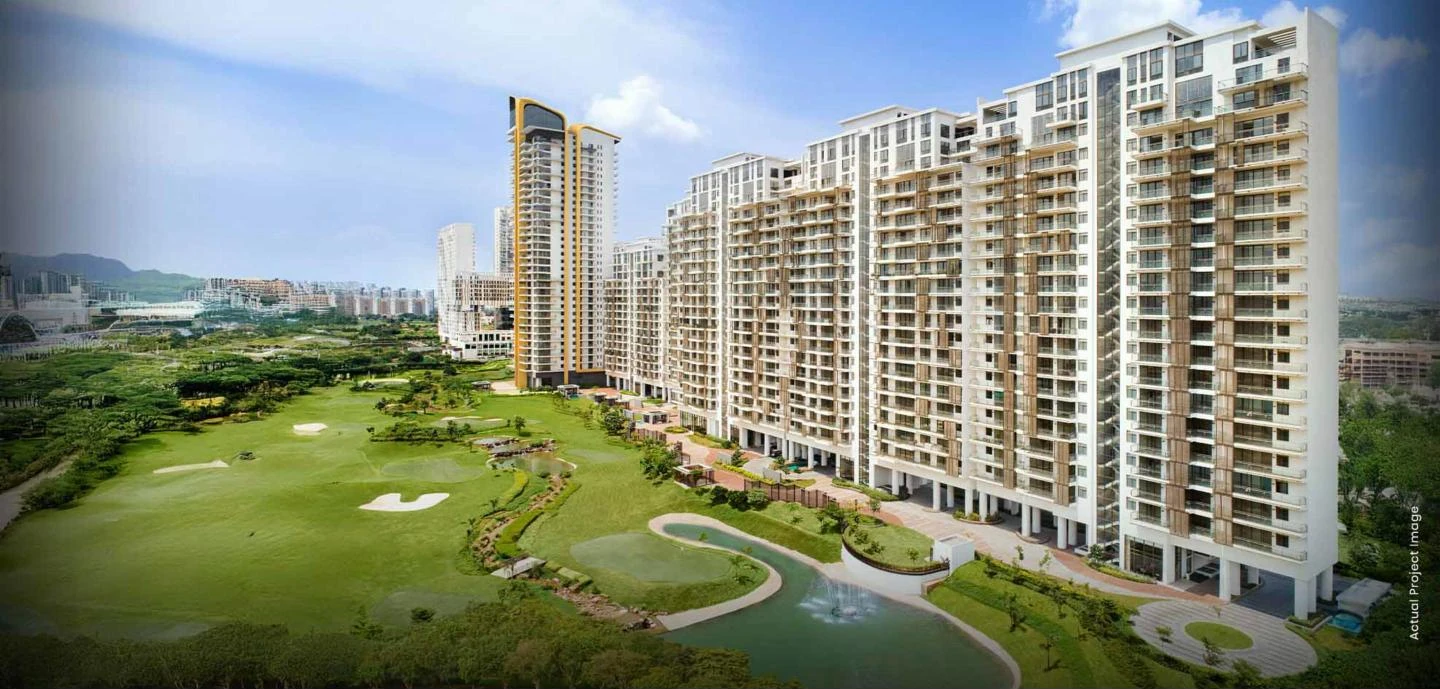
Luxury Real EstateBengaluru · Hyderabad · Gurgaon · Dubai
Discover the clarity inReal Estate.
A research-led advisory for buyers who treat an address as a long-term position, not a purchase. Every conversation is private, every mandate handled by a single dedicated relationship manager.
SobhaLodhaEmbassy GroupM3M IndiaMAIA EstatesMSN RealtyCentury Real EstateSobhaLodhaEmbassy GroupM3M IndiaMAIA EstatesMSN RealtyCentury Real Estate
What we do
Research first. Recommendation second.
Bridgekeys exists to help discerning buyers discover exceptional properties — guided by trusted real-estate expertise, carefully curated opportunities, transparent counsel, and a genuinely premium experience at every step.
We build long-term relationships, not transactions. Every recommendation is grounded in diligence. Every address we represent is chosen with the same discernment we ask our clients to bring to their own decisions.
Consultations are held by appointment and in private — at our office, at the site, or wherever suits you. Your name, budget and holdings are never circulated to developers as a lead, never sold, and never used in marketing. Where a booking requires disclosure to a developer, we tell you exactly what is being shared before it goes.
Handpicked
Residences on the current shortlist
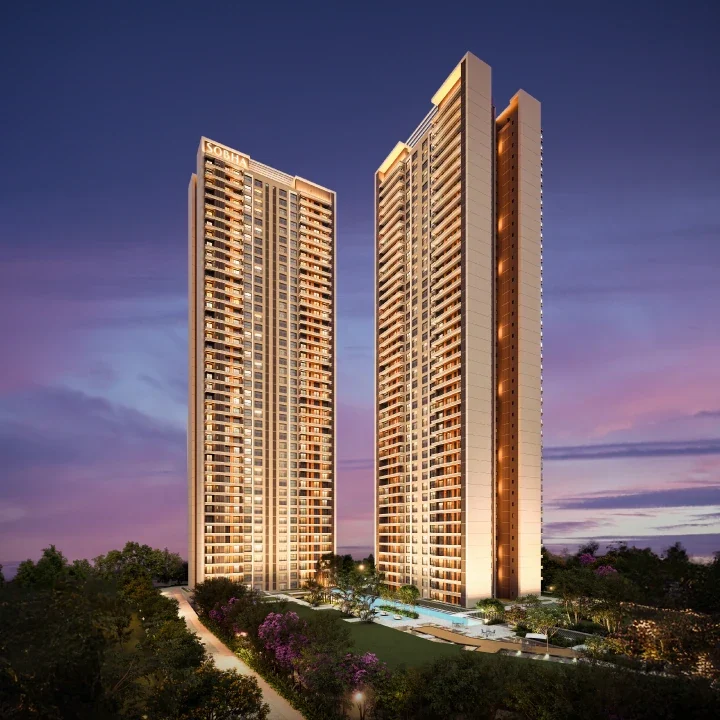
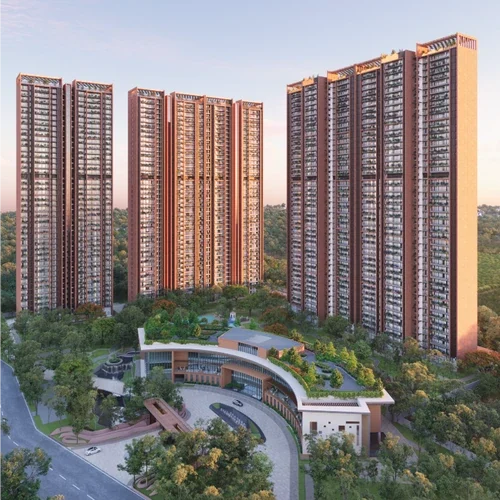
The addresses we are actively advising on this quarter, selected for build quality, land parcel, and the credibility of the developer behind them.
One dedicated relationship manager. No shared floor, no queue behind you, no details passed on. We meet at our office, at the site, or over video if you are buying from abroad.
“I had a great experience with Bridgekeys. The team is professional, transparent, and genuinely focused on helping clients find the right property. I highly recommend them to anyone looking for a luxury real estate company in Bangalore.”
Ashish Kumar Barman · 4 BHK, Sobha One World
Book an appointment
A private consultation.
Tell us the shape of what you're looking for. A dedicated relationship manager responds within one working day with a shortlist, a pricing view and available site-visit slots — held in confidence, with no mass mailers and no call-centre follow-up.
Dubai luxury homes in 2026: why prime villas held while the wider market cooled, and when off-plan still makes sense
Dubai's wider market cooled in 2026, but the top end kept trading. The detail matters: villas held up better than prime apartments, and buyers are paying more for homes they can move into.
Headlines about Dubai in 2026 have mostly been about slower sales. The top of the market tells a different story. Developer sales of homes priced above AED 5 million reached about AED 85.3 billion across 6,974 transactions between January and October, most of it off-plan: AED 77.9 billion across 6,441 homes, at an average of about AED 12.1 million. Villas accounted for 57% of that off-plan luxury value. Luxury buyers did not stop buying; they changed what they bought.
Villas over apartments. The split inside prime is the most useful thing to understand this year. In Q2, CBRE recorded apartment prices on the Palm down about 9% in a single quarter, with Business Bay and Downtown down around 7%. Villas behaved differently: by mid-year villa values were still up about 2% year on year while apartments were down about 3%. Family buyers with long horizons, who make up much of the villa market, were less moved by the regional conflict than investors in high-rise stock.
The very top was early, not immune. Knight Frank reported US$5.1 billion of sales of homes above US$10 million in the first half of 2026, up 14% on a year earlier, but noted that most of those deals were agreed before the conflict began in late February. Treat 2026's ultra-prime figures as a sign of depth in the buyer pool, not as proof that prices at the top are rising.
Why buyers are moving to ready homes. Across the market, the value of ready-home sales rose about 18% between Q2 and Q3, while off-plan apartment sales roughly halved in October. In October the median off-plan apartment sold for about AED 1.11 million, 13.4% lower than a year earlier, while the median ready apartment sold for about AED 1.23 million, up 1.3%. That gap is mostly about mix, since off-plan sales have tilted towards smaller units. It still says something real: in an uncertain year, buyers are paying more for a home they can move into or let today.
When off-plan still makes sense. Developers are still launching, and well-chosen off-plan can buy you a better product and a staged payment plan. Nakheel's Palm Springs, for example, released its first villas and townhouses in November from about AED 3.8 million to AED 8.9 million, with handover reported for Q4 2030. Before committing, check four things: the developer's delivery record on recent projects, how much of the price is due before completion, how much competing supply will hand over in the same community around the same date, and the escrow and registration details with the Dubai Land Department. Avoid paying a launch premium in a community where thousands of similar units will complete alongside yours.
Where the risk sits. The supply wave arriving from 2027 is concentrated in mid-market apartment communities such as Jumeirah Village Circle, Arjan, Dubai South and Business Bay. Established villa communities and prime locations with little remaining land are better placed. For an Indian buyer, a property of AED 2 million or more can also support an application for the UAE's ten-year Golden Visa, which keeps it relevant for families who want residency as well as an asset.
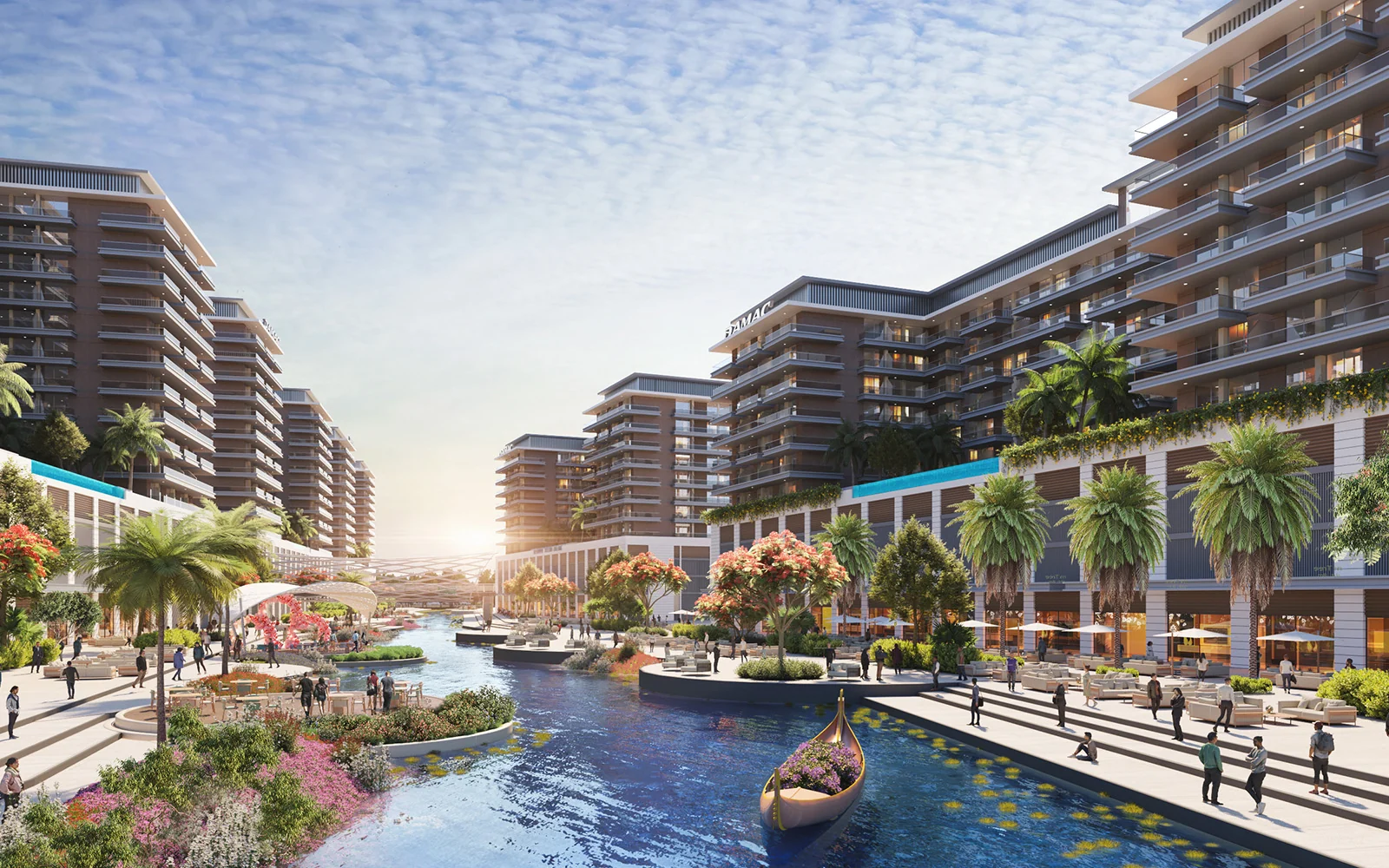
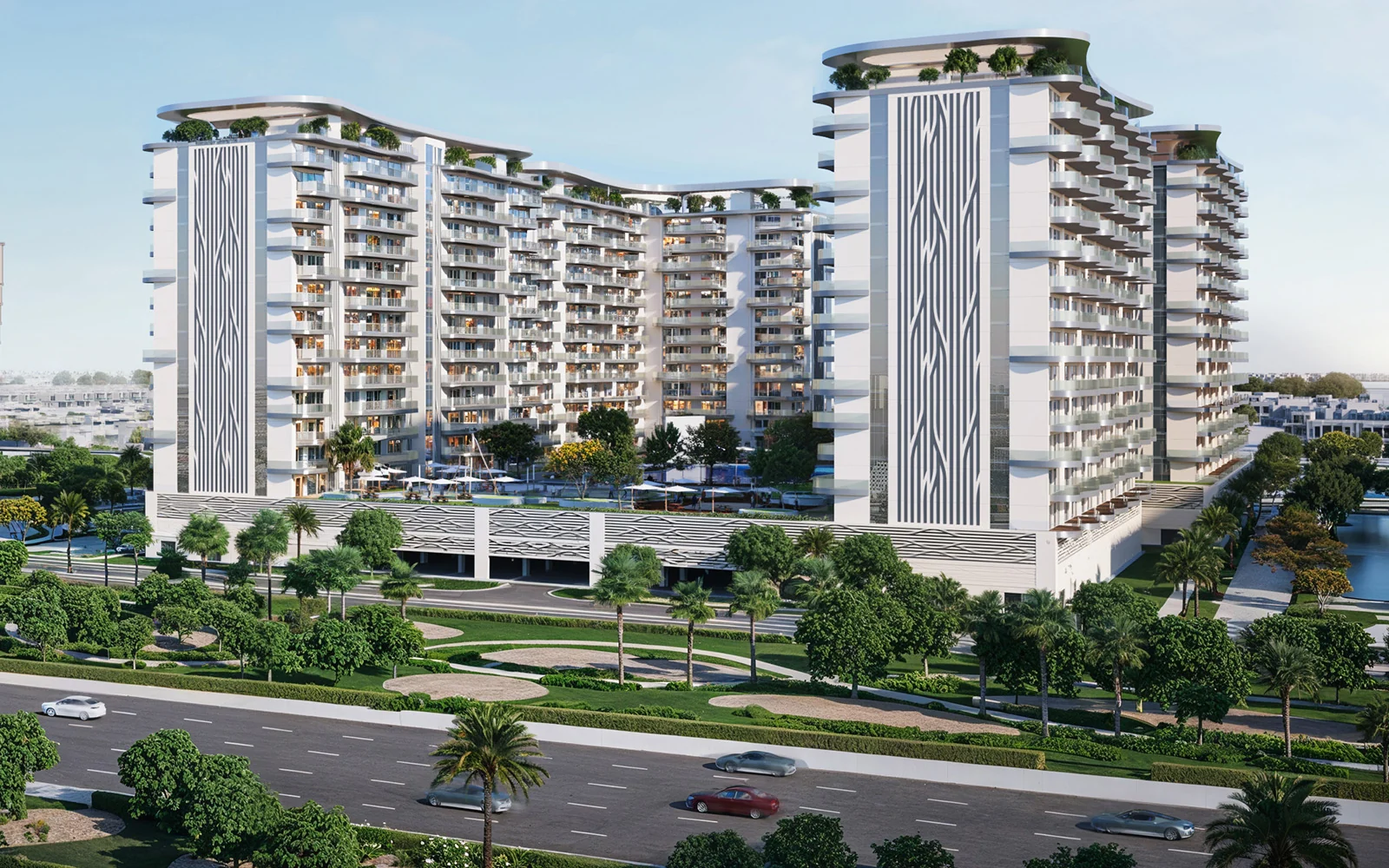
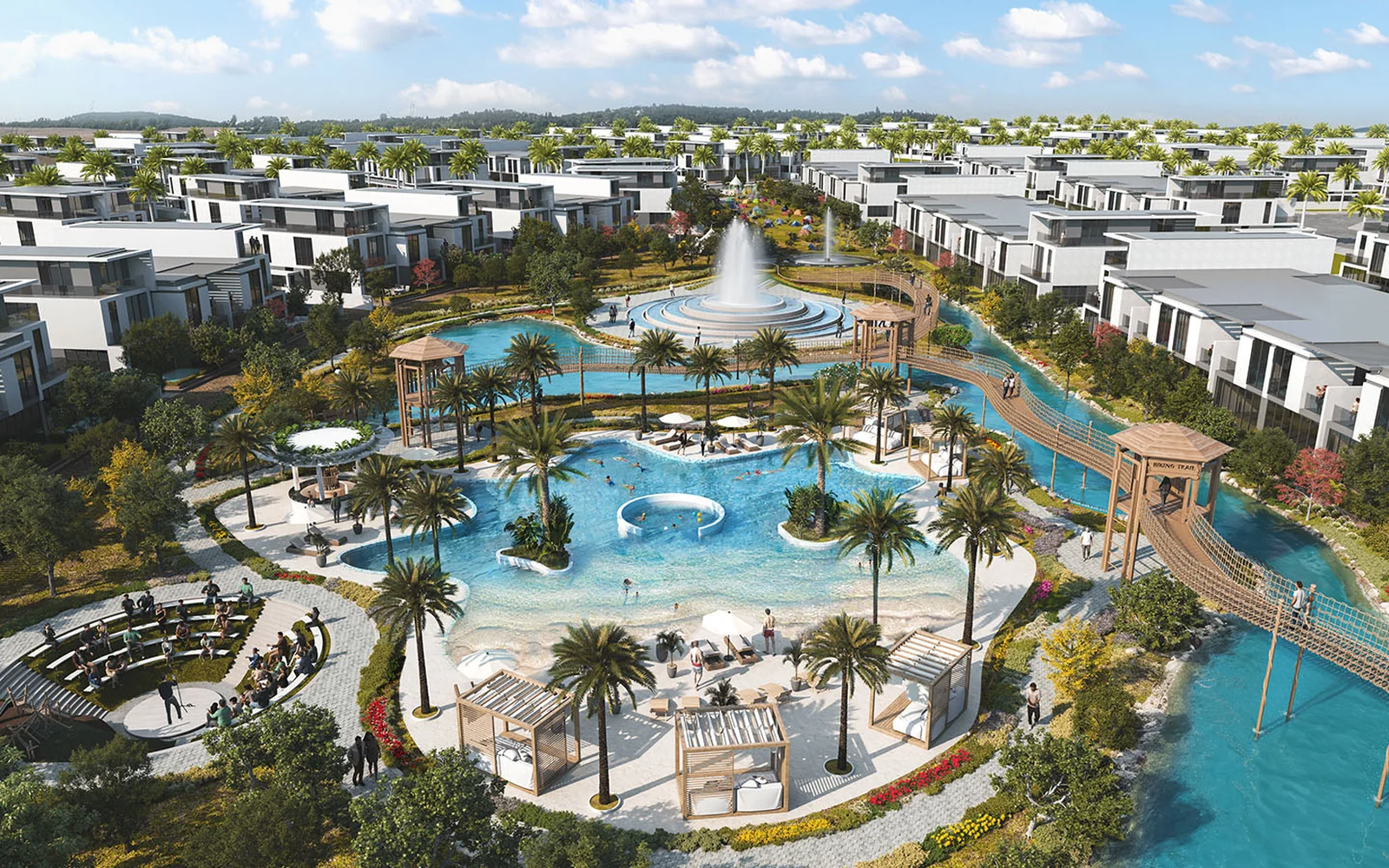
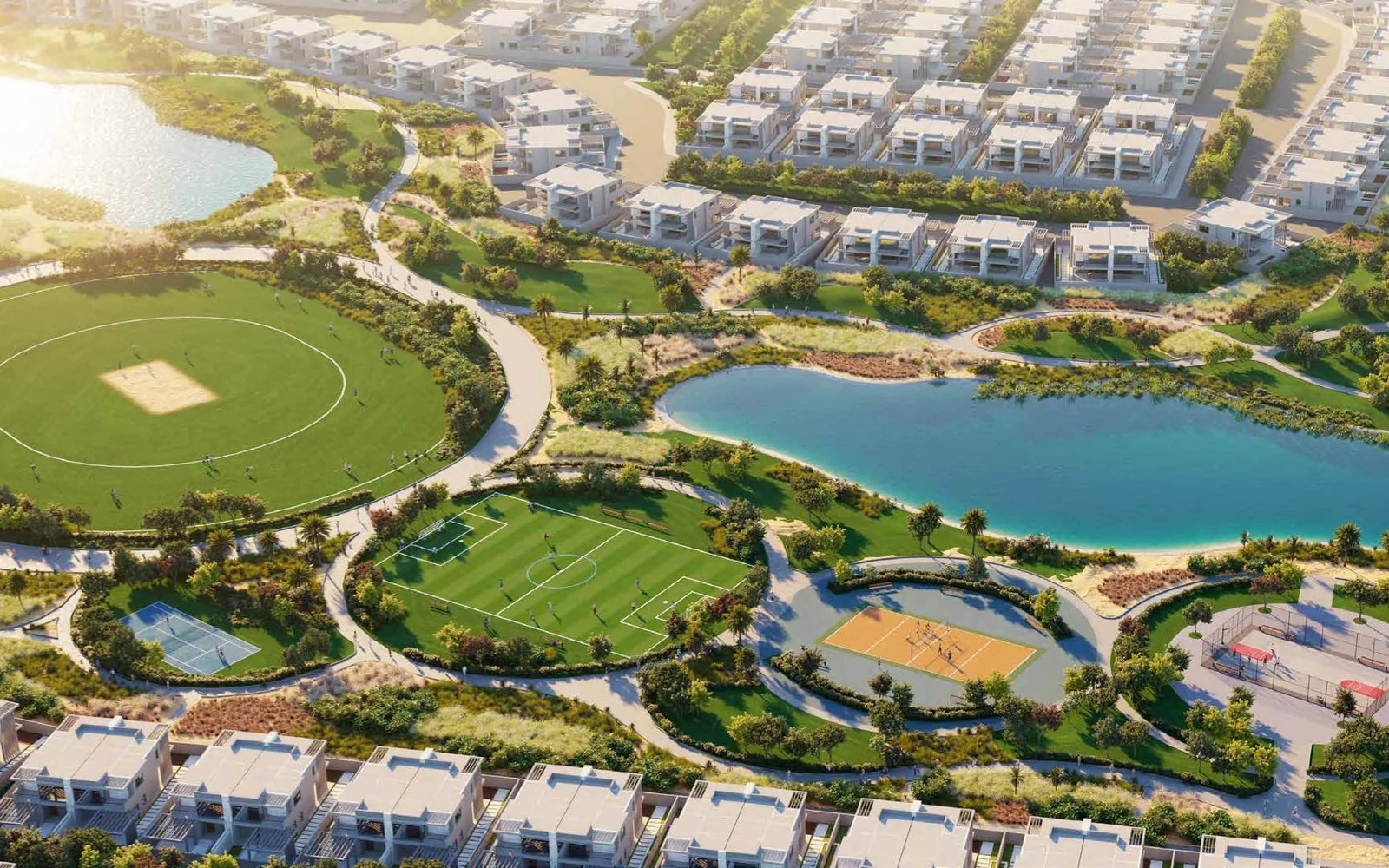
How we approach it. Bridgekeys advises Indian and NRI buyers on Dubai through the same process we use at home: a written shortlist, the case against each option and developer-verified pricing. Our current Dubai shortlist, including Sobha Hartland II, Sobha Central and DAMAC Islands, is on the Dubai projects page. For the wider market picture, read Dubai property market in 2026.
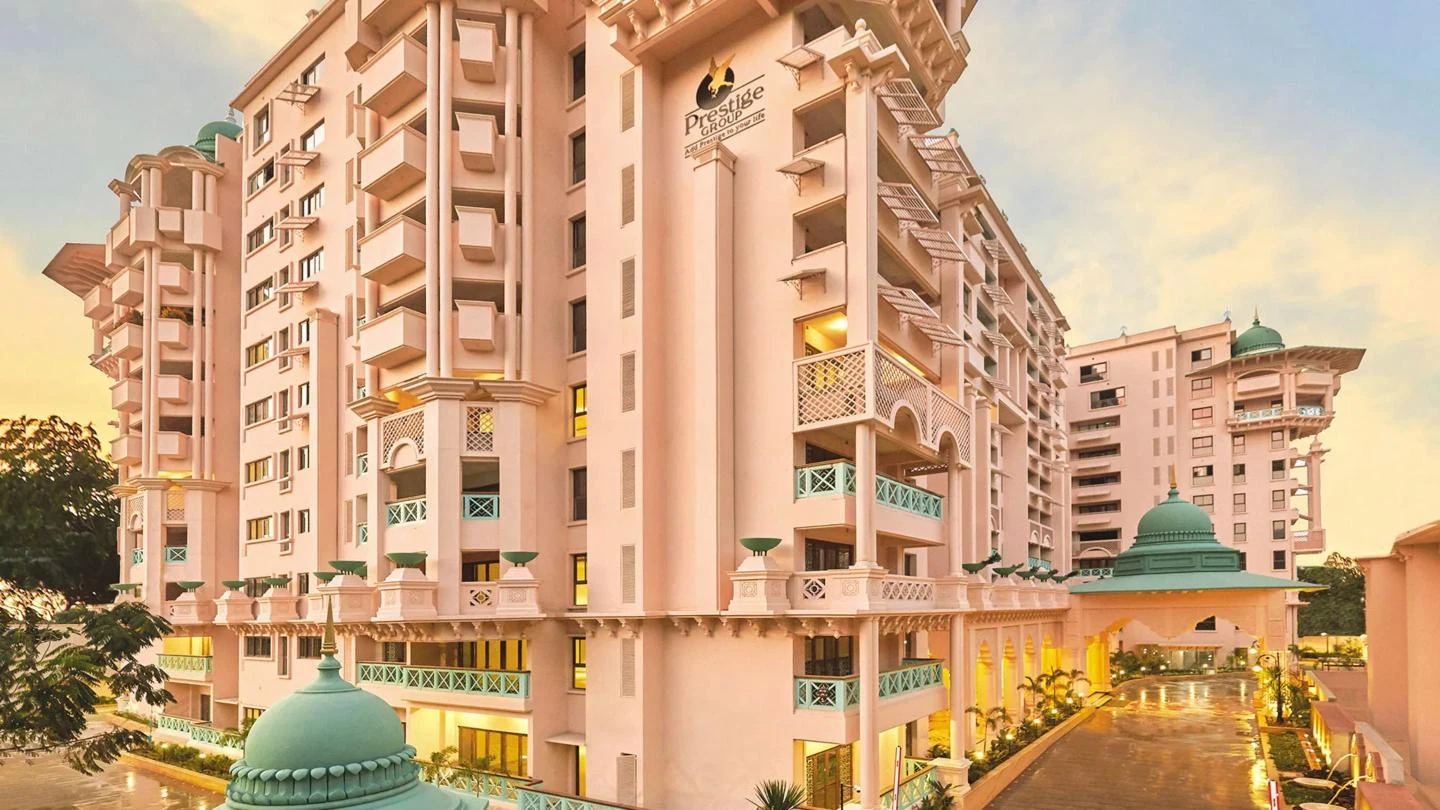
Prestige new launches in Bangalore, 2026: Prestige Avon, Prestige Springwood and the pipeline behind them
One Prestige launch is registered and selling, one is in pre-launch near the airport, and a ₹45,000 crore national pipeline sits behind both. Here is what is confirmed and what is still marketing.
Prestige Group has moved two Bengaluru projects to the front of its launch calendar this quarter. Prestige Avon, on Thanisandra Main Road in North Bengaluru, is launched and registered with Karnataka RERA. Prestige Springwood, a compact high-rise in Devanahalli near the airport, is in pre-launch. Both sit inside a much larger plan: on its Q2 FY27 investor call in November, Prestige described residential launches worth more than ₹45,000 crore in gross development value over the next two years, across Bengaluru, Mumbai, Delhi NCR, Chennai, Goa and Hyderabad. Bengaluru has historically been the largest single share of the company's sales, so a good part of that pipeline will land here.
Prestige Avon, Thanisandra Main Road. This is the one you can actually buy. It is a 260-home community on about three acres at Bellahalli, off Thanisandra Main Road, with roughly 4 lakh sq ft of saleable area and a gross development value of about ₹550 crore declared in Prestige's stock-exchange filing of 20 November. Pricing quoted at launch starts at about ₹1.73 crore for a 2 BHK, ₹2.30 crore for a 3 BHK and ₹2.78 crore for a 3.5 BHK with a maid's room, on a base rate of roughly ₹13,300 to ₹14,500 per sq ft before additional charges. Homes run from about 1,306 to 2,160 sq ft, and some layouts include a dedicated home-office room. The Karnataka RERA registration is PRM/KA/RERA/1251/309/PR/131126/009097, issued on 13 November 2026. Our full project note is on the Prestige Avon page.
How Avon's pricing compares. Average listed rates on recent Prestige launches give a useful frame: about ₹14,990 per sq ft at Prestige Somerville in Whitefield, about ₹13,910 at Prestige Pine Forest, and about ₹15,590 at Prestige Camden Gardens in North Bengaluru. Avon's base rate sits at the lower end of that band, which is the main reason it is drawing early enquiries. It is a launch rate, though, and Prestige launches in Bengaluru typically reprice in steps as towers sell, so the published figure is the floor rather than the price you should expect three months from now.
Prestige Springwood, Devanahalli. Springwood is described as a two-acre project about 1.5 km from the Bangalore airport toll plaza, with three basement levels, a ground floor and 19 upper floors. It has been named among Prestige's near-term launches. Online listings put it at about 180 homes in 3 and 4 BHK formats from about ₹2.40 crore, but those figures come from marketing portals rather than Prestige, and the project is not yet registered with Karnataka RERA. Until it is, treat configurations, prices and possession dates as indicative. Any expression of interest you pay now should be fully refundable and should not amount to an allotment.
The pipeline behind them. Prestige's other named launches nationally include Falcon City in Thane, Prestige Bougainvillea Gardens in Noida's Sector 150 and Prestige Sea Scapes in Goa, with Falcon City Reserve, Chambers 51 and Prestige Meadows further out. The company has said the near-term group could launch in October to December 2026 if approvals and registrations arrive on time, and it reported Q2 FY27 sales bookings of about ₹7,225 crore, up roughly 20% year on year. Names such as Prestige Evergreen, Prestige Grove Hills and Prestige Falcon City Luxe also circulate on unofficial portals with launch dates attached. None of these is registered in Bengaluru at the time of writing, and we would not plan around a date that the developer has not filed.
Registered Prestige options above ₹2 crore. If your budget is above Avon's entry point and you want a project with a registration number today, three are worth comparing: Prestige Raintree Park facing Varthur Lake in Whitefield from ₹3.70 crore, the 117-home Prestige Camden Gardens in North Bengaluru from ₹3.32 crore, and Eaton Park at The Prestige City on Sarjapur Road from ₹2.99 crore.
How to use a Prestige launch well. The best units in a launch go first and the best prices last only until the first tower fills. Ask for the written cost sheet on a specific unit, not a configuration; check the declared completion date on the K-RERA portal rather than the brochure; and compare the 3.5 BHK against a genuine 4 BHK elsewhere on carpet area, not on the label. Bridgekeys is a K-RERA registered agent (PRM/KA/RERA/1251/446/AG/230427/003607) and works with Prestige across Bengaluru. Tell us your budget and corridor and we will send the current price sheet for Avon, or register your interest for Springwood ahead of its launch.
Bengaluru property prices in 2026: why the city keeps leading India, and what that means if you are buying now
Bengaluru has led India's housing price growth for three quarters running. The numbers differ by who is counting, but the direction does not. Here is how to read them before you buy.
Bengaluru has now led India's housing price growth for three consecutive quarters. NoBroker's Q3 2026 report puts the city's year-on-year price rise at 14.5%, ahead of NCR at 10.6%, Chennai at 10.2% and Mumbai at 8.9%. That follows 14.5% in Q1 and 16% in Q2. On sales, ANAROCK counted about 16,670 homes sold in Bengaluru in Q3, second only to the Mumbai region; together the two cities made up 48% of sales across the top seven markets.
Why the numbers do not agree. If you read several reports you will see Bengaluru's price growth anywhere from about 7% to about 15%, and sales described as both rising and falling. That is mostly method. Cushman & Wakefield tracks weighted capital values on comparable projects and reported 6 to 7% annual growth in Q2. NoBroker's figures lean on listed prices, which move faster. PropEquity, with a wider nine-city lens, recorded a 6% fall in Q3 sales nationally while ANAROCK's seven-city count showed a 3% rise. None of these is wrong. The useful conclusion is that every source agrees on direction and that Bengaluru is at or near the top of every table.
What is driving it. Three things. First, the mix of what is being built has shifted upward: high-end and luxury homes made up 58% of Bengaluru launches in Q2 2026 according to Cushman & Wakefield, after 68% in Q1, so the average new home is simply a more expensive product than it was two years ago. Second, demand has held up even as some trackers recorded fewer launches, which NoBroker linked to affordability concerns. Third, employment: the Outer Ring Road and Whitefield office belts keep absorbing space, and premium housing follows the jobs.
Where it is moving fastest. North and East Bengaluru recorded the strongest launch activity in Q3. In the first half of the year, Cushman & Wakefield attributed 41% of launches to the east and 33% to the north, with the south at 20%. The east is the established employment market; the north is where the land is, along the airport corridor, Hennur, Thanisandra and Yelahanka. We compare the two in detail in North vs East Bengaluru for a premium home.
The caution in the data. National inventory is rising. ANAROCK reported unsold stock across the top seven cities up 12% year on year to about 6.3 lakh homes, and average prices across those cities up 7% to ₹9,714 per sq ft. Rising inventory alongside rising prices usually means buyers get more negotiating room on specific projects even while the headline index keeps climbing. That is especially true on large township launches, where a developer has many units to move in each phase.
What it means if you are buying. First, do not buy an index. A citywide 14.5% says little about a particular tower; ask for the developer's own price history on the project and the last few registered sale prices nearby. Second, launch pricing is usually the best pricing on a well-located registered project, because Bengaluru developers reprice in steps as towers fill. Third, buy the corridor you will actually live or rent in. Appreciation has been widest in the north and east, but so has supply, and a home that is easy to let is easier to hold. Current registered options across both corridors are on our Bengaluru projects page, and the Prestige launches this quarter are a good live example of launch pricing in practice.
Every project below has been visited, price-checked against its micro-market and verified for RERA registration. Filter by city, configuration or budget.
Widen the budget band or clear a filter. If you're looking for something we don't list, tell us — we source off-portfolio too.
Yield assets
Commercial Properties
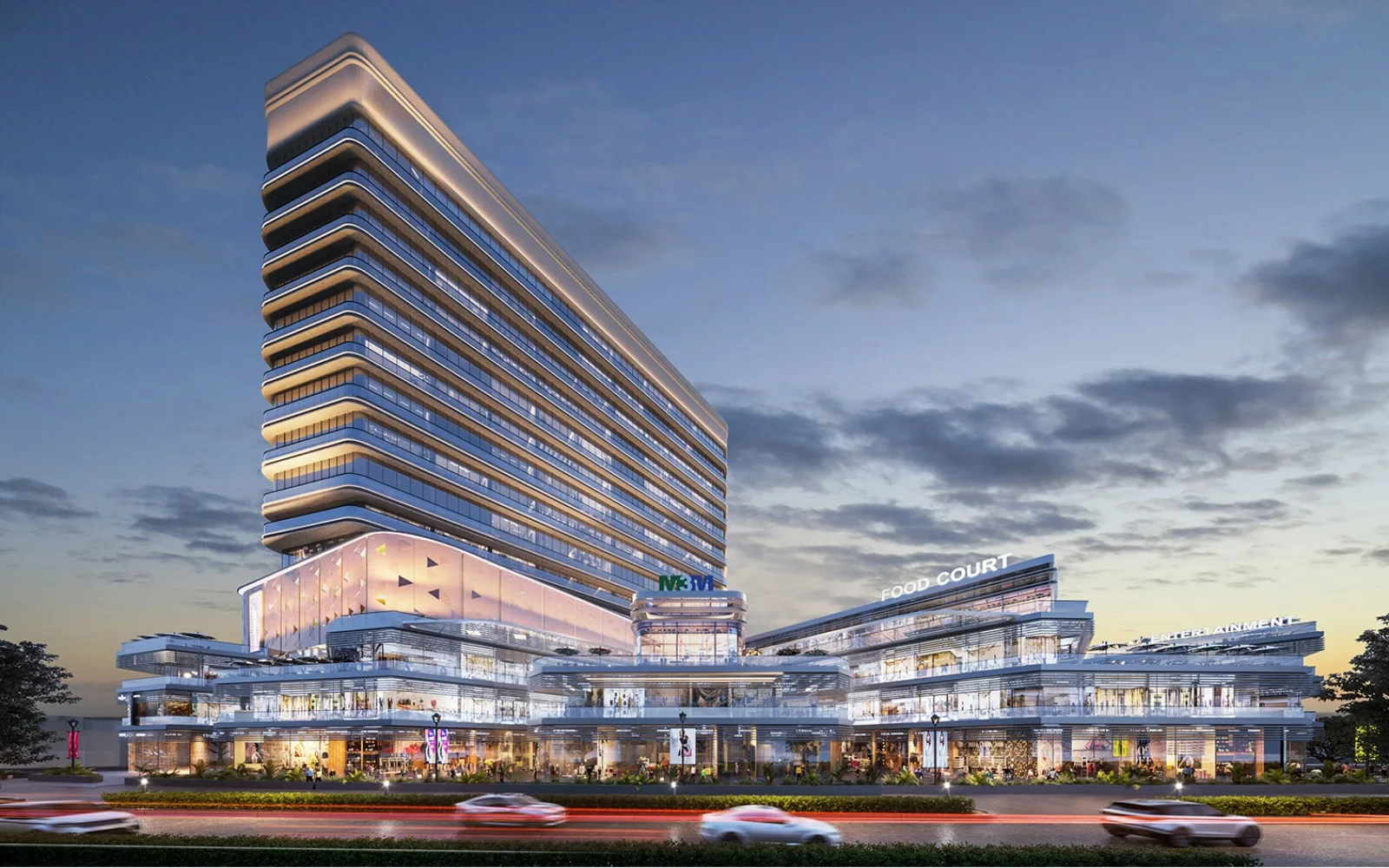
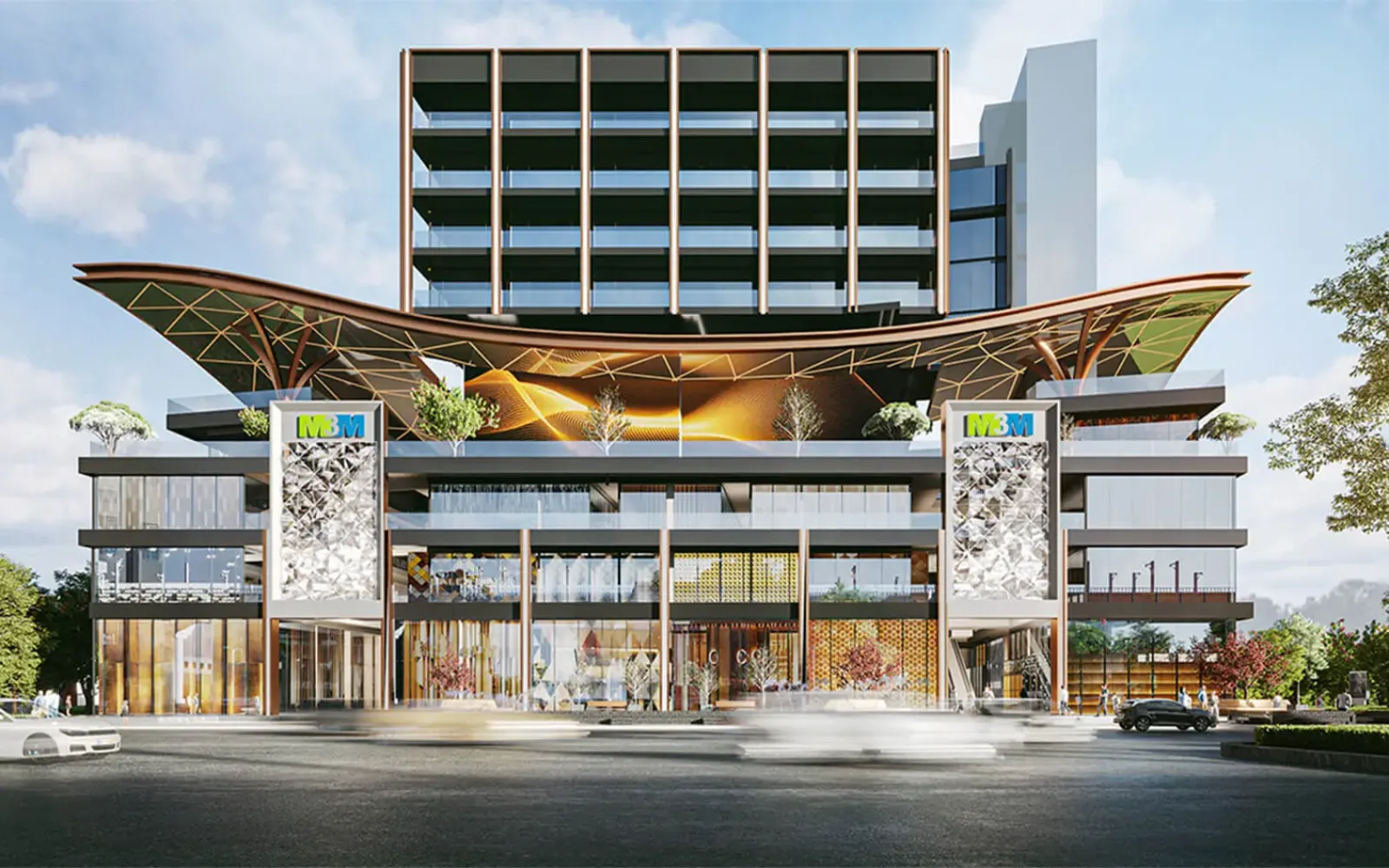
Retail, high-street and office assets underwritten on catchment, footfall and tenant covenant rather than brochure yield. We share the rental assumptions behind every projection, including the ones that don't flatter the asset.
Assured-return and guaranteed-rental structures carry counterparty risk. We will walk you through the escrow, the lock-in and what happens if the anchor tenant exits before we discuss the upside.
Why Bridgekeys
One advisor. Complete discretion.
Most property enquiries in India end the same way: your number is passed to four developers, six brokers call you within the hour, and you spend the next six months unsubscribing. We built Bridgekeys to work the opposite way.
01
The first meeting
We talk about you before we talk about property.
The opening conversation covers no addresses at all. We want to understand the horizon you are buying against, how much of the ticket is liquid, whether a parent or a child changes the brief in five years, and what a good exit looks like to you. Only once that is written down do we open the portfolio.
It happens at our office, at your home, or on a video call if you are buying from Dubai or Singapore. One advisor, no sales floor, nobody waiting behind you.
02
The shortlist
Three to five addresses, and the case against each.
You receive a written shortlist with the comparable set, the price-per-square-foot trend for that micro-market, the absorption data, and a plain account of what is wrong with every option. If a project is priced ahead of its corridor we say so, including when we represent it.
Our fee comes from the developer's channel-partner arrangement and does not change with which project you choose. That is the structural reason we can afford to recommend waiting two quarters, or buying nothing at all.
03
The site visits
Accompanied, unhurried, and off the show-flat rush.
Your advisor walks the site with you, having already checked the developer's cost sheet line by line — floor rise, PLC, club charges, corpus, GST, registration. We ask the questions in front of the sales team that most buyers only think of on the drive home.
Your name and number stay with us until you decide to register. Nothing is passed to a developer, sold to a lead aggregator, or used in our marketing without your written permission.
04
The close, and afterwards
The same person right through to the keys.
Negotiation, allotment, agreement review, RERA and title verification, home-loan or NRI remittance coordination, registration and handover — handled by the advisor who took your first call. You never restate your brief to a new name, and nothing is lost in a handover.
A significant share of our clients buy without visiting until handover. For them we run video walkthroughs, coordinate Power of Attorney, manage Section 195 withholding on resale purchases, and keep the FEMA and e-Khata paperwork clean from the first instalment.
How it runs
Four steps, no surprises.
A typical mandate takes six to ten weeks from first conversation to registration. We will tell you at the outset which stage is likely to slow down, and why.
Brief. A private conversation on horizon, liquidity, family needs and exit. Nothing is shared beyond your advisor.
Shortlist. Three to five addresses with comparables, pricing view and the case against each.
Visits. Scheduled privately, with the developer's sales team briefed but your details withheld until you decide.
Close. Negotiation, allotment, documentation and registration — including RERA, title and home-loan coordination.
Meet our team
The people behind the advice.
A deliberately small team. You will deal with one of these people from your first conversation to your registration — not with whoever happens to pick up.
AG
Founder & CEO
Abhinav Gupta
Founder and CEO with over 14 years of multi-city real estate expertise. An MBA in Marketing, he brings strategic insight and a data-driven approach to real estate consulting, channel partnerships and property investment solutions. His leadership has established Bridgekeys as a trusted consultancy delivering premium real estate services across Bangalore, Hyderabad and Dubai.
She brings 3+ years of HR expertise across technical and non-technical recruitment. With an MTech background, she combines technical acumen with strong talent acquisition skills. At Bridgekeys she manages end-to-end recruitment, employee relations, onboarding and HR operations, alongside developer registrations and the business operations that keep the desk running.
VH
Team Lead · Private Client Advisory
Venunandan H D
He leads the luxury team at Bridgekeys, specialising in ultra-luxury real estate — the ₹5 Cr-and-above band, where the shortlist is short, the inventory is rarely advertised and discretion is part of the service. He brings multiple years of sales and business development expertise, and a consultative approach that guides clients through the entire transaction — from identifying their goals to closing the deal.
VS
City Head · Hyderabad
Vikas Suryavanshi
He runs Hyderabad end to end — the developer relationships that get our clients early access and a straight answer on price, the team on the ground, and the day-to-day of a desk that has to stand behind every booking it takes. The western corridors are his beat: the Financial District, Gachibowli and Kokapet. Away from work he is usually exploring somewhere he has not been, or across a chessboard.
MG
Digital Marketing Executive
Mohit Kumar Gupta
He runs the Bridgekeys digital presence — campaign creative, project films and renders, and the tracking behind every enquiry that reaches the team. If you found us through a search, a reel or a campaign, that was his work.
LP
Private Client Advisor
Likitesh P
He advises buyers in the ultra-luxury band, where the shortlist is short and the diligence matters more than the brochure. A mandate stays with him end to end — the first conversation, the site visits, the price comparison and the paperwork through to registration.
SA
Relationship Manager
Saheeq Ahamed
He manages buyer relationships from the first enquiry through to registration, holding a single thread of communication across site visits, cost sheets and developer paperwork — so a client never has to repeat themselves to a new face.
B
Business Development Executive
Bhardwaj
He looks after Category A residential developments — the Grade A builders whose launches set the benchmark in their micro-market. He is the first point of contact on a new enquiry, establishing budget band, configuration and possession horizon before any site visit is booked, so the shortlist that follows is short and relevant. Outside work he is usually training.
JD
Marketing
Jessica Davis
She takes care of marketing, and comes with extensive experience in marketing and branding. She likes to read books in her leisure time.
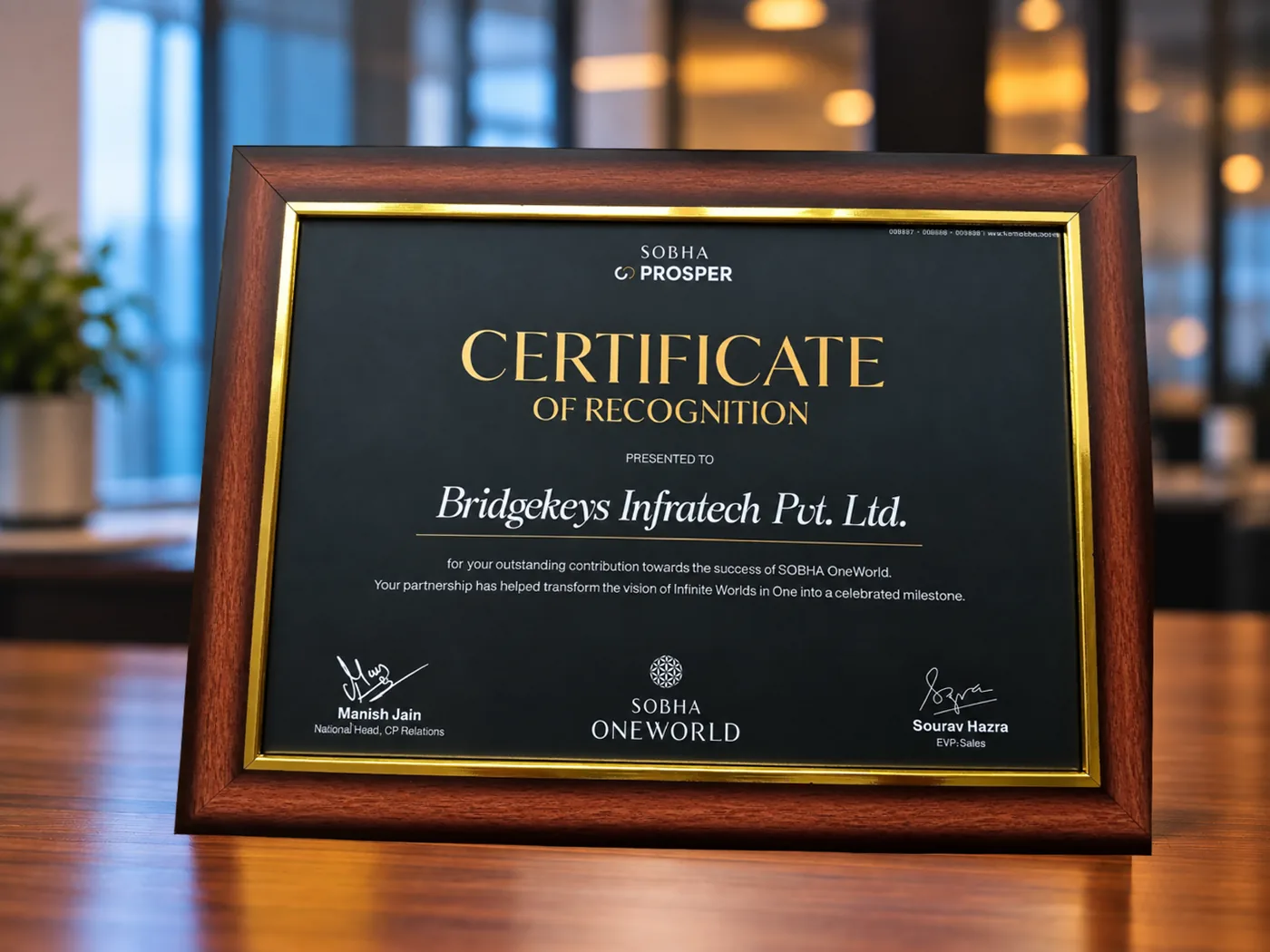
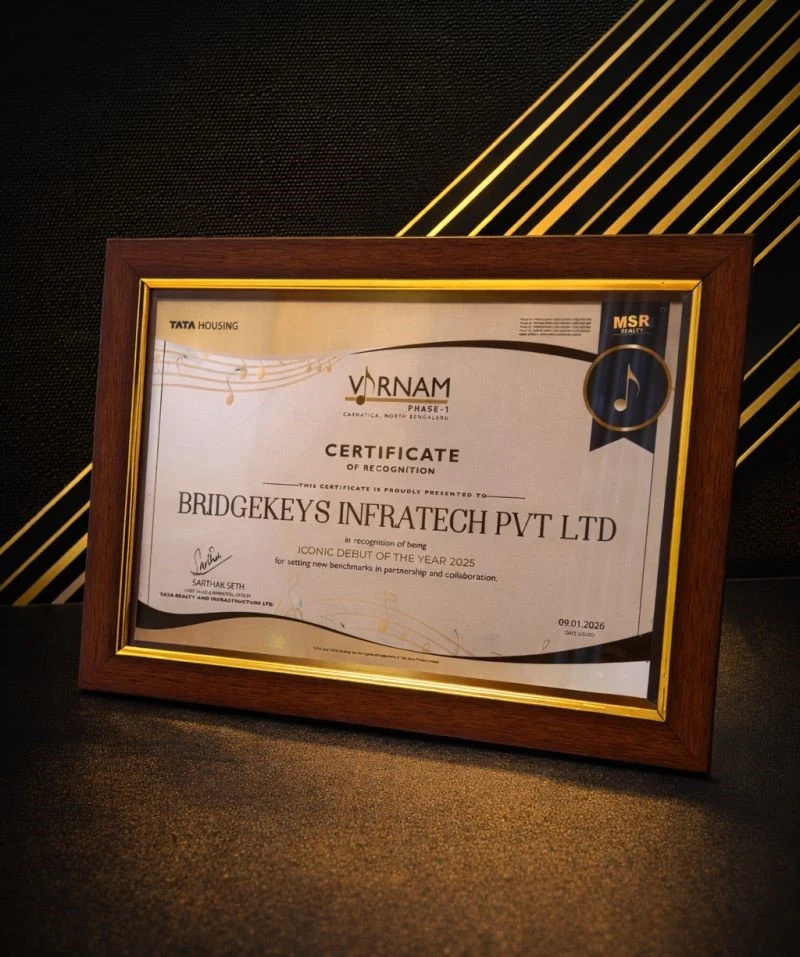
Every award we have earned is a reflection of the trust our clients place in us and the dedication our team brings to every home journey. At Bridgekeys, excellence isn't a goal — it's our standard.
Recognitions are issued by developer partners for sales performance, channel-partner conduct and client experience. Certificates are reproduced as received.
Gallery · Handovers & client moments
Where every search ends: at the door.
These are the days our work is measured by. A Bridgekeys advisor stays with each client from the first shortlist to the day the home is theirs: at the developer's welcome, at the booking table and at the handover. The families and buyers here bought with Sobha, Brigade, Sumadhura and other developers in Bengaluru, guided by our RERA-registered team.
Handover day at a client family’s new home in BengaluruWelcoming our client into the Brigade familyInto the Sumadhura CircleClients at Sobha NeopolisTrained on how homes are built
What a Bridgekeys purchase looks like
One advisor from first call to handover. A written shortlist with the case against each option. Accompanied site visits, negotiation on the written cost sheet, and help with loans, registration and possession. We are registered with Karnataka RERA as PRM/KA/RERA/1251/446/AG/230427/003607 and work directly with Bengaluru's leading developers, which is why so many of these moments happen at their welcome desks.
A professional real estate advisory based in Bangalore, committed to providing unmatched research-based real estate counsel to our clients and the best long-term return on their investment.
B
Philosophy
Your dream, made navigable.
Buying real estate for your own use or as an investment is a dream many of us share, and we are here to make the journey of turning that dream into reality.
Our purpose is to ensure you get the best product at a fair price, generating handsome returns. We strive to make your real estate search seamless and hassle-free.
Discover the clarity in real estate with us.
AG
About our CEO
Abhinav Gupta
An MBA from AIMA, New Delhi.
Comes with over a decade of rich real estate experience working across multiple regions of the country.
Passionate about making real estate buying easier for buyers in an ambiguous market.
You can find him driving on the highways or playing chess in his leisure time.
We hire a small number of people carefully. If you have sold residential real estate before and you would rather advise well than dial fast, leave your details below and we will come back to you.
What we look for
Consultative, not transactional.
At least one year selling residential real estate
Comfort with HNI and NRI buyers in the ₹2 Cr-and-above band
Own conveyance for site visits across the city
The judgement to tell a client when the answer is no
Applications are treated in confidence and are never shared outside the hiring team.
Testimonials
Real clients, real results.
Every one of these buyers came to us with a different brief, a different budget and a different corridor. What they have in common is that they know exactly why they bought what they bought.
“
I had a great experience with Bridgekeys. The team is professional, transparent, and genuinely focused on helping clients find the right property. I highly recommend them to anyone looking for a luxury real estate company in Bangalore.
Ashish Kumar Barman4 BHK, Sobha One World“
I recently had an outstanding experience working with Bridgekeys Infratech Pvt Ltd, and I highly recommend their team. Their consultants are true professionals who demonstrated exceptional market knowledge and communication skills throughout the entire process. The team was efficient, responsive, and a pleasure to work with, making the complex process of buying a home feel seamless and stress-free. Their commitment to excellence and client satisfaction is evident in every interaction. If you're looking for top-tier real estate professionals, you can explore their services.
Great experience with BridgeKeys! They coordinated everything smoothly for our apartment booking, offered an excellent deal and were highly professional throughout. Highly recommended!
Megha Naik4 BHK, Sobha Neopolis“
It was a great experience with Bridgekeys on purchasing our home. They've guided us from starting and provided all the necessary information and made our purchase very smoothly. Their experience in real estate is exceptional and accurate. I would like to continue this relationship for future endeavours.
S Tejaswini4 BHK Grande, Hamptons at Sobha Townpark“
We bought a property at Rohan through them. Very good service and on-time response. It was wonderful getting to know you guys.
Deepti MishraProud owner of Rohan Ekanta“
Exceptional service. I would highly recommend this real estate agent for their professionalism, expertise and dedication.
Rishabh SachanPurchased Sobha Dream Gardens“
Sunil and Abhinav helped through the entire process of purchasing my flat. I appreciate the professionalism and clarity in the support they provided. I recommend them for anybody who is looking to buy any property in Bangalore.
Koresh Prasad NayakSobha Dream Acres, Bangalore“
Excellent service! The team was very responsive and knowledgeable. They took the time to understand our needs and provided valuable insights. The site visit was well organised, and we appreciated the transparency throughout the process. Highly recommend!
Lavanya S GowdaGodrej Woods“
I recently had an outstanding experience working with Bridgekeys Infratech. Their consultants are true professionals who demonstrated exceptional market knowledge and communication throughout the entire process. The team was efficient, responsive and a pleasure to work with, making the complex process of buying a home feel seamless and stress-free.
Kumar RahilLodha Azur“
They are highly responsive and knowledgeable, taking the time to truly understand client needs. The site visit was well organised, and their transparency and valuable insights made the entire experience smooth and trustworthy. A genuinely talented team to work with if you're looking for the right real estate.
Ankit KumarSobha Townpark
Legal
Privacy Policy
Edition 01 · Last updated 15 August 2026
We value your privacy and are committed to protecting your personal information. This Privacy Policy explains how we collect, use, disclose and safeguard your information when you visit our website or use our services. Please read it carefully to understand our practices.
1. Information we collect
1.1 Personal information. We may collect personal information such as your name, email address, phone number and postal address when you voluntarily provide it while using our website or services.
1.2 Usage information. We may automatically collect certain information about your device and how you interact with our website or services. This may include your IP address, browser type, operating system, referral URLs, pages viewed and other browsing information.
2. How we use your information
2.1 Provide and improve services. To deliver the services you request and to improve the functionality of our website and services.
2.2 Communication. To communicate with you about our services, respond to your enquiries and provide support.
2.3 Marketing. With your consent, to send you promotional communications about our services.
2.4 Legal compliance. To comply with applicable laws, regulations, legal processes or enforceable governmental requests.
3. How we disclose your information
3.1 Service providers. We may share information with third-party service providers who help us operate the website, such as hosting, analytics and customer support.
3.2 Business transfers. If we undergo a merger, acquisition or sale of all or part of our assets, your information may be transferred as part of that transaction.
3.3 Legal requirements. We may disclose your information if required by law or in response to a valid legal request, such as a court order or government enquiry.
3.4 Consent. We may share your information with third parties where you have given us your consent to do so — for example, to register your booking with a developer.
We do not sell, rent or trade your contact details, and we do not add you to third-party marketing lists.
4. Cookies and similar technologies
We may use cookies, web beacons and similar technologies to collect information about your browsing activity. These help us personalise your experience, analyse website usage and measure advertising. You can manage your cookie preferences through your browser settings.
5. Data security
We implement reasonable security measures to protect your personal information from unauthorised access, alteration, disclosure or destruction.
6. Your rights
You have certain rights regarding your personal information. You may request access, correction, deletion or restriction of your information, and you may object to its processing. Contact us using the details below to exercise those rights.
7. Children's privacy
Our website and services are not intended for children under the age of 12, and we do not knowingly collect personal information from individuals in this age group.
8. Changes to this policy
We may update this Privacy Policy from time to time. Any changes will be posted on this page with an updated effective date. We encourage you to review it periodically.
9. Contact us
If you have any questions or concerns about this Privacy Policy, call us on +91 636 44 66 801 or write to us through the Call Us page.
By using our website or services, you acknowledge that you have read and understood this Privacy Policy and agree to the collection, use and disclosure of your personal information as described here.
Pre Launches
Before the public launch.
Pre-launch inventory is released quietly, to a small list, at a price that does not survive the official launch. These projects are not yet RERA-registered, so we share them only with verified enquirers — and we tell you plainly what that means for your risk.
Verified access
1 Your details2 Verify phone3 View projects
Open for expression of interest
Two addresses, ahead of launch.
Pre-launch projects are not yet RERA-registered. Figures are indicative, shared by the developer ahead of formal filing, and will be confirmed at launch. An expression of interest is not a booking and creates no obligation on either side. Do not pay any amount before RERA registration — we will tell you when it is filed.
Bridgekeys · By invitation
Black Circle.
A private tier within Bridgekeys for clients buying at the top of the market. It is not advertised, it is not sold, and there is nothing to apply for. It is extended — and it stays small on purpose.
Most of what we handle at the top of the market never reaches a portal. Allocations open and close inside a week. Resales in the best towers move between people who already know each other. Underwritten inventory is spoken for before a price list exists. Black Circle is how we run that side of the business — a standing list of clients we call first, each with one senior advisor who carries the whole file.
There is no fee and no tier to climb. It follows the relationship rather than a payment, and we keep it small for a reason that is simply arithmetic: a list twice the size is a call that comes half as often.
What it is not. Black Circle is not a guarantee of allocation, a discount scheme, or an entitlement from any developer. Allotment is the developer's decision, and RERA applies to every booking — a project that is not registered cannot be sold to you, and membership does not change that. What it changes is when you hear, how much diligence is already done when you do, and who handles it.
BC
What it gets you
Three things, and no brochure.
We have deliberately not built this around concierge services and event invitations, because that is not what we do and you would see through it. These are the three things an advisory can actually give you that are worth having.
01
First sight
Pre-launch allocations, EOI windows and off-market resales reach the list before they reach this website. On inventory we have underwritten ourselves, that head start can run to weeks rather than days.
02
One desk
A single senior advisor carries the mandate end to end — the shortlist, the site visits, the price comparison and the paperwork through to registration. You never re-explain your brief to someone new.
03
Discretion
Your name, your budget and your holdings are not circulated to developers as a lead, not sold, and never used in marketing. Where a booking requires disclosure, you are told exactly what goes across before it goes.
Who it reaches
Who it is extended to.
There is no application and no committee. In practice the list is made up of four kinds of client, and we would rather set it out plainly than imply a velvet rope that does not exist.
Clients we have completed a transaction with, in any of our markets
Buyers introduced to us by an existing client
Buyers already working with us on a brief above ₹5 crore
Owners of several assets who want one desk on the portfolio rather than a broker per city
If none of those describes you yet and you are buying at this level, say so below. The honest answer is that the first transaction usually comes first — and that is a conversation worth having on its own terms. In the meantime, the residential shortlist and the Gurgaon commercial portfolio are open to everyone.
Ask to be introduced
Tell us what you are looking for.
A senior advisor reads this, not a call centre. If the brief fits what we are actually holding, you will hear what that is. If it does not, we will say so rather than put you on a list and call you about something else in six months.
Your enquiry reaches one senior advisor. Nothing is passed to a developer without your say-so.
Refer a client
Someone you know is looking to buy.
Most of our clients arrive through someone who has already worked with us. If a friend, a colleague or a family member is in the market, tell us what they need and we will handle it with the same discretion we extend to you.
How a referral is handled
Quietly, and on your terms.
Everything you enter here is treated as confidential. We do not sell, trade or add referred contacts to any marketing list, and we will not tell them anything about you that you have not asked us to share. One senior advisor makes a single introductory call at a reasonable hour — if they are not interested, that is the end of it and we do not call again.
One advisor, one call — no call-centre follow-up
Their details are never passed to a developer without their consent
You are told the outcome only if they are happy for us to say
Referral arrangements are discussed with you directly, never advertised
Home loans
Home Loan FAQs.
We are not a lender and we take no commission from one. What we do is coordinate the paperwork, put your file in front of banks that actually lend on the project you have chosen, and tell you where the terms are worse than they look.
How much home loan can I get against a ₹5 crore property?
Lenders fund a percentage of the property value, not the full price, and the percentage tightens as the ticket rises — typically up to 75% on higher-value property, against 80–90% at smaller tickets. Separately, your eligibility is capped by income: most lenders keep total EMIs within roughly 50–60% of net monthly income. On a large purchase the binding constraint is usually income, not the property, so get the eligibility worked out before you fix the budget.
What is the difference between a fixed and a floating rate, and which should I take?
A floating rate moves with an external benchmark, usually the repo rate, so your EMI or tenure changes as policy moves. A fixed rate is locked for a defined period, often three to five years, after which most products revert to floating. Fixed rates price in that certainty and usually start higher. For a long tenure in a falling or stable rate environment, floating has historically cost less; fixed suits a buyer whose cash flow cannot absorb a rise. Ask what the reset frequency and spread are, not just the headline rate.
What is pre-EMI, and should I choose it on an under-construction home?
On an under-construction property the lender disburses in stages against construction. Pre-EMI means you pay only the interest on what has been disbursed until possession, so your outgo is lower but no principal is repaid. Full EMI means you start repaying principal immediately. Pre-EMI protects cash flow while you may also be paying rent; full EMI materially reduces total interest over the life of the loan. If you can carry both, full EMI is almost always cheaper.
What tax relief do I actually get on a home loan?
Under the old tax regime, interest on a self-occupied property is deductible up to ₹2 lakh a year under Section 24(b), and principal repayment up to ₹1.5 lakh under Section 80C within that section's overall cap. Under the default new regime, those deductions are not available for a self-occupied property, though interest on a let-out property remains deductible against rental income. Which regime leaves you better off depends on your whole return — model it with your accountant rather than assuming the deduction.
Can an NRI take a home loan in India, and on what terms?
Yes. Indian banks and housing finance companies lend to NRIs and OCI cardholders for residential property. Tenures are usually shorter than for residents, loan-to-value is often more conservative, and EMIs must be serviced through NRE or NRO accounts or by inward remittance. Lenders typically want your employment contract, overseas salary slips, overseas bank statements, passport and visa or OCI card, and PAN. A Power of Attorney is usually required if you cannot attend execution in person.
What charges should I check beyond the interest rate?
Processing fee, legal and technical valuation charges, administrative fees, and whether there is a prepayment or foreclosure charge. On floating-rate loans to individuals, prepayment charges are generally not permitted, but fixed-rate products can carry them. Also check the conversion fee if you later want to move to a lower spread — lenders often reprice new borrowers while existing ones stay on an older, costlier spread until they ask.
Does the bank approving the project mean the project is safe?
No. An approved project list means the lender has done its own legal and technical check and is willing to lend against that project — useful, but it is a credit decision, not a guarantee of delivery or of title. Verify the RERA registration, the approved plans, the encumbrance certificate and the developer's handover record independently. We share every document we hold, and we will tell you where a project is bankable but still carries schedule risk.
Should I take a larger loan or pay more upfront?
It depends on what else the money would earn and which tax regime you are in. If your post-tax return on alternative investments exceeds the effective post-relief cost of the loan, borrowing more can make sense. If it does not, or if the EMI would push your obligations past a comfortable share of income, pay more upfront. Treat it as a capital-allocation decision, not a question of how much the bank will give you.
Want your eligibility worked out against a specific project? An advisor will do it with you, confidentially.
General information only, current at the time of writing, and not financial advice. Rates, limits and tax provisions change — confirm the position with your lender and your own tax adviser before acting.
NRI & OCI buyers
Buying from another time zone.
A significant share of our clients buy without setting foot on site until handover. That works when the documentation runs ahead of the money, not behind it — which is the part we manage.
01
Eligibility and what you may buy
NRIs and OCI cardholders may acquire residential and commercial property in India without RBI approval. Agricultural land, plantation property and farmhouses cannot be purchased, though they may be inherited. A foreign national of non-Indian origin resident outside India generally may not buy, and needs specific RBI approval.
02
Funding and the right account
Payment must come through normal banking channels from an NRE, NRO or FCNR account, or by inward remittance. Travellers' cheques and foreign currency notes are not acceptable. Keep the trail clean from the first instalment — reconstructing it later is the single most common cause of delay we see at repatriation.
03
Power of Attorney, done properly
If you cannot attend registration, a POA executed abroad must be notarised and then apostilled or consularised, and adjudicated and stamped in India within the prescribed window. A POA that skips adjudication gets questioned at the sub-registrar's office. We prepare the draft with your lawyer before you sign anything.
04
TDS, and the Section 195 trap
Buying from a resident seller, you withhold 1% under Section 194-IA above the threshold. Buying from an NRI seller, Section 195 applies instead — withholding is on the full consideration, not the gain, unless the seller obtains a lower-deduction certificate. You will also need a TAN. Start both at the beginning of the timeline, not the end.
05
Repatriating the proceeds
Sale proceeds of up to two residential properties may be repatriated, subject to the property having been acquired in accordance with FEMA and the applicable limits. Repatriation from an NRO account is subject to the annual ceiling, with Forms 15CA and 15CB certified by a chartered accountant. Plan the exit route before you buy.
06
Documents to have ready
Passport and visa or OCI card, PAN, overseas address proof, recent photographs, and for a loan your employment contract, salary slips and overseas bank statements. For registration, your POA holder's identification. We send a single checklist rather than asking for things one at a time.
Indian residents buying in Dubai
The money rules come first.
Dubai property is a legitimate purchase for an Indian resident, but it runs through the Liberalised Remittance Scheme and it has to be structured correctly from the booking, not corrected later. This is the part most Dubai marketing leaves out, so we put it first.
01
Your annual limit is USD 250,000
Under the RBI's Liberalised Remittance Scheme, a resident individual may remit up to USD 250,000 per financial year for any permitted transaction, and acquisition of immovable property abroad is expressly permitted. The scheme is available to individuals only, including minors — not to companies, partnership firms, HUFs or trusts. At roughly AED 918,000 a year per person, most Dubai purchases need more than one individual, more than one financial year, or both.
02
Clubbing limits needs co-ownership
Family members can pool remittances, but not for a capital account transaction such as property unless they are co-owners of the property itself. A couple can fund USD 500,000 in one year only if both are named on the sale agreement and on the Dubai Land Department record. Putting one spouse's remittance into a unit titled solely to the other is a FEMA breach — so the ownership structure has to be right at booking, because amending a DLD record afterwards is slow and costly.
03
TCS is 20%, and it is a cash-flow event
Tax collected at source on LRS remittances for property is nil up to ₹10 lakh and 20% above it. It is not a tax — it is creditable against your income tax and refundable if excess — but the drag is real: on a ₹2.5 crore remittance, roughly ₹48 lakh is blocked until your return is processed. Splitting across two financial years spreads the block but does not reduce it. We build this into the funding plan rather than letting it surprise you.
04
Construction-linked plans suit LRS
This is why the payment structure matters more in Dubai than the headline price. Safa Gate's 20% deposit then roughly 1% monthly, DAMAC Riverside's 10% down, and The Element's 10/50/40 all let instalments be matched to successive LRS years. A plan demanding 40% in year one may simply not be fundable within one individual's limit.
05
Repatriation and annual disclosure
Rental income earned abroad may be retained and reinvested. But unused foreign exchange must be repatriated within 180 days, and that obligation attaches to sale proceeds that are not reinvested. Separately, foreign immovable property must be reported in Schedule FA of your Indian return every year you hold it. These two points are the most misrepresented in Dubai marketing to Indian buyers, and we will tell you to take a written CA opinion rather than rely on a brochure.
06
What Dubai costs on top
Budget the 4% Dubai Land Department transfer fee in full on top of the price — official policy splits it with the seller, but market practice on an off-plan purchase is that the buyer pays all of it. Add a registration trustee fee and, for off-plan, an Oqood registration fee. On a direct off-plan booking the buyer pays no agency commission: the developer pays the channel partner, which is us. On resale, budget about 2% plus VAT.
Before you sign anything
Six checks, every time.
This is the Dubai Land Department's own pre-contract checklist for off-plan buyers. We run all six before a client signs, and we put the answers in writing.
Is the project registered with RERA, and under which project number
What are the escrow account details — buyer money must sit in a DLD-accredited project escrow
What is the current completion percentage and the registered completion date
Does the developer hold the land, and does it have every required permit
Is the standard DLD sale contract being used, with no added terms that conflict with it
Is every broker in the chain RERA-registered
On residency: the UAE government's own guidance sets the property route to a Golden Visa at a minimum of AED 2 million and states a five-year duration. Marketing that promises ten years, or that asserts off-plan and mortgaged units qualify, is going beyond what the official page says — we will point you to ICP for eligibility rather than assert it. Note too that several of the lowest-priced projects we list sit below AED 2 million, so a single unit there will not support a visa whatever the brochure implies.
What we handle
End to end, in your time zone.
One advisor coordinates everything, and meetings happen at an hour that works where you are.
Video walkthroughs of the site and the model residence
Title, RERA and approval verification before you commit
POA drafting coordination, apostille guidance and adjudication
Home-loan files placed with banks that lend to NRIs on that project
Section 195 and TAN coordination where you are buying a resale
FEMA-compliant remittance structuring and the e-Khata position
Registration attendance through your POA holder, and handover
Buying from the Gulf, Singapore, the UK or the US? We will work to your hours.
General guidance only, current at the time of writing, and not legal, tax or investment advice. FEMA, RBI and income-tax provisions change and apply differently to individual circumstances. Take your own professional advice before acting.
Dubai · Luxury ·
Dubai luxury homes in 2026: why prime villas held while the wider market cooled, and when off-plan still makes sense
Dubai's wider market cooled in 2026, but the top end kept trading. The detail matters: villas held up better than prime apartments, and buyers are paying more for homes they can move into.
B
Headlines about Dubai in 2026 have mostly been about slower sales. The top of the market tells a different story. Developer sales of homes priced above AED 5 million reached about AED 85.3 billion across 6,974 transactions between January and October, most of it off-plan: AED 77.9 billion across 6,441 homes, at an average of about AED 12.1 million. Villas accounted for 57% of that off-plan luxury value. Luxury buyers did not stop buying; they changed what they bought.
Villas over apartments. The split inside prime is the most useful thing to understand this year. In Q2, CBRE recorded apartment prices on the Palm down about 9% in a single quarter, with Business Bay and Downtown down around 7%. Villas behaved differently: by mid-year villa values were still up about 2% year on year while apartments were down about 3%. Family buyers with long horizons, who make up much of the villa market, were less moved by the regional conflict than investors in high-rise stock.
The very top was early, not immune. Knight Frank reported US$5.1 billion of sales of homes above US$10 million in the first half of 2026, up 14% on a year earlier, but noted that most of those deals were agreed before the conflict began in late February. Treat 2026's ultra-prime figures as a sign of depth in the buyer pool, not as proof that prices at the top are rising.
Why buyers are moving to ready homes. Across the market, the value of ready-home sales rose about 18% between Q2 and Q3, while off-plan apartment sales roughly halved in October. In October the median off-plan apartment sold for about AED 1.11 million, 13.4% lower than a year earlier, while the median ready apartment sold for about AED 1.23 million, up 1.3%. That gap is mostly about mix, since off-plan sales have tilted towards smaller units. It still says something real: in an uncertain year, buyers are paying more for a home they can move into or let today.
When off-plan still makes sense. Developers are still launching, and well-chosen off-plan can buy you a better product and a staged payment plan. Nakheel's Palm Springs, for example, released its first villas and townhouses in November from about AED 3.8 million to AED 8.9 million, with handover reported for Q4 2030. Before committing, check four things: the developer's delivery record on recent projects, how much of the price is due before completion, how much competing supply will hand over in the same community around the same date, and the escrow and registration details with the Dubai Land Department. Avoid paying a launch premium in a community where thousands of similar units will complete alongside yours.
Where the risk sits. The supply wave arriving from 2027 is concentrated in mid-market apartment communities such as Jumeirah Village Circle, Arjan, Dubai South and Business Bay. Established villa communities and prime locations with little remaining land are better placed. For an Indian buyer, a property of AED 2 million or more can also support an application for the UAE's ten-year Golden Visa, which keeps it relevant for families who want residency as well as an asset.
How we approach it. Bridgekeys advises Indian and NRI buyers on Dubai through the same process we use at home: a written shortlist, the case against each option and developer-verified pricing. Our current Dubai shortlist, including Sobha Hartland II, Sobha Central and DAMAC Islands, is on the Dubai projects page. For the wider market picture, read Dubai property market in 2026.
Weighing a purchase in this segment? A senior advisor will walk you through the numbers privately.
Keep reading
Dubai · Market
Dubai property market in 2026: from boom to balance, and what the latest numbers mean for Indian buyers
After five years of record growth, Dubai's residential market spent 2026 finding its level. Sales are well down on last year, comparable prices have barely moved, and the supply pipeline is the biggest in the city's history.
For five years Dubai was the easiest property story in the world to tell: record sales every quarter, double-digit price growth and rents rising faster still. In 2026 the story changed. Savills describes the market as having entered a period of stabilisation in Q3, with transactions, pricing and new launches all moderating after several years of strong growth. That is a more useful market for a careful buyer than the one before it, but it needs reading closely.
The numbers. Savills counted about 34,500 residential transactions in Q3 2026 worth AED 70.8 billion, down 4% on the previous quarter. Cavendish Maxwell's count was similar, about 34,000 sales worth AED 72.6 billion, which it put at 38% lower by volume and 47% lower by value than Q3 2025. October was steadier: Property Finder's analysis of Dubai Land Department data showed 11,883 deals worth AED 34.8 billion, up 5% and 18% on September.
What changed in February. The regional conflict that began at the end of February, involving the United States, Israel and Iran, hit sentiment first. Dubai Land Department data cited by S&P Global Ratings show average monthly transactions falling from 17,198 in January and February to 12,887 between March and June. CBRE recorded apartment prices on the Palm down about 9% in Q2 alone, and around 7% in Business Bay and Downtown. The listed developer stocks fell further and faster than the homes themselves, which is worth remembering when headlines quote the stock index as if it were house prices.
Prices: softer at the top line, steady underneath. Here the sources diverge, mostly on method. S&P Global Ratings, citing industry reports, put declines at 5 to 15% between the end of 2025 and September 2026. CBRE had average prices only about 1% lower year on year in Q3. Savills found that while headline apartment and villa prices softened, like-for-like prices on comparable homes stayed relatively stable. Reliant Surveyors measured comparable apartment prices moving just 0.4% in the quarter. The fairest reading: some areas, especially prime apartments and high-supply communities, gave back ground; the market as a whole did not fall far.
Ready homes are back in favour. The clearest shift of the year is buyers moving from off-plan to completed homes. Ready-property sales rose from about AED 21.3 billion in Q2 to AED 25.1 billion in Q3, an increase of roughly 18%, according to Savills. In October, off-plan apartment sales fell by about half, and the median off-plan apartment sold for less than the median ready one, largely because the off-plan mix has tilted towards smaller units. Buyers who want income now, or who are wary of delivery risk, are paying for certainty.
Rents are easing. CBRE put average rents about 7% lower year on year in Q3. For a landlord that matters more than a small move in the price, because it is the yield that justifies a Dubai purchase for most Indian investors.
The supply wave is the real story for 2027. A Dubai Land Department study approved in November projects about 365,000 new homes by 2030, roughly 40% of today's stock, against residential occupancy of around 97%. S&P Global expects residential supply to rise about 20% over the next two years, and scheduled handovers in 2027 are expected to roughly double 2026's. The pressure will be local: communities such as Jumeirah Village Circle, Arjan, Dubai South and Business Bay carry the most new supply, while established areas with little remaining land are better insulated.
What it means if you are buying from India. First, stress-test the rent: if the yield still works with rent 10 to 15% lower, the purchase can ride out a soft year. Second, prefer established communities and ready or near-complete homes unless an off-plan payment plan and developer track record genuinely justify the wait. Third, remember the currency: the dirham is pegged to the US dollar, so your return in rupees depends on the rupee as much as on Dubai. Remittances run under the RBI's Liberalised Remittance Scheme, currently up to US$250,000 per person per financial year. We compare the two markets side by side in Dubai or India for a luxury investor, and our current Dubai shortlist is on the Dubai projects page.
Prestige new launches in Bangalore, 2026: Prestige Avon, Prestige Springwood and the pipeline behind them
One Prestige launch is registered and selling, one is in pre-launch near the airport, and a ₹45,000 crore national pipeline sits behind both. Here is what is confirmed and what is still marketing.
Prestige Group has moved two Bengaluru projects to the front of its launch calendar this quarter. Prestige Avon, on Thanisandra Main Road in North Bengaluru, is launched and registered with Karnataka RERA. Prestige Springwood, a compact high-rise in Devanahalli near the airport, is in pre-launch. Both sit inside a much larger plan: on its Q2 FY27 investor call in November, Prestige described residential launches worth more than ₹45,000 crore in gross development value over the next two years, across Bengaluru, Mumbai, Delhi NCR, Chennai, Goa and Hyderabad. Bengaluru has historically been the largest single share of the company's sales, so a good part of that pipeline will land here.
Prestige Avon, Thanisandra Main Road. This is the one you can actually buy. It is a 260-home community on about three acres at Bellahalli, off Thanisandra Main Road, with roughly 4 lakh sq ft of saleable area and a gross development value of about ₹550 crore declared in Prestige's stock-exchange filing of 20 November. Pricing quoted at launch starts at about ₹1.73 crore for a 2 BHK, ₹2.30 crore for a 3 BHK and ₹2.78 crore for a 3.5 BHK with a maid's room, on a base rate of roughly ₹13,300 to ₹14,500 per sq ft before additional charges. Homes run from about 1,306 to 2,160 sq ft, and some layouts include a dedicated home-office room. The Karnataka RERA registration is PRM/KA/RERA/1251/309/PR/131126/009097, issued on 13 November 2026. Our full project note is on the Prestige Avon page.
How Avon's pricing compares. Average listed rates on recent Prestige launches give a useful frame: about ₹14,990 per sq ft at Prestige Somerville in Whitefield, about ₹13,910 at Prestige Pine Forest, and about ₹15,590 at Prestige Camden Gardens in North Bengaluru. Avon's base rate sits at the lower end of that band, which is the main reason it is drawing early enquiries. It is a launch rate, though, and Prestige launches in Bengaluru typically reprice in steps as towers sell, so the published figure is the floor rather than the price you should expect three months from now.
Prestige Springwood, Devanahalli. Springwood is described as a two-acre project about 1.5 km from the Bangalore airport toll plaza, with three basement levels, a ground floor and 19 upper floors. It has been named among Prestige's near-term launches. Online listings put it at about 180 homes in 3 and 4 BHK formats from about ₹2.40 crore, but those figures come from marketing portals rather than Prestige, and the project is not yet registered with Karnataka RERA. Until it is, treat configurations, prices and possession dates as indicative. Any expression of interest you pay now should be fully refundable and should not amount to an allotment.
The pipeline behind them. Prestige's other named launches nationally include Falcon City in Thane, Prestige Bougainvillea Gardens in Noida's Sector 150 and Prestige Sea Scapes in Goa, with Falcon City Reserve, Chambers 51 and Prestige Meadows further out. The company has said the near-term group could launch in October to December 2026 if approvals and registrations arrive on time, and it reported Q2 FY27 sales bookings of about ₹7,225 crore, up roughly 20% year on year. Names such as Prestige Evergreen, Prestige Grove Hills and Prestige Falcon City Luxe also circulate on unofficial portals with launch dates attached. None of these is registered in Bengaluru at the time of writing, and we would not plan around a date that the developer has not filed.
Registered Prestige options above ₹2 crore. If your budget is above Avon's entry point and you want a project with a registration number today, three are worth comparing: Prestige Raintree Park facing Varthur Lake in Whitefield from ₹3.70 crore, the 117-home Prestige Camden Gardens in North Bengaluru from ₹3.32 crore, and Eaton Park at The Prestige City on Sarjapur Road from ₹2.99 crore.
How to use a Prestige launch well. The best units in a launch go first and the best prices last only until the first tower fills. Ask for the written cost sheet on a specific unit, not a configuration; check the declared completion date on the K-RERA portal rather than the brochure; and compare the 3.5 BHK against a genuine 4 BHK elsewhere on carpet area, not on the label. Bridgekeys is a K-RERA registered agent (PRM/KA/RERA/1251/446/AG/230427/003607) and works with Prestige across Bengaluru. Tell us your budget and corridor and we will send the current price sheet for Avon, or register your interest for Springwood ahead of its launch.
Bengaluru property prices in 2026: why the city keeps leading India, and what that means if you are buying now
Bengaluru has led India's housing price growth for three quarters running. The numbers differ by who is counting, but the direction does not. Here is how to read them before you buy.
Bengaluru has now led India's housing price growth for three consecutive quarters. NoBroker's Q3 2026 report puts the city's year-on-year price rise at 14.5%, ahead of NCR at 10.6%, Chennai at 10.2% and Mumbai at 8.9%. That follows 14.5% in Q1 and 16% in Q2. On sales, ANAROCK counted about 16,670 homes sold in Bengaluru in Q3, second only to the Mumbai region; together the two cities made up 48% of sales across the top seven markets.
Why the numbers do not agree. If you read several reports you will see Bengaluru's price growth anywhere from about 7% to about 15%, and sales described as both rising and falling. That is mostly method. Cushman & Wakefield tracks weighted capital values on comparable projects and reported 6 to 7% annual growth in Q2. NoBroker's figures lean on listed prices, which move faster. PropEquity, with a wider nine-city lens, recorded a 6% fall in Q3 sales nationally while ANAROCK's seven-city count showed a 3% rise. None of these is wrong. The useful conclusion is that every source agrees on direction and that Bengaluru is at or near the top of every table.
What is driving it. Three things. First, the mix of what is being built has shifted upward: high-end and luxury homes made up 58% of Bengaluru launches in Q2 2026 according to Cushman & Wakefield, after 68% in Q1, so the average new home is simply a more expensive product than it was two years ago. Second, demand has held up even as some trackers recorded fewer launches, which NoBroker linked to affordability concerns. Third, employment: the Outer Ring Road and Whitefield office belts keep absorbing space, and premium housing follows the jobs.
Where it is moving fastest. North and East Bengaluru recorded the strongest launch activity in Q3. In the first half of the year, Cushman & Wakefield attributed 41% of launches to the east and 33% to the north, with the south at 20%. The east is the established employment market; the north is where the land is, along the airport corridor, Hennur, Thanisandra and Yelahanka. We compare the two in detail in North vs East Bengaluru for a premium home.
The caution in the data. National inventory is rising. ANAROCK reported unsold stock across the top seven cities up 12% year on year to about 6.3 lakh homes, and average prices across those cities up 7% to ₹9,714 per sq ft. Rising inventory alongside rising prices usually means buyers get more negotiating room on specific projects even while the headline index keeps climbing. That is especially true on large township launches, where a developer has many units to move in each phase.
What it means if you are buying. First, do not buy an index. A citywide 14.5% says little about a particular tower; ask for the developer's own price history on the project and the last few registered sale prices nearby. Second, launch pricing is usually the best pricing on a well-located registered project, because Bengaluru developers reprice in steps as towers fill. Third, buy the corridor you will actually live or rent in. Appreciation has been widest in the north and east, but so has supply, and a home that is easy to let is easier to hold. Current registered options across both corridors are on our Bengaluru projects page, and the Prestige launches this quarter are a good live example of launch pricing in practice.
For five years Dubai was the easiest property story in the world to tell: record sales every quarter, double-digit price growth and rents rising faster still. In 2026 the story changed. Savills describes the market as having entered a period of stabilisation in Q3, with transactions, pricing and new launches all moderating after several years of strong growth. That is a more useful market for a careful buyer than the one before it, but it needs reading closely.
The numbers. Savills counted about 34,500 residential transactions in Q3 2026 worth AED 70.8 billion, down 4% on the previous quarter. Cavendish Maxwell's count was similar, about 34,000 sales worth AED 72.6 billion, which it put at 38% lower by volume and 47% lower by value than Q3 2025. October was steadier: Property Finder's analysis of Dubai Land Department data showed 11,883 deals worth AED 34.8 billion, up 5% and 18% on September.
What changed in February. The regional conflict that began at the end of February, involving the United States, Israel and Iran, hit sentiment first. Dubai Land Department data cited by S&P Global Ratings show average monthly transactions falling from 17,198 in January and February to 12,887 between March and June. CBRE recorded apartment prices on the Palm down about 9% in Q2 alone, and around 7% in Business Bay and Downtown. The listed developer stocks fell further and faster than the homes themselves, which is worth remembering when headlines quote the stock index as if it were house prices.
Prices: softer at the top line, steady underneath. Here the sources diverge, mostly on method. S&P Global Ratings, citing industry reports, put declines at 5 to 15% between the end of 2025 and September 2026. CBRE had average prices only about 1% lower year on year in Q3. Savills found that while headline apartment and villa prices softened, like-for-like prices on comparable homes stayed relatively stable. Reliant Surveyors measured comparable apartment prices moving just 0.4% in the quarter. The fairest reading: some areas, especially prime apartments and high-supply communities, gave back ground; the market as a whole did not fall far.
Ready homes are back in favour. The clearest shift of the year is buyers moving from off-plan to completed homes. Ready-property sales rose from about AED 21.3 billion in Q2 to AED 25.1 billion in Q3, an increase of roughly 18%, according to Savills. In October, off-plan apartment sales fell by about half, and the median off-plan apartment sold for less than the median ready one, largely because the off-plan mix has tilted towards smaller units. Buyers who want income now, or who are wary of delivery risk, are paying for certainty.
Rents are easing. CBRE put average rents about 7% lower year on year in Q3. For a landlord that matters more than a small move in the price, because it is the yield that justifies a Dubai purchase for most Indian investors.
The supply wave is the real story for 2027. A Dubai Land Department study approved in November projects about 365,000 new homes by 2030, roughly 40% of today's stock, against residential occupancy of around 97%. S&P Global expects residential supply to rise about 20% over the next two years, and scheduled handovers in 2027 are expected to roughly double 2026's. The pressure will be local: communities such as Jumeirah Village Circle, Arjan, Dubai South and Business Bay carry the most new supply, while established areas with little remaining land are better insulated.
What it means if you are buying from India. First, stress-test the rent: if the yield still works with rent 10 to 15% lower, the purchase can ride out a soft year. Second, prefer established communities and ready or near-complete homes unless an off-plan payment plan and developer track record genuinely justify the wait. Third, remember the currency: the dirham is pegged to the US dollar, so your return in rupees depends on the rupee as much as on Dubai. Remittances run under the RBI's Liberalised Remittance Scheme, currently up to US$250,000 per person per financial year. We compare the two markets side by side in Dubai or India for a luxury investor, and our current Dubai shortlist is on the Dubai projects page.
Dubai · Luxury
Dubai luxury homes in 2026: why prime villas held while the wider market cooled, and when off-plan still makes sense
Dubai's wider market cooled in 2026, but the top end kept trading. The detail matters: villas held up better than prime apartments, and buyers are paying more for homes they can move into.
Headlines about Dubai in 2026 have mostly been about slower sales. The top of the market tells a different story. Developer sales of homes priced above AED 5 million reached about AED 85.3 billion across 6,974 transactions between January and October, most of it off-plan: AED 77.9 billion across 6,441 homes, at an average of about AED 12.1 million. Villas accounted for 57% of that off-plan luxury value. Luxury buyers did not stop buying; they changed what they bought.
Villas over apartments. The split inside prime is the most useful thing to understand this year. In Q2, CBRE recorded apartment prices on the Palm down about 9% in a single quarter, with Business Bay and Downtown down around 7%. Villas behaved differently: by mid-year villa values were still up about 2% year on year while apartments were down about 3%. Family buyers with long horizons, who make up much of the villa market, were less moved by the regional conflict than investors in high-rise stock.
The very top was early, not immune. Knight Frank reported US$5.1 billion of sales of homes above US$10 million in the first half of 2026, up 14% on a year earlier, but noted that most of those deals were agreed before the conflict began in late February. Treat 2026's ultra-prime figures as a sign of depth in the buyer pool, not as proof that prices at the top are rising.
Why buyers are moving to ready homes. Across the market, the value of ready-home sales rose about 18% between Q2 and Q3, while off-plan apartment sales roughly halved in October. In October the median off-plan apartment sold for about AED 1.11 million, 13.4% lower than a year earlier, while the median ready apartment sold for about AED 1.23 million, up 1.3%. That gap is mostly about mix, since off-plan sales have tilted towards smaller units. It still says something real: in an uncertain year, buyers are paying more for a home they can move into or let today.
When off-plan still makes sense. Developers are still launching, and well-chosen off-plan can buy you a better product and a staged payment plan. Nakheel's Palm Springs, for example, released its first villas and townhouses in November from about AED 3.8 million to AED 8.9 million, with handover reported for Q4 2030. Before committing, check four things: the developer's delivery record on recent projects, how much of the price is due before completion, how much competing supply will hand over in the same community around the same date, and the escrow and registration details with the Dubai Land Department. Avoid paying a launch premium in a community where thousands of similar units will complete alongside yours.
Where the risk sits. The supply wave arriving from 2027 is concentrated in mid-market apartment communities such as Jumeirah Village Circle, Arjan, Dubai South and Business Bay. Established villa communities and prime locations with little remaining land are better placed. For an Indian buyer, a property of AED 2 million or more can also support an application for the UAE's ten-year Golden Visa, which keeps it relevant for families who want residency as well as an asset.
How we approach it. Bridgekeys advises Indian and NRI buyers on Dubai through the same process we use at home: a written shortlist, the case against each option and developer-verified pricing. Our current Dubai shortlist, including Sobha Hartland II, Sobha Central and DAMAC Islands, is on the Dubai projects page. For the wider market picture, read Dubai property market in 2026.
Prestige new launches in Bangalore, 2026: Prestige Avon, Prestige Springwood and the pipeline behind them
One Prestige launch is registered and selling, one is in pre-launch near the airport, and a ₹45,000 crore national pipeline sits behind both. Here is what is confirmed and what is still marketing.
Prestige Group has moved two Bengaluru projects to the front of its launch calendar this quarter. Prestige Avon, on Thanisandra Main Road in North Bengaluru, is launched and registered with Karnataka RERA. Prestige Springwood, a compact high-rise in Devanahalli near the airport, is in pre-launch. Both sit inside a much larger plan: on its Q2 FY27 investor call in November, Prestige described residential launches worth more than ₹45,000 crore in gross development value over the next two years, across Bengaluru, Mumbai, Delhi NCR, Chennai, Goa and Hyderabad. Bengaluru has historically been the largest single share of the company's sales, so a good part of that pipeline will land here.
Prestige Avon, Thanisandra Main Road. This is the one you can actually buy. It is a 260-home community on about three acres at Bellahalli, off Thanisandra Main Road, with roughly 4 lakh sq ft of saleable area and a gross development value of about ₹550 crore declared in Prestige's stock-exchange filing of 20 November. Pricing quoted at launch starts at about ₹1.73 crore for a 2 BHK, ₹2.30 crore for a 3 BHK and ₹2.78 crore for a 3.5 BHK with a maid's room, on a base rate of roughly ₹13,300 to ₹14,500 per sq ft before additional charges. Homes run from about 1,306 to 2,160 sq ft, and some layouts include a dedicated home-office room. The Karnataka RERA registration is PRM/KA/RERA/1251/309/PR/131126/009097, issued on 13 November 2026. Our full project note is on the Prestige Avon page.
How Avon's pricing compares. Average listed rates on recent Prestige launches give a useful frame: about ₹14,990 per sq ft at Prestige Somerville in Whitefield, about ₹13,910 at Prestige Pine Forest, and about ₹15,590 at Prestige Camden Gardens in North Bengaluru. Avon's base rate sits at the lower end of that band, which is the main reason it is drawing early enquiries. It is a launch rate, though, and Prestige launches in Bengaluru typically reprice in steps as towers sell, so the published figure is the floor rather than the price you should expect three months from now.
Prestige Springwood, Devanahalli. Springwood is described as a two-acre project about 1.5 km from the Bangalore airport toll plaza, with three basement levels, a ground floor and 19 upper floors. It has been named among Prestige's near-term launches. Online listings put it at about 180 homes in 3 and 4 BHK formats from about ₹2.40 crore, but those figures come from marketing portals rather than Prestige, and the project is not yet registered with Karnataka RERA. Until it is, treat configurations, prices and possession dates as indicative. Any expression of interest you pay now should be fully refundable and should not amount to an allotment.
The pipeline behind them. Prestige's other named launches nationally include Falcon City in Thane, Prestige Bougainvillea Gardens in Noida's Sector 150 and Prestige Sea Scapes in Goa, with Falcon City Reserve, Chambers 51 and Prestige Meadows further out. The company has said the near-term group could launch in October to December 2026 if approvals and registrations arrive on time, and it reported Q2 FY27 sales bookings of about ₹7,225 crore, up roughly 20% year on year. Names such as Prestige Evergreen, Prestige Grove Hills and Prestige Falcon City Luxe also circulate on unofficial portals with launch dates attached. None of these is registered in Bengaluru at the time of writing, and we would not plan around a date that the developer has not filed.
Registered Prestige options above ₹2 crore. If your budget is above Avon's entry point and you want a project with a registration number today, three are worth comparing: Prestige Raintree Park facing Varthur Lake in Whitefield from ₹3.70 crore, the 117-home Prestige Camden Gardens in North Bengaluru from ₹3.32 crore, and Eaton Park at The Prestige City on Sarjapur Road from ₹2.99 crore.
How to use a Prestige launch well. The best units in a launch go first and the best prices last only until the first tower fills. Ask for the written cost sheet on a specific unit, not a configuration; check the declared completion date on the K-RERA portal rather than the brochure; and compare the 3.5 BHK against a genuine 4 BHK elsewhere on carpet area, not on the label. Bridgekeys is a K-RERA registered agent (PRM/KA/RERA/1251/446/AG/230427/003607) and works with Prestige across Bengaluru. Tell us your budget and corridor and we will send the current price sheet for Avon, or register your interest for Springwood ahead of its launch.
Bengaluru property prices in 2026: why the city keeps leading India, and what that means if you are buying now
Bengaluru has led India's housing price growth for three quarters running. The numbers differ by who is counting, but the direction does not. Here is how to read them before you buy.
Bengaluru has now led India's housing price growth for three consecutive quarters. NoBroker's Q3 2026 report puts the city's year-on-year price rise at 14.5%, ahead of NCR at 10.6%, Chennai at 10.2% and Mumbai at 8.9%. That follows 14.5% in Q1 and 16% in Q2. On sales, ANAROCK counted about 16,670 homes sold in Bengaluru in Q3, second only to the Mumbai region; together the two cities made up 48% of sales across the top seven markets.
Why the numbers do not agree. If you read several reports you will see Bengaluru's price growth anywhere from about 7% to about 15%, and sales described as both rising and falling. That is mostly method. Cushman & Wakefield tracks weighted capital values on comparable projects and reported 6 to 7% annual growth in Q2. NoBroker's figures lean on listed prices, which move faster. PropEquity, with a wider nine-city lens, recorded a 6% fall in Q3 sales nationally while ANAROCK's seven-city count showed a 3% rise. None of these is wrong. The useful conclusion is that every source agrees on direction and that Bengaluru is at or near the top of every table.
What is driving it. Three things. First, the mix of what is being built has shifted upward: high-end and luxury homes made up 58% of Bengaluru launches in Q2 2026 according to Cushman & Wakefield, after 68% in Q1, so the average new home is simply a more expensive product than it was two years ago. Second, demand has held up even as some trackers recorded fewer launches, which NoBroker linked to affordability concerns. Third, employment: the Outer Ring Road and Whitefield office belts keep absorbing space, and premium housing follows the jobs.
Where it is moving fastest. North and East Bengaluru recorded the strongest launch activity in Q3. In the first half of the year, Cushman & Wakefield attributed 41% of launches to the east and 33% to the north, with the south at 20%. The east is the established employment market; the north is where the land is, along the airport corridor, Hennur, Thanisandra and Yelahanka. We compare the two in detail in North vs East Bengaluru for a premium home.
The caution in the data. National inventory is rising. ANAROCK reported unsold stock across the top seven cities up 12% year on year to about 6.3 lakh homes, and average prices across those cities up 7% to ₹9,714 per sq ft. Rising inventory alongside rising prices usually means buyers get more negotiating room on specific projects even while the headline index keeps climbing. That is especially true on large township launches, where a developer has many units to move in each phase.
What it means if you are buying. First, do not buy an index. A citywide 14.5% says little about a particular tower; ask for the developer's own price history on the project and the last few registered sale prices nearby. Second, launch pricing is usually the best pricing on a well-located registered project, because Bengaluru developers reprice in steps as towers fill. Third, buy the corridor you will actually live or rent in. Appreciation has been widest in the north and east, but so has supply, and a home that is easy to let is easier to hold. Current registered options across both corridors are on our Bengaluru projects page, and the Prestige launches this quarter are a good live example of launch pricing in practice.
North vs East Bengaluru for a premium home in 2026: airport corridor or Whitefield?
Most premium enquiries we take now come down to one question: the airport corridor or Whitefield? The two are close on headline growth and very different underneath.
Ask a ₹2 crore-plus buyer in Bengaluru where they are looking and the answer is usually north or east. The data backs that up. Savills reported that East and North Bengaluru led appreciation in the city's ₹2 crore-plus segment through 2025, at around 23 to 24% year on year, and expects them to remain the top performers in 2026. In the first half of 2026 the east took 41% of the city's launches and the north 33%. Close on headline numbers, the two corridors are very different underneath.
East Bengaluru: established, constrained and priced for it. Whitefield, the Outer Ring Road and Sarjapur Road make up the city's deepest employment catchment. You are buying into a finished market with schools, hospitals and the Purple Line already running to Whitefield. The trade-off is land: large parcels inside the core rarely come to market, so projects here tend to be smaller and priced higher. Brigade Avalon, a four-acre development of 3.5 and 4 BHK homes in the Whitefield core, starts at ₹4.62 crore. Prestige Raintree Park facing Varthur Lake starts at ₹3.70 crore, and Eaton Park at The Prestige City on Sarjapur Road at ₹2.99 crore.
North Bengaluru: land, townships and the airport. The north is where Bengaluru's large-format supply is coming from, along Hebbal, Hennur, Thanisandra, Yelahanka and on toward Devanahalli. Developer-published ranges illustrate the spread: about ₹11,600 to ₹17,000 per sq ft around Hebbal, ₹9,150 to ₹11,000 on Hennur Road and ₹7,150 to ₹11,000 around Devanahalli. Registered options above ₹2 crore include Brigade Insignia in Yelahanka from ₹3.99 crore and the 117-home Prestige Camden Gardens from ₹3.32 crore, with Prestige Avon on Thanisandra Main Road as the newest registration. Sobha's 50-acre Sobha Parq City on Hennur Road is in pre-launch.
The metro question. Much of the north's pitch rests on the Blue Line, the 58 km Outer Ring Road–airport corridor. Trial runs on the main line began in November 2026, and Phase 2B, the 38.44 km stretch from KR Puram to the airport via Hebbal, will have 16 main stations. The dates have moved repeatedly, though. The Hebbal–airport section was once expected by mid-2026; recent statements have pointed to June 2027, and other reported schedules put it at September 2027, with the KR Puram–Hebbal link later still. Our view: buy in the north for the land and the product, and treat the airport metro as upside rather than as the reason.
How to choose. If you want a finished neighbourhood, a short commute to Whitefield or the Outer Ring Road, and a smaller community, the east is the safer, more expensive answer. If you want more square footage per rupee, a newer township with large amenities, and you are comfortable with a corridor still building its infrastructure, the north offers more choice and arguably more room to grow. Either way, compare projects on carpet area, the declared K-RERA completion date and the written cost sheet, not on the brochure. For the market numbers behind this, read Bengaluru property prices in 2026.
Buying a ₹2–5 crore home in Bangalore: a 10-point checklist for 2026
Most of the expensive mistakes in a Bangalore home purchase are made before the booking cheque, not after. Ten checks that take an afternoon and can save lakhs.
More of Bengaluru's new supply now sits at the top of the market. ANAROCK found that 68% of the city's new launches in Q2 2026 were priced above ₹1.5 crore, and the band between ₹2 crore and ₹3.5 crore is where demand has been most consistent. That is a lot of choice, and also a lot of brochures that look alike. These are the ten checks we run with every client before a booking.
1. Confirm the K-RERA registration yourself. Search the project on the Karnataka RERA portal, not in the brochure. Check that the promoter name, land area and phase match what you are being sold, and note the registration date.
2. Read the declared completion date. The date on the RERA filing is the one the developer is accountable for. If the sales team quotes an earlier date, ask why it is not the one on the filing.
3. Compare on carpet area. Super built-up area includes a share of lobbies, corridors and the clubhouse, and the loading varies widely between projects. A home sold as 3,862 sq ft super built-up can have a carpet area closer to 2,200 sq ft. Price per sq ft only means something on the same basis.
4. Understand what '3.5 BHK' means. It is usually a three-bedroom home with a fourth, smaller room, often without an attached bathroom. That is useful as a study or staff room, but compare it with a genuine 4 BHK on carpet area and layout, not on the label.
5. Get the written cost sheet for one specific unit. The headline price excludes floor rise, preferential location charges, parking, clubhouse and maintenance deposits, GST on under-construction property, and stamp duty and registration. In Karnataka the statutory outlay alone runs roughly 7 to 7.6% of value. Ask for the all-in figure for the exact unit you would buy.
6. Check the land title and e-khata. E-khata has made Bengaluru property records cleaner and transactions smoother, and it is now part of the paperwork lenders and registrars expect. For a new project, your advisor or lawyer should see the title documents and approvals; for a resale, insist on the e-khata in the seller's name.
7. Treat pre-launch money carefully. Pre-launch expressions of interest are common in Bengaluru, but a project cannot lawfully be booked or sold before RERA registration. Any amount you pay should be fully refundable and should not amount to an allotment. Get that in writing. Two large pre-launches this season, Sobha Parq City and Sobha Mullur, are good examples to apply this to.
8. Price infrastructure at today's status, not tomorrow's. Metro lines, ring roads and business corridors move Bengaluru prices, but timelines slip. The airport metro has been re-dated more than once. Buy for what the location offers now, and treat future infrastructure as upside.
9. If you are an NRI, plan the tax side early. NRIs can buy residential property in India freely, with payments from NRE or NRO accounts or inward remittance. When the buyer is a resident purchasing from a resident seller above ₹50 lakh, 1% TDS applies; when the seller is an NRI, TDS is much higher and the buyer must deduct it. Your advisor and CA should settle who deducts what before the agreement is signed.
10. Use a registered advisor, and make them show their work. A K-RERA registered agent is accountable on the same portal as the developer. Ask for comparables, the cost sheet and the RERA extract, not just the brochure. Bridgekeys is registered as PRM/KA/RERA/1251/446/AG/230427/003607. Current registered options are on our Bengaluru projects page, and the market context is in Bengaluru property prices in 2026.
Sobha's two new Bengaluru mega launches: Parq City on Hennur Road and Mullur on Sarjapur Road
Two Sobha townships, two corridors, one window. Between them roughly 75 acres and more than 5,000 homes — and neither is registered yet. Here is what is known and what is still marketing.
Sobha Limited has two of the largest launches in Bengaluru moving through pre-launch at the same time. Sobha Parq City, tracked for most of the year as Sobha Hennur, is an integrated township of about 50 acres on Hennur Main Road in North Bengaluru. Sobha Mullur, reported to be launching as Sobha Aurelia, is a high-rise community of roughly 24 to 27 acres at Mullur on Sarjapur Road, opposite the Wipro campus at Kodathi. Together they add something like 75 acres and more than 5,000 homes to the city's supply. Neither is registered with Karnataka RERA yet, which shapes everything that follows.
Sobha Parq City, Hennur Road. Pre-launch material describes 12 towers in 24 wings, each rising three basements, ground and 42 floors, with 1, 2, 3 and 4 BHK apartments and a Luxe Suite format. Expression-of-interest activity opened in November 2026 and a formal launch has been indicated for December, with a reported completion date of December 2031. Tentative pricing has been circulated from about ₹1.15 crore — roughly ₹1.35 crore for a 2 BHK, ₹1.95 crore for a 3 BHK and ₹2.75 crore for the 4 BHK and Luxe Suite. Reported unit counts range from about 3,200 to more than 4,000, and land area from 45 to 52 acres. That spread is the clearest sign of where the project actually stands: the layout has not been released.
Sobha Mullur, Sarjapur Road. The Mullur site is reported at about 2,200 to 2,285 apartments across 1 to 4 BHK, on a parcel quoted at anywhere from 24 to 27.8 acres, with tentative pricing of around ₹17,000 per square foot — roughly ₹1.20 crore to ₹4.08 crore across configurations — and a reported possession window from June 2030. Some older listings describe Mullur as a row-house project; that reflects Sobha's separate row-house enclaves nearby, Crystal Meadows among them, rather than this apartment community. Sarjapur Road is Sobha's longest-running corridor in the city, and the Mullur pocket sits close to the Wipro SEZ, RGA Tech Park and RMZ Ecospace.
Why two townships at once. This is part of a pattern rather than a coincidence. Within the same few weeks, Brigade registered a 40-acre township off Whitefield–Kadugodi Road and My Home Group put a 52-acre parcel into codename stage at Whitefield Annex. Buyer expectations at ₹1.5 crore and above now include amenity programmes — large clubhouses, generous open space, in-gate retail — that only large parcels can fund, and those parcels exist only at the city's edge. Bengaluru launched 17,700 homes in Q3 2026 alone, with 52% priced above ₹1.5 crore, so premium at volume is where the supply is going. We wrote about that shift in more detail in why Bengaluru developers are buying 50-acre parcels again.
What to weigh between them. The two corridors are genuinely different buys. Hennur is North Bengaluru: Manyata Tech Park at one end, the airport's eastern approach at the other, and the most committed public infrastructure of any corridor in the city — but Hennur Main Road itself carries heavy peak-hour traffic towards the Outer Ring Road, and a 50-acre township will add to it. Sarjapur Road is the established south-east technology belt, deep in employment and deep in supply; it was named among Bengaluru's most active residential hotspots through 2026, which means choice for a buyer and competition for a seller. Neither is the better corridor in the abstract. The better one is the one closer to where you or your tenant actually work.
What is not yet known, and matters. Until each project is registered there is no approved layout, no binding carpet area, no declared completion date and no price list. That has three practical consequences. First, any expression of interest you make now should be fully refundable and should not amount to an allotment — under the RERA Act, an unregistered project cannot be booked or sold. Second, pre-launch pricing commonly moves at the formal launch, and sometimes not in the buyer's favour. Third, at township scale the phasing matters more than the headline: which towers launch first, what completes alongside them, and whether the clubhouse arrives with your phase or a later one.
Our position. Both are worth tracking closely, and both are worth seeing before the price lists land rather than after. Neither is something to commit money to until the K-RERA filing is public. We have added Sobha Parq City to our residential listings with every figure marked as indicative, and Sobha Mullur sits on our pre-launch list. When either registration appears we will replace the reported numbers with the filed ones — and if the filed numbers differ from what has been circulating, we will say so.
Lodha Whitefield at Hope Farm: why it is worth a site visit, and what to look for when you go
Three things make Lodha's Hope Farm project unusual for Whitefield. One thing makes it impossible to buy yet. Here is how to use a visit well.
Lodha Developers' upcoming project at Hope Farm Junction on Whitefield Main Road — marketed as Lodha Whitefield and tracked by some as Lodha Hopefarm — has drawn more attention than most pre-launch projects in east Bengaluru this year. Some of that is the brand. More of it, we think, is a combination of three physical facts that are genuinely uncommon on this corridor. They are reasons to go and look. They are not yet reasons to buy, and the difference is worth keeping clear.
It is small, by Whitefield standards. Pre-launch material describes eight to nine acres and six towers. In a corridor where the large launches are now 40 to 50-acre townships carrying 2,000 to 4,000 homes, a project of this size is a different way of living rather than a smaller version of the same thing: fewer people per lift, a smaller and more workable owners' association, less construction disruption over the life of the project, and amenities shared with hundreds of households rather than thousands. The trade-off is the inverse — a smaller parcel cannot fund the amenity programme of a township, so what you are paying for is space and finish rather than the length of the facilities list.
The metro is at the gate. The site sits roughly 120 metres from Hopefarm Channasandra station on the Purple Line, which is now operational. For a city in which almost every launch brochure promises metro connectivity in the future tense, a station you can walk to in two minutes is a material difference, both in daily life and in how the home will be valued on resale. It is the single fact about this project that does not depend on anyone's projections.
Every residence has a private deck. The design feature Lodha has led with is a large private deck attached to each home. In practice that means an outdoor room rather than a balcony — the kind of space that is common in a villa and rare in a tower. Whether it matters to you depends on how you live, which is exactly what a site visit, and later a sample flat, should test.
And the thing that makes it impossible to buy yet. Lodha Whitefield is not registered with Karnataka RERA. Every figure circulating — configurations of 3, 3.5, 4 and 5 BHK plus penthouses, sizes from around 2,500 sq ft for the 3.5 BHK, indicative pricing from roughly ₹3.8 crore to ₹4.6 crore, a Phase 1 possession date of December 2030 — comes from pre-launch material rather than an approved filing. Under the RERA Act an unregistered project cannot be booked or sold. Expressions of interest are being collected, reportedly at around ₹7.2 lakh for standard homes and ₹15 lakh for the larger residences and penthouses; if you choose to place one, make sure in writing that it is fully refundable and does not amount to an allotment.
What to look for on the visit. Go at peak hour, not on a Sunday morning, and time the drive from the gate to where you work. Walk from the site to the metro station yourself. Look at what sits immediately around the parcel — the Hope Farm pocket already has Mahindra Blossom and Alembic's developments nearby, and what gets built on the remaining open land will shape the outlook from your deck. Ask which towers come first and which face the junction. And ask how the deck is counted: whether it sits in the carpet area, the built-up area or only the super built-up, because at roughly ₹16,000 per square foot that decision alone can move the effective price of a home by tens of lakhs.
How it compares. At ₹4 crore and above, the obvious comparisons on the same corridor are registered projects you can buy today — Brigade Avalon in the Whitefield core at ₹4.62 crore, and Prestige Raintree Park facing Varthur Lake at ₹3.70 crore. Neither has a metro station at the gate or a deck with every home; both have a registration number and a declared completion date. That is the real decision, and it is worth framing honestly: certainty now, or an unusual product later at a price nobody has fixed yet.
A disclosure, since this is written as an assessment rather than a sales sheet: Bridgekeys works with Lodha as a channel partner, as we do with several of the developers named here. Our view is that Lodha Whitefield is one of the few pre-launch projects in Whitefield this year worth a dedicated visit — and that nothing about it should be paid for until the registration is public.
Carpet area, built-up, super built-up: what you are actually paying for
Two homes, both 3,000 sq ft, both ₹5 crore. One gives you 2,400 sq ft to live in; the other gives you 2,222. The difference has a name, and it is on the price sheet.
Every apartment in India is described by at least three numbers, and buyers are usually quoted the largest one. Carpet area is the floor you can actually walk on inside your own walls. Built-up area adds the walls themselves and the balcony. Super built-up area adds your share of everything held in common — the lobby, the lift shafts, the staircases, the clubhouse, the corridors, sometimes the generator room. The gap between carpet and super built-up is called loading, and it is where the money quietly goes.
Loading is expressed as a percentage of carpet area: a home with 2,400 sq ft of carpet sold as 3,000 sq ft super built-up carries 25% loading. Twenty-five to thirty-five per cent is the ordinary range in Indian cities. Premium projects often sit at the top of it or beyond, and for a reason that is not sinister: a 1,00,000 sq ft clubhouse, wide corridors and generous lobbies are exactly what you are paying a premium for, and all of that common area has to be loaded onto somebody's saleable area. A low-loading project is not automatically the better buy. It may simply have less to share.
The arithmetic is worth doing properly because it is rarely done for you. Take two homes, both quoted at 3,000 sq ft super built-up, both at ₹5 crore — the same ₹16,667 per square foot on the price sheet. The first carries 25% loading, so its carpet area is 3,000 ÷ 1.25 = 2,400 sq ft, and you are paying ₹20,833 per square foot of usable floor. The second carries 35% loading, so its carpet is 3,000 ÷ 1.35 = 2,222 sq ft, and you are paying ₹22,500. The second home costs 8% more per usable foot, and the 178 sq ft you lose is roughly a bedroom.
This is why the per-square-foot number in a comparison is close to meaningless unless both sides are measured the same way. When we put two projects side by side we convert everything to a carpet-area rate first, because that is the only basis on which they are comparable. Any advisor who will not do that conversion for you is not comparing, they are presenting.
The law is clearer than the sales practice. Under the Real Estate (Regulation and Development) Act, carpet area is defined in Section 2(k) as the net usable floor area within the apartment's walls, excluding the external walls, balcony and verandah, but including the internal partition walls. RERA requires that a home be sold on the basis of carpet area, and that the carpet area be stated in the agreement for sale. It does not prohibit quoting a price per super built-up foot in marketing, which is why both numbers continue to circulate and why the agreement is the document that settles it.
So the four things to establish before you compare anything. Ask for the carpet area in writing, not the super built-up. Calculate the loading yourself rather than accepting a quoted percentage. Ask what the common area actually buys — a large clubhouse is worth loading, a large lobby is not. And read the agreement for sale, because the carpet area stated there is the number you are contractually buying, whatever the brochure says.
One last note for buyers coming from older stock. Builders occasionally quote 'built-up' when they mean super built-up, and the terms are used loosely in conversation even by people being entirely honest. The only reliable move is to ask for the three numbers separately — carpet, built-up, super built-up — and see whether they add up. If someone cannot give you all three for a specific unit, that is itself the answer.
Stamp duty and registration in 2026: what you actually pay in Bengaluru, Hyderabad and Gurgaon
The same ₹3 crore purchase costs ₹18 lakh in Hyderabad and ₹24 lakh in Gurgaon. In one of the three states, the name on the deed changes the bill by ₹6 lakh.
Stamp duty and registration are the costs buyers budget last and discover first. They are also the only part of a purchase where the government, not the developer, sets the price — and the three cities we work in charge quite differently for the same transaction. Here is where each stands in 2026, and what the differences amount to on a real number.
Bengaluru (Karnataka). Stamp duty is 5% on property above ₹45 lakh, with a cess and a surcharge calculated on the duty, and the registration fee doubled from 1% to 2% in August 2025. Together the statutory outlay now runs roughly 7 to 7.6% of value. Karnataka also revised guidance values inside Bengaluru urban limits upward by 6 to 15% in February 2026, which raises the base the duty is charged on even though the percentage did not move.
Hyderabad (Telangana). Within municipal corporation limits the structure is 4% stamp duty, 1.5% transfer duty and 0.5% registration fee — about 6% in total, the lowest of the three. The headline rate has not changed, but guidance values in core urban areas around the Outer Ring Road were raised by roughly 30 to 50% in 2026, so the amount payable has risen materially even at an unchanged rate. There is no gender concession in urban Telangana.
Gurgaon (Haryana). Stamp duty is 7% for a male owner, 5% for a female owner and 6% for joint ownership, plus a 1% registration fee — so roughly 8%, 6% or 7% depending on how the title is held. Haryana revised collector rates with effect from 1 April 2026, its third revision since the 2024 state elections: most locales rose 15 to 30%, some fast-developing zones by as much as 75%, and about half of notified neighbourhoods did not change at all.
On a ₹3 crore purchase, that works out as roughly ₹22.8 lakh in Bengaluru, ₹18 lakh in Hyderabad, and ₹24 lakh in Gurgaon if the deed is in a man's name — or ₹18 lakh if it is in a woman's. Haryana is the only one of the three with a gender concession, and at this ticket size it is worth ₹6 lakh. That is a legitimate and widely used saving rather than a loophole, and it is worth deciding deliberately rather than letting the builder's documentation team fill in the form.
The mechanic that catches people out is which value the duty is charged on. In all three states it is the higher of your agreement value or the government's own valuation — the guidance value in Karnataka and Telangana, the collector rate in Haryana. Where market prices already sit well above the government figure, which is the case across most of luxury Bengaluru and Golf Course Road, a revision to that figure changes nothing for you. Where the government figure was lagging and has now been pulled up, it changes a great deal. That is why the 2026 revisions bit hardest in New Gurgaon and around Hyderabad's ORR, and barely registered in the established addresses.
Two consequences worth carrying into the decision. The government valuation is also a floor for income tax purposes: recording a transaction below it can see the difference treated as income in the hands of both buyer and seller, so there is no advantage in understating a price in a revised area. And a higher guidance or collector rate raises your acquisition cost, which lowers the capital gain when you eventually sell — a small consolation, but a real one if you are buying with an exit in mind.
The practical instruction is simply to budget the right number. Buyers routinely carry 5 or 6% in their heads because that is what it used to be. In 2026 it is closer to 6% in Hyderabad, 7.6% in Bengaluru and 8% in Gurgaon, and on a purchase at these levels the gap between the remembered figure and the real one is several lakh rupees arriving at the worst possible moment. This is general information rather than tax or legal advice — confirm the current rate for your specific sector and deed type before you sign.
A Khata is not a title document. Neither is a RERA registration. Both get treated as proof of ownership every week, and both prove something narrower.
The paperwork on an Indian property purchase is not complicated so much as it is layered, and each layer proves something narrower than buyers assume. Here is what to ask for, in the order that makes sense, and what each document actually establishes.
The sale deed and the mother deed. The sale deed is the instrument that transfers ownership to you. The mother deed is the chain behind it — the sequence of prior transfers showing how the seller came to own what they are selling. A title search going back thirty years is the standard, and it is the single most important piece of work in the transaction. Everything else on this list is secondary to a clean chain.
The Encumbrance Certificate. The EC lists registered transactions against the property over a stated period — sales, mortgages, liens. In Karnataka it comes from Kaveri 2.0. It establishes what has been registered against the property; it does not capture unregistered agreements, disputes that have not reached a registry, or mortgages recorded only with CERSAI. Pull it for the full period of the title search, not the last year.
The Khata, and what it is not. In Bengaluru this has changed materially. BBMP launched the e-Aasthi system in October 2024 and published around 22 lakh draft e-Khatas; a valid e-Khata is now effectively required to register a sale, take a loan against the property or obtain plan approval in the former BBMP area, now administered by the Greater Bengaluru Authority. The distinctions that matter: a draft e-Khata is auto-generated from old records, can still change and will generally not be accepted by a sub-registrar or a bank — you need the final one, issued after the corporation verifies the sale deed, EC and tax receipts. And A-Khata means the property is regularised; B-Khata means it is recorded for tax but not fully regularised, which makes it harder to mortgage and to sell. Properties constructed after 30 September 2024 are no longer eligible for B-Khata.
The critical point, and the one most often missed: a Khata is a municipal tax and identification record. It is not a title document. It does not prove ownership, a clean chain of title, or the absence of a mortgage or litigation. A seller producing a final A-Khata has shown you that the municipality recognises them as the taxpayer. That is useful and necessary. It is not the same as showing you they own the property.
The Occupancy Certificate and Commencement Certificate. The CC authorises construction to begin; the OC certifies that the completed building complies with the approved plan and is fit for occupation. For a ready property, no OC is a serious flag — it affects your ability to get utilities connected lawfully, to resell, and in some cases to get a loan. It also affects GST: a ready property with an OC attracts none, while an under-construction purchase does.
The approved building plan — and specifically, whether what has been built matches it. Deviations from the sanctioned plan are common and range from trivial to disqualifying. Compare the plan against the actual structure rather than assuming.
The RERA registration and the quarterly filings. For an under-construction project, the registration number lets you pull the approved plans, the declared completion date and the quarterly progress updates the promoter is legally required to file. Those quarterly filings are the most under-read documents in Indian real estate, and on a large project they tell you more about delivery risk than any site visit. But note the same caution as with the Khata: a RERA registration proves the project is registered, not that the title is clean or that the promoter will deliver on time.
And then the rest. Property tax receipts showing no arrears. For a resale, the society's no-objection certificate and a statement of outstanding maintenance. A CERSAI search for registered security interests. A check of court records for pending litigation. And finally a lawyer's review of the whole set — not because the list is hard to assemble, but because the judgement about what the gaps mean is the part worth paying for.
The order matters as much as the list. Establish the title chain first, because if that is unsound nothing else rescues it. Then the encumbrance position. Then the municipal and statutory records. Then the physical compliance. Buyers routinely do this in reverse — visiting the site, liking the flat, paying a booking amount, and commissioning the title search afterwards. By then the money is already somewhere else.
Selling in 2026: the 12.5% versus 20% choice, and the ₹10 crore ceiling
Residents who bought before 23 July 2024 can compute the tax two ways and pay the lower. NRIs cannot. At the top of the market, the ₹10 crore cap on Section 54 matters more than either.
The 2024 Budget changed how gains on property are taxed, and three years on the detail still catches sellers out — particularly at the top of the market, where an exemption cap that sounded generous turns out to bind. This is general information rather than tax advice, and the structure of any sale should be settled with your chartered accountant before you sign anything.
The holding period first. Land or a building held for more than 24 months produces a long-term capital gain. The clock runs from acquisition — the registered deed date, or the allotment date in the case of a builder apartment — to transfer. Anything shorter is a short-term gain, added to your income and taxed at your slab rate, which for most buyers at this level means 30% plus surcharge and cess.
The rate, and the choice. Since 23 July 2024, long-term gains on property are taxed at 12.5% without indexation. Resident individuals and Hindu Undivided Families who acquired the property before that date keep an option: compute the tax both ways — 12.5% without indexation, or 20% with indexation — and pay the lower. That choice is not available to anyone who acquired on or after 23 July 2024, and it is not available to non-residents or companies at all, who pay 12.5% without indexation regardless of when they bought.
That last point deserves emphasis because it is widely misunderstood. An NRI selling a long-held Indian property does not get the 20%-with-indexation comparison. For a property bought in 2005 and sold now, indexation would often produce the lower number — and a resident seller could take it while an NRI seller in the identical position cannot. If you hold Indian property and your residency status is in flux, that asymmetry is worth modelling before you decide when to sell. Surcharge on long-term gains is capped at 15%, with 4% health and education cess on top.
The exemptions, and the ceiling that matters here. Section 54 applies when you sell a residential house and buy another: one house, within one year before or two years after the sale, or built within three years. The exemption is capped at ₹10 crore. Section 54F covers long-term assets that are not a house — a plot, a shop, shares — and requires the net sale consideration to be reinvested in one residential house, also capped at ₹10 crore, and is unavailable if you already own more than one other residential house. Section 54EC allows the gain to go into notified bonds (REC, PFC, IRFC) within six months, limited to ₹50 lakh across the year of sale and the following year together, with a five-year lock-in.
For most sellers the ₹10 crore cap is theoretical. For the clients we work with it frequently is not. If you sell a ₹25 crore property with a ₹15 crore gain and reinvest the lot, ₹10 crore is sheltered and the remaining ₹5 crore is taxed. The ₹50 lakh bond route barely moves that number. Planning the sale across two financial years, or structuring it differently, is the kind of decision that has to be made before the sale rather than discovered at filing — which is the single most common and most expensive mistake we see at this end of the market.
Tax deducted at source. Where the seller is resident, the buyer deducts 1% on any property sale at ₹50 lakh or above, measured on the higher of the price and the stamp duty value. Where the seller is an NRI, the obligation is heavier and sits under Section 195: the buyer deducts 12.5% plus surcharge and cess on the whole consideration, not on the gain. An NRI seller can apply for a lower-deduction certificate in advance and should — without one, a very large sum sits with the department until a return recovers it, and recovering it takes a filing cycle.
Two numbers for the arithmetic if you are modelling the indexation route: the Cost Inflation Index is 376 for FY 2025-26 and 384 for 2026-27. And one caution from practitioners worth repeating — how a partial Section 54 exemption interacts with the 20% comparison is not spelled out cleanly, so if you intend to reinvest only part of the gain, have both routes modelled rather than assuming the answer carries over.
Gurgaon's circle rates changed on 1 April 2026 — what you actually pay at registry
About half of Gurgaon's notified neighbourhoods saw no change at all. The ones that moved, moved hard — and the buyers it hits are not the ones you would expect.
Gurgaon's collector rates — what everyone calls circle rates — were revised with effect from 1 April 2026, the third revision Haryana has notified since the 2024 state elections. Most locales moved 15 to 30%. Some fast-developing zones went up by as much as 75%. And roughly 51% of notified neighbourhoods were not revised at all. That last figure is the one that gets left out of the headlines, and it is the reason the impact is so uneven across the city.
The mechanic matters more than the percentage. Stamp duty in Haryana is charged on whichever is higher: the value written in your agreement, or the government's collector rate for that property. In most of luxury Gurgaon the market price already sits well above the circle rate, so the agreement value is what you pay duty on and a circle rate revision changes nothing for you. Where it bites is the corridor where the collector rate was lagging the market and has now been pulled up to meet it — because there, the statutory base you pay on genuinely rises.
That is why the sharpest increases landed in New Gurgaon. Sectors 104 to 115 saw collector rates move from roughly ₹4,444–4,889 to ₹7,347–7,778 per sq ft, a jump of about 62 to 67%, with group housing proposed to move from ₹4,000 to ₹7,000. Commercial land along the Dwarka Expressway was revised up to around ₹22,750 in places, a rise of up to 75%. By contrast Golf Course Road moved an average of 10 to 20%, Sohna Road about 10%, and established locations such as Sector 29 around 15%. Some of these figures were notified as proposed rather than final, so confirm the current rate for your specific sector before you sign anything.
Now the arithmetic buyers actually need. Haryana charges stamp duty at 7% for a male owner, 5% for a female owner and 6% for joint ownership, plus a registration fee of 1% of value with a minimum of ₹1,000. So your total statutory outgo is roughly 8%, 6% or 7% depending on how the title is held. On a ₹3 crore purchase that is about ₹24 lakh in a man's name, about ₹18 lakh in a woman's name, and about ₹21 lakh jointly. A ₹6 lakh difference, decided entirely by whose name goes on the deed.
That is a legitimate and widely used saving, not a loophole, and it is worth raising before the builder's documentation team fills in the form rather than after. The one thing to think through is that the registered owner is the owner — for succession, for a future sale and for capital gains — so the decision should suit your family's position and not only this transaction. Where ownership is joint, the proportions should be recorded, because they govern how a future gain is split.
Two further consequences people miss. The collector rate also sets a floor for income tax purposes: where a transaction is recorded below it, the difference can be treated as income in the hands of both buyer and seller, so there is no advantage in understating a price in a revised sector. And a higher circle rate raises the base on which your eventual capital gain is computed — relevant if you are buying to exit in five years rather than to live.
The practical summary for a Gurgaon purchase today: budget 8% of value for statutory costs rather than the 6% people quote from memory, check the current collector rate for your exact sector rather than the city average, consider female or joint ownership deliberately rather than by default, and treat New Gurgaon and the Dwarka Expressway sectors as the places where the revision genuinely changed the number. On Golf Course Road, it mostly did not.
A third of new Gurgaon homes now cost over ₹2.5 crore. What if your budget is below that?
NCR is simultaneously India's most luxury-weighted market and one that still launches a third of its homes at the bottom. The squeeze is in the middle, where most buyers actually are.
ANAROCK's Q3 2026 numbers describe an NCR market shaped like a barbell. Of everything launched in the quarter, 62% was priced above ₹1.5 crore and 34% above ₹2.5 crore — the highest luxury and ultra-luxury share of any of India's top seven cities. At the same time 33% of launches sat in the affordable and lower-mid bands. Weight at both ends, and comparatively little between them.
Hold that against Bengaluru, which launched 52% of its homes above ₹1.5 crore and just 1% in the affordable and lower-mid bands. Bengaluru has effectively stopped building at the bottom. NCR has not — it has kept a third of its supply there while simultaneously pushing a third into the ₹2.5 crore-plus band. These are two genuinely different market structures, and they call for different buying strategies even though the headline price per square foot is similar: ₹9,980 in NCR against ₹9,600 in Bengaluru.
If your budget is ₹1.5 to ₹2.5 crore in Gurgaon, the arithmetic puts you in the thinnest part of the distribution — roughly 28% of launches, between the 62% above ₹1.5 crore and the 34% above ₹2.5 crore. You are not priced out, but you are shopping in the band where developers are launching least, and that shows up as less choice, fewer launch-stage incentives and slower movement on price than buyers one band above are being offered.
Geographically that supply sits where the land is newer: the New Gurgaon sectors, the Dwarka Expressway corridor and parts of the Southern Peripheral Road. It is worth knowing that the Haryana government's own April 2026 collector rate revision raised the circle rates in Sectors 104 to 115 by about 62 to 67%, against 10 to 20% on Golf Course Road. The state does not revise rates on a hunch; a revision of that size is a statement that recorded transaction values in those sectors have moved and the official rate had fallen behind.
That leaves three workable approaches. Buy in the repricing corridor and accept that you are taking infrastructure timing risk in exchange for entry price — the roads and the metro extensions are partly ahead of you, not behind you. Or buy resale in an established sector, where ₹2.5 crore buys a larger or better-positioned home than the same money buys new, at the cost of an older building and a less complete amenity set. Or stretch into the bottom of the luxury band, where developer discipline and build quality are more consistent and where, perversely, there is more to choose from.
What not to do is wait for the band to refill. NCR posted 12% year-on-year price growth in Q3 2026, the fastest of any major Indian market, against 10,900 launches and 13,750 units sold — a market selling more than it is launching. Inventory stands at 86,200 homes with an 18-month overhang, which is healthy rather than distressed. There is no supply wave coming to rescue the middle of this market.
The counterweight, and it is a real one: an 18-month overhang means you are not forced to decide this week either. There are 86,200 unsold homes in NCR. Take the site visits, compare the cost sheets properly, and treat any launch-day urgency as a sales technique rather than a market condition. In our experience the ₹1.5–2.5 crore buyer who moves deliberately over six weeks does materially better than the one who books on the first visit.
Bengaluru's unsold stock rose 35% — and it still has India's shortest inventory overhang
The two most alarming-sounding numbers in Bengaluru's quarter contradict each other. Reading them together is the whole skill.
Two figures from ANAROCK's Q3 2026 data describe Bengaluru, and taken separately they tell opposite stories. Unsold inventory reached 80,200 homes, up 35% year on year — the sharpest annual build-up of any city in India's top seven. Inventory overhang stood at 15 months — the shortest of any city in India's top seven. Both are accurate. Neither is the whole picture.
The resolution is in how overhang is calculated: it is unsold stock divided by the rate at which that stock is selling. Bengaluru's inventory grew quickly because the city is launching a great deal — 17,700 homes in Q3 alone, up 16% year on year. But sales grew too, reaching 16,650 units, up 9% on the previous quarter and 12% year on year. A market that launches 17,700 and sells 16,650 in the same quarter is not accumulating dead stock; it is running a large operation at near-balance.
For contrast, look at Hyderabad in the same quarter: 1,14,700 unsold homes and a 28-month overhang, nearly double Bengaluru's, on 12,950 sales. That is what a genuine supply problem looks like. Bengaluru's 80,200 unsold homes clear in a little over a year at current velocity. Hyderabad's take nearly two and a half.
What this means at the negotiating table is narrower than the 35% figure suggests. Fifteen months of overhang gives you choice, not leverage. You will find several comparable options in most corridors and you should use them to compare cost sheets properly — but you should not walk in expecting distress pricing, because the seller's position is not distressed. Average Bengaluru pricing rose 8% year on year to ₹9,600 per square foot in the same quarter the inventory figure jumped.
The composition of that inventory matters as much as its size. Just 1% of Bengaluru's Q3 launches fell in the affordable and lower-mid bands, while 52% were priced above ₹1.5 crore. The stock building up is overwhelmingly premium stock. So the choice a buyer gets is real in the ₹1.5 crore-plus segment and close to non-existent below it — which is the opposite of NCR, where 33% of launches sat in the affordable and lower-mid bands.
One figure worth watching into 2027. Launches fell 18% quarter on quarter, from 21,700 in Q2 to 17,700 in Q3. If developers keep moderating while sales hold near 16,650, the overhang tightens from an already-low base and the 8% price growth has room to continue. If launches resume at Q2 levels while sales stay flat, the 35% inventory build becomes the more important number. Right now the first scenario looks more likely, but it is a quarter-by-quarter question rather than a settled trend.
Our working position: Bengaluru in late 2026 is a well-supplied market with healthy absorption, not a market turning over. Negotiate hard in the eastern and south-eastern corridors where launches concentrate, because that is where the 80,200 actually sits. Do not expect to negotiate in the established core, where nothing is being launched and the inventory figure is irrelevant. And treat 15 months of overhang as what it is — the healthiest number in the country, reported in the same breath as the scariest one.
Why Bengaluru developers are buying 50-acre parcels again
After years of eight- and ten-acre infill, three developers have committed township-scale land in a single launch window. The reason is not sentiment about open space.
Within a few weeks of each other, three Bengaluru projects have come to market on parcels that would have looked out of fashion two years ago. Brigade registered a 40-acre township off Whitefield–Kadugodi Road. My Home Group, crossing over from Hyderabad for the first time, has a 52-acre mixed-use parcel at Whitefield Annex. Sobha has entered expression-of-interest activity on roughly 50 acres on Hennur Main Road with Sobha Parq City. After a long run of eight- and ten-acre infill projects, township scale is back.
The reason is mostly arithmetic. Buyer expectations at the ₹1.5 crore-plus level now include a clubhouse of 25,000 square feet or more, substantial open space, multiple sports facilities and a retail component inside the gates. None of that fits on eight acres alongside enough saleable area to pay for the land. Once the amenity programme reaches a certain size, the only parcels that can carry it are at the edge of the city — which is why all three of these sit on the outer corridors rather than in the established core.
What makes these particular parcels work is that they are not merely at the edge; they are on employment corridors. The two Whitefield sites serve ITPL and the eastern technology cluster, which took 61% of Bengaluru's office leasing on the Outer Ring Road axis alone. Hennur serves north Bengaluru and the airport corridor. A fifty-acre parcel with no employment within reach is a land bank, not a township, and the distinction shows up in resale depth a decade later.
The market context explains the timing. Bengaluru launched 17,700 homes in Q3 2026 with 52% priced above ₹1.5 crore and just 1% in the affordable and lower-mid bands, at an average of ₹9,600 per square foot, up 8% year on year. Premium is where the supply is going, and premium at volume needs land. Unsold inventory of 80,200 homes against a 15-month overhang says the city can still absorb it — the shortest overhang in the country.
For a buyer, scale cuts both ways and it is worth being clear about the second edge. A township gives you open space and an amenity set that a small project cannot fund, plus a master plan that protects your outlook from whatever gets built next door. It also means buying into a site that will be under construction around you for years. If you purchase in Phase 1 of a 52-acre development, Phase 3 is still a building site when you move in, and the clubhouse may be scheduled with a later phase than your tower.
So the questions to ask at township scale are specific ones. Which phase is your tower in, and what is committed to complete alongside it? Does the clubhouse land with your phase or a later one? What is the total planned density across all phases, not just the one being sold to you? Where does construction traffic enter, relative to your block? And is the land a single contiguous parcel with clean title, or an assembly that is still being completed? These are answerable questions and a serious developer will answer them in writing.
One caution that applies right now, and it is the reason to read all three of these differently. Brigade Autograph is registered with Karnataka RERA, which means it is a filed project you can lawfully buy today. My Home Codename Anandam is at codename stage with no registration issued. Sobha Parq City, Sobha's Hennur township, is at expression-of-interest stage, also unregistered. Under the RERA Act a project cannot be booked or sold before registration — so of these three township-scale options, only one is actually purchasable this week. The other two are positions to understand now and act on when the filings appear.
Hyderabad, the US midterms and the H-1B fight: what actually changed for NRI buyers
Two things happened in the first week of November that NRI buyers are reading as one story. They are not. One changes less than you think; the other changes the price you pay.
On 3 November 2026 the Democrats took control of both the US House and the Senate, ending unified Republican control of Congress. On 9 November the rupee closed at 93.70 to the dollar, its strongest level in six months. NRI buyers in Hyderabad are reading these as one story — the political weather improving, so the diaspora money comes home. They are two separate stories, and the one everyone is talking about is the less important of the two.
Start with the visa question, because it opens every conversation. The $100,000 H-1B fee was never legislation. It arrived as Presidential Proclamation 10973 and was renewed by Proclamation 11069 on 18 September 2026. Two federal courts have since struck it down: Judge Leo Sorokin in the District of Massachusetts in June 2026, on a nationwide basis, and Judge Haywood Gilliam in the Northern District of California on 30 September 2026, who vacated the policies in <em>Global Nurse Force v. Trump</em> as arbitrary and capricious under the Administrative Procedure Act and as legislative rules issued without the required notice-and-comment rulemaking. The fee is currently enjoined, and the litigation continues on appeal.
That is precisely why a change of control in Congress does not settle it. A proclamation is an executive instrument — a new House and Senate majority does not repeal one. The fee's fate sits with the appellate courts, and separately with a DHS proposed rule from August 2026 that would set a fee of $103,265 through ordinary rulemaking, a route the September ruling does not block. What changed on 3 November is the political check on future immigration measures, not the status of the measure already before the courts. If you are planning around your H-1B, plan around the litigation calendar rather than the election result.
The currency move is the part that actually touches your cheque, and it runs against the story NRIs have been told for two years. The rupee has recovered more than 3% from a record low of about 96.90 to 93.70, helped by Brent crude falling nearly 20% as US–Iran tensions eased, and by more than $4 billion of foreign equity inflows in a single week. Run it on a ₹3 crore apartment. At 96.90 that was roughly $309,600. At 93.70 it is roughly $320,200. The same home costs about $10,600 more in dollar terms than it did a few weeks ago. The weak-rupee tailwind that made 2024 and 2025 easy is not currently working in your favour.
So the case for buying has to stand on the asset — which, in Hyderabad, is where it is strongest anyway. The city absorbed 4.10 million sq ft of office space on a net basis in Q3 2026 against 4.21 million sq ft of gross leasing, took in 8.6 million sq ft of new Grade A supply, and still saw stock-weighted rents rise 13.7% year on year. Gachibowli alone accounted for 89% of leasing. Global capability centres drove about 48% of demand and BFSI about 40%, while Madhapur vacancy held at 7.1%. That is the tenant market sitting underneath a Hyderabad rental yield, and it is being built by precisely the employers that hire the diaspora.
On the residential side, read the supply concentration carefully before you read the brochures. The west zone took about 62% of the 10,312 units launched in Q3 2026, clustered in Kokapet and Kollur, with high-end housing making up more than half of quarterly supply. That means genuine choice and negotiating room in the west right now — and it means the scarcity argument there is weaker than you will be told. Where it still holds is on parcels that are already fixed: Prestige Clairemont on 7.56 acres and My Home Grava on 17.52 acres cannot add land, and in a quarter with 10,312 new launches that is the distinction worth paying for.
Three practical points that catch NRI purchases, none of which is tax advice — settle them with your chartered accountant before you book, not after. If you are buying from a resident seller at ₹50 lakh or above, you deduct 1% TDS under section 194-IA. If you are the NRI selling, the buyer must withhold under section 195 at 20% plus surcharge and cess on long-term gains, and recovering an over-deduction means filing a return in India. And repatriation out of an NRO account is capped at $1 million per financial year per person, which matters a great deal if you are buying with an exit in mind rather than a family base.
Our own reading, for what it is worth: the election has changed the mood more than the mechanics, the currency has quietly moved against you, and the Hyderabad office market is the one number in this piece that genuinely supports a purchase. Buy because you want a base in the city and a tenant market that GCC hiring keeps filling. Do not buy because you think a political cycle has de-risked your visa — the courts have not finished with it, and neither has DHS.
Gurgaon offices in 2026: 17.6% vacancy and rents still up 15%
Vacancy near 18% alongside double-digit rent growth is not a contradiction. It is a market splitting in two, and only one half is worth owning.
The Delhi NCR office market closed Q3 2026 with 3.8 million sq ft of leasing, taking the nine-month total to 10.7 million sq ft. Net absorption of 2.2 million sq ft outpaced new supply. Headline vacancy across the region stands at 17.6%. And Grade A rents still rose 6–9% year on year, with Gurgaon's CBD and NH-8 Prime up 12–15%. Gurgaon accounted for 63% of all NCR leasing.
Read those numbers together and the apparent contradiction resolves. A market does not post 12–15% rent growth while one in six square feet sits empty unless the empty space and the leased space are different products. What NCR has is a quality split: Grade A+ stock in the established Gurgaon corridors is tight, and the vacancy is concentrated in older buildings, weaker addresses and plates that no longer meet what a global capability centre specifies. The 17.6% figure is an average across two markets that no longer behave alike.
This matters more to a buyer than to a tenant. If you are leasing, a 17.6% vacancy rate reads as leverage — and in the right building it is not there. If you are buying a commercial asset in Gurgaon, that same figure is the single most important thing to check before you commit, because the headline rate tells you nothing about the specific asset you are being sold. The question is which side of the split your floor sits on, and the honest answer usually comes from the building's own rent roll rather than from a market report.
The practical test we apply has three parts. First, the tenant profile: who is actually in the building, on what lease term, and are they the kind of occupier driving the 12–15% rent growth or the kind that signed when the corridor was cheap. Second, the specification against current demand — floor plate, power backup, parking ratio and green certification, since GCC requirements are now the binding constraint on what a landlord can charge. Third, the escalation clause and the remaining term, because in a rising-rent market an asset locked into a long lease at old rates captures none of the growth you are paying for.
On the corridors themselves: NH-8 Prime and the CBD are where the rental growth has actually landed, which is also where the entry price is highest. Golf Course Extension Road and the Dwarka Expressway sectors trade at a discount because their infrastructure story is still partly ahead of them rather than delivered — that is real optionality, and it is also real timing risk. In our experience the mistake is not choosing the wrong corridor; it is paying prime-corridor pricing for an asset in a corridor that has not completed its infrastructure.
Where we are actively advising in Gurgaon commercial: M3M Capital Financial Centre and M3M Xpressway 114 on the Dwarka Expressway side, and M3M Paragon 57 and M3M Route 65 in the Golf Course Extension belt. We quote assured-return structures as what they are — a developer's obligation for a defined period, not a yield — and we show you the rent roll before the brochure.
The summary, if you want one line: in Gurgaon offices in 2026 you are not buying a market, you are buying a position within a split market. The 63% leasing share says the demand is here. The 17.6% vacancy says it is not distributed evenly. Both are true, and the gap between them is where the money is made or lost.
Gurgaon retail 2026: high streets took 71% of absorption and no new malls opened
Retail leasing up 49%, zero new mall completions, and Grade A mall vacancy still falling. The scarcity in Gurgaon retail is not where most investors are looking for it.
Delhi NCR leased 0.6 million sq ft of retail space in Q3 2026, taking the nine-month total to 1.8 million sq ft — up 49% year on year. High street locations accounted for 71% of quarterly absorption. No new mall supply completed in the quarter, and Grade A mall vacancy fell further. Gurgaon was the most active market in the region, ahead of Noida and Delhi.
The combination of those four facts is the whole story. Demand is up by half. Supply of organised mall space did not grow at all. Vacancy in the good malls is falling from an already low base. And the overflow is going to high streets, which took more than two-thirds of everything leased. Retail in Gurgaon is not a market where you are early — it is a market where completed, let-out space is genuinely short and the pricing has noticed.
That changes what is worth buying. In a market with no new mall supply, the premium attaches to space that is finished, trading and surrounded by other trading space — because footfall is a shared asset and a half-empty retail block generates none of it. The common error is buying a shop in a project that is structurally complete but commercially empty, on the reasoning that the catchment will arrive. Sometimes it does. The 71% high street share suggests that right now retailers are not waiting for it; they are taking space where the customers already are.
So the diligence is about the catchment rather than the unit. What is the residential population within a ten-minute drive, and is it occupied or still under construction? What is the anchor tenant, is it signed or in discussion, and what happens to your rent if it leaves? Which floor is the unit on — because in Indian retail the ground floor and the lower ground floor behave like different asset classes, and the rent differential between them is wider than most price sheets imply. And what is the actual trading density of comparable space nearby, which a developer will rarely volunteer.
On Gurgaon's geography: the Dwarka Expressway sectors are where the new residential density is landing, which is what makes retail there a forward bet on occupancy rather than on current footfall. The Golf Course Extension Road belt and the older Golf Course Road catchment have the resident income today, and price accordingly. MG Road sits in a different category again — established, constrained and effectively unrepeatable. Each of those is a defensible purchase; they are just not the same purchase, and the yield you should accept differs across them.
The projects we are working on in this segment are M3M Capital Walk in Sector 113 and M3M 114 Market in Sector 114 on the Dwarka Expressway side, M3M Route 65 in the Golf Course Extension belt, and M3M Jewel on MG Road. We will tell you which of those is a footfall purchase today and which is an occupancy bet for 2029, because the two should not be priced the same.
One closing caution on the 49% figure. Retail leasing growing by half in nine months is a strong number, but it is a flow, not a stock — it measures how much space was taken, not how much money the tenants are making. Trading density is the number that eventually decides whether your rent is renewed. Ask for it, and be sceptical of any retail pitch that offers a rental yield without it.
Bengaluru 2026: record launches, record office supply, and what it does to pricing
Bengaluru is absorbing record supply on both sides of the market at once. That is why its office rents grew 4–5% while Hyderabad's grew 13.7%.
Bengaluru launched 12,442 homes in Q3 2026, bringing the nine-month total to roughly 37,650 units — a record. On the commercial side the city took in 9.8 million sq ft of new Grade A office space in the same quarter, also a record, leased 5.2 million sq ft gross and absorbed 4.0 million sq ft net, with the year-to-date net absorption figure at 10.9 million sq ft. Global capability centres drove 65% of office demand and the Outer Ring Road alone accounted for 61% of leasing.
Now put one number beside another. Bengaluru's city-wide office rents rose 4–5% over the year. Hyderabad's stock-weighted rents rose 13.7%. Bengaluru is the larger and deeper market by every measure of demand, and its rents grew at a third of the pace. The reason is in the supply line: Bengaluru delivered a record 9.8 million sq ft into the quarter. Hyderabad delivered 8.6 million sq ft into a smaller market and still ran out of good space. Rent growth is not a measure of how strong demand is — it is a measure of how much demand exceeds the supply arriving to meet it.
The same logic applies to the residential side, and it is the more useful conclusion for a buyer. Roughly 37,650 launches in nine months, concentrated in the east and south-east with Varthur, Panathur Road and Sarjapur Road named as the active hotspots, means that in those corridors you are shopping in a buyer's market whatever the sales pitch says. Choice is wide, negotiating room is real, and the developer's urgency is higher than it will appear. That is a genuinely good position to buy from, provided you know you are in it.
What record supply does not reach is the part of the city where land cannot be assembled. Bengaluru's established core — Indiranagar, Rajajinagar, Basavanagudi, the Lalbagh belt — does not participate in a launch wave, because contiguous parcels of any size effectively do not come to market there. A project like Century Regalia on 8.5 acres on Golf Avenue in Indiranagar is unusual precisely because a parcel that size in that postcode is close to unrepeatable, and nothing in a 12,442-unit quarter changes that.
The east is where the arithmetic is most interesting, because the supply and the employment are landing in the same place. The Outer Ring Road taking 61% of office leasing and the east and south-east taking most of the residential launches is not a coincidence — it is the same corridor on both sides of the ledger. Along the Whitefield axis, Godrej Florenne and Sobha Liora sit inside the established belt, while Brigade Autograph pushes further east on 40 acres off Whitefield–Kadugodi Road, where land is still available at scale. The entry prices across those three reflect exactly that difference in position.
A cost note that buyers continue to under-budget. Karnataka's registration fee doubled to 2% in August 2025, and guidance values inside Bengaluru urban limits rose 6–15% in February 2026. Total statutory outlay now runs about 7–7.6% of value. On a ₹5 crore purchase that is roughly ₹35–38 lakh before GST, and it needs to be in your working number at the offer stage rather than discovered at registration.
Our working position on Bengaluru heading into 2027: this is a market where supply is doing the buyer a favour in the outer corridors and doing nothing at all in the core. Negotiate hard in the east, where 37,650 launches give you standing to. Do not expect to negotiate in Indiranagar or Rajajinagar, and do not wait for supply there that is not coming. And treat 4–5% office rent growth as what it is — a sign of a healthy market being well supplied, not a weak one.
Bengaluru luxury housing in 2026: where the value actually sits
The city sold 128 homes above ₹10 crore in FY26 — small in volume, but the fastest-growing ultra-luxury market in the south. The question is which corridor to buy it in.
Bengaluru recorded about ₹1,957 crore of ultra-luxury sales across 128 homes above ₹10 crore in FY26, against Hyderabad's ₹8,562 crore from 625 units. On absolute volume Bengaluru looks like the junior market. On momentum it is the opposite: the city grew roughly 52% year on year, the steepest of the three southern metros.
Pricing tells you where that growth is going. Whitefield now averages ₹11,000 to ₹13,000 per square foot, with premium projects clearing ₹17,800. Rajajinagar, Basavanagudi and the Lalbagh belt in the established core trade higher still, because large contiguous land there is close to unavailable — which is the entire argument for a finished, occupancy-certified building like Phoenix Kessaku on Dr. Rajkumar Road or a single-tower address like Purva Orient Grand beside Lalbagh.
The corridors divide cleanly by what you are buying. Whitefield and Sarjapur Road are employment-led: deep tenant demand, rental yields near 4.2%, and resale liquidity that holds through soft cycles. North Bengaluru around Hebbal is infrastructure-led, where the airport corridor premium is largely in the price and the remaining story is scarcity of ten-acre-plus parcels. The central core — Basavanagudi, Rajajinagar, Lalbagh — is scarcity-led and behaves least like the rest of the city.
Where we see the clearest mispricing is Sarjapur Road. The metro catalyst there is still ahead rather than already capitalised, which is unusual at this stage of a corridor's life. Whitefield's infrastructure story is largely delivered; you are paying for what exists. Sarjapur still carries optionality, and large-format plates above 1,800 square feet remain chronically undersupplied against the number of households trading up within the corridor.
One cost note that catches buyers out. Karnataka's registration fee doubled to 2% in August 2025 and guidance values inside Bengaluru urban limits rose 6 to 15% in February 2026. Total statutory outlay now runs about 7 to 7.6% of value. On a ₹10 crore purchase that is roughly ₹75 lakh before GST — budget it at the offer stage, not at registration.
Our working rule for this market: pay for land, location and density, which cannot be replicated, and be sceptical of paying for amenity and specification, which a renovation replaces anyway. In Bengaluru that means weighting the parcel size, the units-per-acre figure and the floor plate far above the clubhouse inventory.
Hyderabad outsold Bengaluru and Chennai combined at the top end. The reason is unglamorous and decisive: how much home the money buys.
In FY26, Hyderabad recorded roughly ₹8,562 crore of sales in homes above ₹10 crore across 625 units — more than Bengaluru and Chennai together. The city did not get there on prestige. It got there on floor area per rupee.
Luxury apartments in the western zones — Gachibowli, the Financial District, Kokapet — transact between ₹9,000 and ₹15,000 per square foot. A ₹10 crore budget that buys a compact apartment in South Mumbai buys a 5,000-plus square foot residence in Neopolis. For a buyer who has stopped needing the postcode to prove anything, that trade is straightforward.
The supporting data is strong. Hyderabad's residential prices rose about 7% to ₹8,258 per square foot in H1 2026, and the office market underneath it set a record of 7.5 million square feet leased, up 29% year on year, with vacancy compressing 296 basis points to 11.5%. Luxury housing demand in this city is a derivative of GCC employment, and that employment is still expanding.
The number serious buyers should study is a land auction, not a brochure. HMDA's e-auction for a lake-facing Neopolis plot in Kokapet cleared at about ₹137.25 crore an acre, roughly 87% above the previous benchmark. Land is now the dominant input in Neopolis pricing. That supports inventory already launched at a lower land cost, and it tells you future phases on adjacent parcels will be priced off a much higher base.
Two cautions. Rental yields sit at 3 to 5%, so this is a capital-appreciation market, not an income one — underwrite it accordingly. And HYDRAA has been active on construction inside lake full-tank levels and buffer zones. The lake-facing position you pay a premium for is the same attribute that carries the compliance question, so have the survey number checked against the notified FTL boundary and get the position in writing before booking.
Telangana's stamp duty, transfer duty and registration together come to roughly 6% of value against about 7.5% in Bengaluru. On a ₹7 crore purchase that difference is close to ₹10 lakh — not decisive, but worth modelling.
Bengaluru office in 2026: 231 million sq ft of stock, and rents past ₹100
India's largest office market holds 26% of national stock and keeps absorbing it. For an investor, the interesting question is which micro-market still has room.
Bengaluru carries roughly 231 million square feet of office stock, about 26% of India's total, and leased approximately 5.59 million square feet in Q2 2026 — close to 27% of national demand. New supply in the quarter was 4.66 million square feet, so the market absorbed more than it added. Average warm shell rents have moved past ₹100 per square foot a month and vacancy has compressed to post-pandemic lows.
Global Capability Centres are the engine, taking about 42% of national demand, with flexible workspace operators at 27%. Inside Bengaluru, technology alone accounts for over 30% of conventional leasing, with BFSI institutions behind it. That concentration is a strength while GCC expansion continues and a single-sector risk if it pauses — worth naming plainly rather than glossing over.
Geographically the market is lopsided. ORR North took 56% of new supply and holds a 52% citywide transaction share with minimal vacancy. That is where the covenant quality is, and where rents are least negotiable. The more interesting opportunity for a private investor is PBD East and PBD North, which together took 25% of transactions on the back of GCC pre-leasing along the metro and airport corridors.
For a buyer at ₹5 crore and above, the practical filter is not the building, it is the tenant. Ask for the actual lease: covenant strength, lock-in, escalation clause and the fit-out amortisation. A Grade A address with a weak covenant on a three-year lock-in is a worse asset than a plainer building with a GCC on nine years.
Full-year leasing is tracking toward roughly 24 million square feet with H2 absorption near 11 million. Those are historically strong numbers, but new supply has run ahead of absorption nationally since 2022. Buy on the lease, not on the leasing statistic.
Gurugram office: what a private investor should check before buying a floor
NCR has posted the sharpest office rent growth of any Indian metro. That is the easy part of the story. The hard part is what you are actually buying.
Delhi-NCR has recorded the steepest office rent growth among Indian metros, with Gurugram carrying most of it. Golf Course Road, Golf Course Extension Road and the Dwarka Expressway corridor have all repriced, and GCC demand nationally — up 22% in H1 2026 and taking roughly 45% of Grade A leasing — is the structural reason.
For an institution buying a whole building, that is enough to act on. For a private buyer taking one floor or a few thousand square feet, it is not. A single floor is a credit exposure to one tenant wrapped in concrete, and it should be underwritten that way.
Five things we check before recommending a Gurugram floor plate. First, the covenant: who is on the lease, what is their India entity's balance sheet, and is there a parent guarantee. Second, the lock-in and the escalation clause — a 15% escalation every three years on a nine-year lease is a different asset from 5% annually. Third, common-area maintenance liability and how it escalates, which is the line item most buyers never model and which can consume a meaningful share of net rent in a poorly leased building.
Fourth, the fit-out. If the tenant funded it, they are stickier at renewal; if the landlord funded it, you are amortising someone else's interiors. Fifth, the exit: who buys this floor from you in year seven, and at what cap rate. Strata-sold office floors in NCR have a materially thinner buyer pool than whole-floor institutional stock, and that discount shows up only when you try to sell.
On the assured-return structures that circulate in this market: they are a marketing instrument, not an income stream. They are usually funded from the developer's own sale proceeds for a fixed window, after which the unit stands on a real tenant paying a real rent. Ask what the rent looks like in year four, not year one.
Gurugram retail in 2026: catchment beats frontage, and the pipeline is a warning
Record leasing and falling vacancy look like a clean buy signal. The development pipeline behind them says be selective about which road you buy on.
Delhi-NCR recorded about 3.1 million square feet of retail leasing with roughly 7% year-on-year growth, and vacancy improved to 8.3% from 9%. Premium stretches have pushed rents to ₹800–1,000 per square foot. On those numbers alone, NCR retail reads as a straightforward buy.
The pipeline complicates it. Noida and Gurugram together account for about 66% of the region's 27 million square foot retail development pipeline running to 2028. That concentration is exactly the condition under which vacancy gains reverse and rent appreciation caps out. Not every road will absorb what is being built on it.
Which is why we underwrite retail on catchment first and frontage second — most buyers do it the other way round. The question is how many high-income households sit within a fifteen-minute drive, what they currently spend locally, and what organised retail already competes for that spend. A Sector 57 unit on Golf Course Extension sits inside a dense, high-income belt with limited competing organised retail on the same road. That is a structural advantage no façade treatment substitutes for.
Floor level then sets the yield band. Ground-floor frontage with double height lets to food and beverage and fashion at a premium. Upper floors depend entirely on the anchor above them — a multiplex or hypermarket pulling footfall past your door. Buy an upper floor without confirming the anchor lease and you have bought a corridor.
Two further pressures to model. Quick commerce and e-commerce are compressing tenant margins in exactly the categories that fill high streets, which eventually shows up as renewal resistance rather than vacancy. And consumer discretionary spending is the single variable that moves retail rents; watch it more closely than the leasing headline.
The honest summary: NCR retail is a good market with a supply problem building behind it. Buy the catchment you can defend, confirm the anchor, model the CAM, and treat any assured return as a bridge rather than a yield.
Hyderabad's commercial engine: record office leasing, and what it does to retail
Office absorption is the leading indicator for retail. Hyderabad just posted its strongest half ever, and the retail consequence is predictable.
Hyderabad leased a record 7.5 million square feet of office space in H1 2026, up 29% year on year. Global Capability Centres took 3.4 million square feet of that — about 45% — with flexible operators at 27%. Despite 3 million square feet of new supply, vacancy fell 296 basis points to 11.5% and average rents rose 7% to ₹80 per square foot a month.
Office absorption is the most reliable leading indicator retail has. Every million square feet leased puts roughly eight to ten thousand people into a micro-market for ten hours a day, with disposable income and almost no time. That daytime population is what food and beverage, convenience retail and services actually monetise — and it arrives before the residential catchment does.
The western corridor is where this concentrates: the Financial District, Nanakramguda, Gachibowli and Kokapet. Neopolis in particular is being built as a planned district rather than an accreted one, which matters for retail because the road widths, parking ratios and zoning are fixed in advance rather than retrofitted.
For a retail buyer the sequencing question is everything. Buying retail into a corridor whose offices are still under construction means carrying a vacant or underlet unit for two to three years before the footfall arrives. Buying into a corridor already at 11.5% office vacancy with absorption outpacing supply means the footfall exists now, and you pay for it. Both can work; confusing one for the other does not.
One structural change worth tracking: the Telangana cabinet has cleared merging 27 municipalities along the Outer Ring Road into GHMC, more than tripling its footprint. For commercial assets in the western corridor this shifts permitting authority, property tax treatment and civic servicing over time. Ask which body will actually sanction and service the asset at handover.
Our view: Hyderabad commercial is the clearest office-to-retail chain in the country right now, but the retail pricing in Neopolis increasingly assumes the office absorption continues. Underwrite a scenario where GCC expansion slows, and see whether the yield still works.
India's ₹20 Cr-plus home sales doubled in H1 2026 — and so did the unsold stock
Knight Frank counted 371 homes sold between ₹20 Cr and ₹50 Cr in the first half of 2026, more than double a year earlier. The inventory figure is the one to read next.
The headline is striking. Knight Frank's data for January to June 2026 shows 371 homes sold in the ₹20–50 crore band across India's major cities, against 181 in the same period of 2025 — a rise of about 105%. Another 35 homes changed hands above ₹50 crore, 23 of them in Mumbai and 12 in the National Capital Region. Mumbai alone took 214 of the ₹20–50 crore transactions, roughly 57% of the national total.
The broader market tells the same story at a lower altitude. Homes above ₹1 crore made up 54% of all residential sales in the half-year, up from 49% a year earlier, while sales below ₹50 lakh fell 15%. Overall volume was essentially flat. The growth in Indian housing is now almost entirely at the premium end.
Here is the figure that matters more for a buyer, though. Unsold inventory in the ₹20–50 crore band rose about 52% year on year, and the band now carries roughly 14 quarters of stock at the current sales pace. Above ₹50 crore the overhang is shorter, near 10 quarters. Developers have read the demand correctly and launched into it — perhaps a little too eagerly.
Fourteen quarters of inventory is three and a half years. In that band, the buyer holds more leverage than the sales pitch suggests. That leverage rarely shows up as a headline discount; it shows up in payment structure, in floor and view selection, in what the developer is willing to include, and in how long a price holds while you decide.
Our reading: genuine scarcity exists at the true trophy level and in a handful of irreplaceable addresses. Across the wider ₹20–50 crore band it does not, and you should negotiate as if you know that. Ready or near-complete inventory deserves particular attention, because it removes both schedule risk and the developer's incentive to hold price until handover.
The ₹10 Cr home has moved south: 811 sales across Hyderabad, Bengaluru and Chennai in FY26
Ultra-luxury buying is no longer a Mumbai story. The southern cities are drawing ₹10 Cr buyers for one reason above all: how much home the money buys.
A joint report from India Sotheby's International Realty and CRE Matrix counted 811 homes sold at ₹10 crore and above across Hyderabad, Bengaluru and Chennai in FY26, with a combined value of about ₹11,246 crore. Hyderabad led the three. A few years ago that segment barely registered outside Mumbai.
Mumbai still dominates by value. Its ₹10 crore-plus market set a half-yearly record of roughly ₹18,512 crore in the first half of calendar 2026, across 957 transactions, with Worli the single most active locality. Nobody should read the southern numbers as the south overtaking Mumbai. They are something more useful: evidence of a second, very different ultra-luxury market.
The difference is space. At the same ticket, Hyderabad and Bengaluru deliver dramatically larger homes than Mumbai. A ₹10 crore budget that buys a compact sea-facing apartment in South Mumbai buys a 4,000 to 7,000 square foot residence in Kokapet or a large-format home in central Bengaluru. Buyers who have moved beyond proving a postcode are choosing floor area, ceiling height and privacy instead.
Bengaluru has its own wrinkle. Large-format supply in the established core — Rajajinagar, Basavanagudi, Lalbagh, Sadashivanagar — is extremely thin, because assembling land there is so hard. That is why complete, occupancy-certified projects in the core trade at a premium to new launches on the periphery: the buyer is paying for an address that will not be replicated.
The practical takeaway: in the south, compare price per square foot of carpet area, not headline ticket size, and weight location scarcity heavily. A ₹12 crore home in a corridor with six more launches coming is a different asset from a ₹12 crore home on a road where nothing else will ever be built.
Branded residences in India, 2026: what the 20–35% premium actually buys
Hotel and fashion brands are arriving in Indian residential at pace, and they charge for the name. Here is how to tell whether the premium is structural or cosmetic.
Branded residences — homes developed with a hospitality or fashion brand attached — typically sell at a premium of about 20 to 35% over unbranded luxury stock in the same micro-market. India is now among the world's larger markets for the category by number of live projects, and industry forecasts expect the pipeline to grow by roughly 60% by 2027.
Bengaluru was early. Four Seasons introduced the format to the city in 2015, and the pipeline is expected to deepen through 2026 to 2029 as technology wealth matures. Whitefield, the central business district along MG Road and Vittal Mallya Road, and Indiranagar are the micro-markets most often named as likely homes for the next wave.
The premium is justified when the brand does more than lend its logo to a brochure. Internationally, branded homes have held their premium where the brand operates the building for years — concierge, housekeeping, maintenance and security run to hotel standards. Where the brand was a launch-marketing licence and nothing more, the premium has tended to fade within one ownership cycle.
So before paying for the name, ask five questions. Who operates the building after handover, and under what contract? How long does that operating agreement run, and what happens when it ends? What does the service charge cover, and how is it escalated? Can the brand withdraw, and if it does, what do owners keep? And what are comparable unbranded homes nearby selling for today?
The answers are in the operating and facilities-management agreements, not the sales deck. Ask for them early. A brand that stands behind its name will share them; a brand that is only renting its name out usually will not.
Ultra-luxury now starts at ₹15 Cr — what buyers are paying for beyond square feet
Two homes can both offer 4,000 square feet and still differ by ₹10 crore. The gap is paying for density, privacy, wellness and location — not size.
The definition of luxury in Indian housing has moved fast. A few years ago, ₹1.5 crore bought a home described as luxury. Anarock chairman Anuj Puri now places the start of the ultra-luxury segment at about ₹15 crore. Anarock's own data shows luxury housing prices across major cities rose around 40% between 2022 and 2025, led by Delhi-NCR at roughly 72% and the Mumbai region at about 43%.
Buyers are paying at that level. India Sotheby's International Realty and CRE Matrix put the average ticket size of luxury homes sold in calendar 2025 at around ₹16 crore, with ultra-luxury accounting for about a quarter of luxury sales by value. In Mumbai's first half of 2026, buyers aged 35 to 55 made up 58% of luxury purchases — this is increasingly first-generation wealth buying for its own use, not only legacy families.
Which raises the obvious question. If a ₹5 crore home and a ₹15 crore home can both offer 3,000 to 5,000 square feet of carpet area, what does the extra ₹10 crore buy? The honest answer is rarely space. It is density, privacy and location — how few neighbours share your land, your lift and your lobby, and whether anything will ever be built in front of you.
The other drivers are experiential. Wellness has become a planning brief rather than a gym room: daylight, cross-ventilation, quiet, green views and sky decks. Sky villas and penthouses carry a premium for single-floor ownership at height. And verifiable green features — water security, efficient glazing, solar — are increasingly valued because they cut running costs, not only because they sound responsible.
Our advice is simple. Pay for what cannot be replicated — the land, the location, the density — and be sceptical of paying for what can: amenity lists, marble specifications and branded fittings that a future renovation will replace anyway. The first holds value across cycles; the second depreciates like furniture.
Bengaluru's transaction cost has quietly moved — what a ₹5 Cr buyer now pays
Two changes in twelve months added roughly ₹5 lakh to the statutory bill on a ₹5 Cr purchase. Neither was widely reported.
Karnataka doubled the property registration fee from 1% to 2% of value on 31 August 2025 — the first increase since 2003. Then, in February 2026, guidance values inside Bengaluru urban limits were revised upward by 6 to 15%. Neither change made much noise, and both land on the buyer.
The arithmetic on a ₹5 Cr apartment inside BBMP limits: 5% stamp duty, 0.5% cess and 2% registration is roughly 7.5% of value, or about ₹37.5 lakh. Under the old 1% registration fee the same purchase cost around ₹32.5 lakh. That is close to ₹5 lakh of additional statutory outlay, before GST on an under-construction unit, and it is money that buys you nothing.
One detail catches people out. Stamp duty is charged on the higher of the guidance value or your actual sale price — so a guidance revision raises your bill even when your negotiated price has not moved. Check the current figure for the specific sub-registrar jurisdiction on Kaveri before you agree a price, not after.
A further statewide revision of 10 to 15% has been proposed. As of the middle of this year the gazette notification had not been issued, which means current rates hold until it is. If your due diligence is already complete and a notification lands, registering ahead of the effective date is worth a few lakh. What is never worth it is compressing your title and approval checks to catch a deadline.
Two documents are now load-bearing. Kaveri 2.0 will not register a property without a verified e-Khata reference, so confirm the e-Khata exists in the seller's name before the agreement is signed rather than discovering the gap at registration. And the Bhu Guarantee window that cut B-Khata to A-Khata conversion from 5% to 2% of guidance value closed on 23 August 2026 — if your purchase was priced on the assumption of that concession, reprice it.
Perspective, though. Five lakh on a five-crore purchase is one percent, and smaller than a single quarter's price movement in an active corridor. These are inputs to your budget, not reasons to buy or to wait. The land parcel, the floor plate and the developer's delivery record still decide how this purchase looks in seven years.
Hyderabad's ₹1 Cr-plus segment is running hot — and the scrutiny has caught up with it
Registrations above ₹1 Cr rose about 35% last year. A record Kokapet land bid and a lake-boundary crackdown both landed in the same market.
Hyderabad's premium end is not softening. Registrations of homes above ₹1 crore grew roughly 35% through 2025, and February 2026 alone recorded 6,179 residential registrations worth about ₹4,139 crore. The growth is heavily concentrated — Kokapet, Narsingi, Gachibowli, Nanakramguda, Puppalguda and Tellapur are carrying most of it, which is why a citywide average tells a ₹5 Cr buyer almost nothing.
The number worth studying is a land bid. HMDA's recent e-auction saw a lake-facing Neopolis plot in Kokapet clear at about ₹137.25 crore an acre, roughly 87% above the previous benchmark. Land is now the dominant input in Neopolis pricing, which cuts two ways: it supports the value of inventory already launched at lower land cost, and it tells you that future phases on that parcel will be priced from a much higher base. If you are choosing between a current release and waiting for the next one, that is the calculation.
Kokapet flats transact in a broad ₹9,000 to ₹12,000 per square foot band depending on the tower and the release, with rental yields near 3%. That is a capital-appreciation market, not an income one. Underwrite it that way — a ₹7 Cr apartment yielding 3% is not competing with a bond, it is competing with the same money in a different corridor.
The counterweight is enforcement. HYDRAA has been active against construction inside lake full-tank levels and buffer zones, and while that protects buyers in the long run, it makes verification non-negotiable in the short run. There is an irony here worth naming: the lake-facing position you pay a premium for is the same attribute that carries the compliance question. Before booking any lake-adjacent unit, have the survey number checked against the notified FTL and buffer boundaries, and see the irrigation department and HYDRAA position in writing rather than in a sales pitch.
One structural change to note. The Telangana cabinet has cleared the merger of 27 municipalities and corporations along the Outer Ring Road into GHMC, more than tripling its footprint. For projects in the western corridor this alters the permitting authority, property tax treatment and civic jurisdiction over time — worth asking your developer which body will actually be sanctioning and servicing the project at handover.
Finally, cost. Telangana's stamp duty, transfer duty and registration together come to roughly 6% of value, against about 7.5% in Bengaluru. On a ₹7 Cr purchase that difference is close to ₹10 lakh. Check TS-RERA registration and HMDA or GHMC approval before anything else, and ask for the ratio of units booked to units launched — not sold to available, which developers report differently.
Why Sobha Altair still leads the Sarjapur Road luxury band
Sarjapur has produced a decade of launches. Only a handful hold their premium on resale. Here is what separates them.
Sarjapur Road has absorbed more premium supply in the last ten years than any other Bengaluru corridor. Most of it competes on the same three claims — connectivity, amenity, brand. Resale data says only a narrow band of projects actually holds a premium once the first owners exit.
Altair sits in that band for structural reasons rather than marketing ones. The plate sizes start at 1,875 sq ft, which is above what the corridor typically builds, and large-format inventory is chronically undersupplied here. Buyers trading up within Sarjapur have very few places to go, and that internal demand is what protects the price.
The connectivity argument is real but often overstated. What matters is not distance to Electronic City on a map, it is whether a household can reach two employment clusters rather than one. From Altair, Electronic City, the Outer Ring Road belt and Whitefield are all viable. That optionality is what keeps a unit rentable when one cluster softens.
Our view: buy on the plate, not the clubhouse. Amenity depreciates; floor area does not.
A 3.67-acre contiguous parcel in inner South Bengaluru is close to unrepeatable. That scarcity is the whole investment case.
Most luxury launches in Basavanagudi happen on quarter-acre to one-and-a-half-acre redevelopment plots. Assembling 3.67 contiguous acres in that fabric is a land story before it is a product story, and it is unlikely to be repeated at scale.
MAIA has committed to a single typology — 128 four-bedroom homes, no mixed inventory to soften absorption risk. That is a confident read of the buyer: households already living in South Bengaluru who want to stay in the neighbourhood without compromising on the home.
Basavanagudi has historically been the steadiest resale market in the city through soft cycles. It does not spike the way Sarjapur or Devanahalli can, and it does not correct the way they do either. For a buyer whose priority is capital preservation over headline appreciation, that trade is usually the right one.
Watch the sky-bridge structure and the sequencing of the two towers during due diligence. On a plot this constrained, construction logistics carry more schedule risk than the brochure implies.
Kokapet or Financial District: where the ₹5 Cr+ Hyderabad buyer should look
Two corridors, four kilometres apart, with very different supply pipelines and very different five-year risks.
The Financial District is built out. That is its strength and its ceiling — the employment is already there, the rentals are proven, and new large-format supply is close to nil. You are buying a mature asset at a mature price.
Kokapet, and Neopolis inside it, is the opposite. Master-planned, wide-road, still under construction, and carrying a heavy launch pipeline. The upside is real; so is the absorption risk if three towers hand over in the same quarter.
The practical split we advise: if the purchase is end-use with a five-year-plus horizon and the household values scale, Neopolis — where floor plates of 5,000 sq ft and above simply do not exist elsewhere in the city. If it is capital deployment with an exit in view, the Financial District's liquidity is worth the lower headline growth.
One thing to check in either corridor: the ratio of booked to launched units, not the ratio of sold to available. Developers report those differently, and the gap tells you what the market actually thinks.
Branded residences arrive in NCR — what the buyer is actually paying for
M3M's partnership with Jacob & Co is the sharpest test yet of whether brand licensing survives resale in India.
A branded residence charges a premium for a name attached to the address. Internationally, that premium has held at roughly 25–30% over comparable unbranded stock, largely because the brand also underwrites service standards for the life of the building.
The Indian question is whether the service layer persists after the developer exits. In markets where it has, the premium held. Where the brand was a launch-marketing device only, it decayed within one ownership cycle.
For M3M Jacob & Co at Sector 97, the structural positives are genuine: four towers, only 250 residences, and an expressway address that has matured faster than most forecasts allowed. Above ₹15 Cr, though, the buyer pool narrows enough that liquidity, not appreciation, is the risk to underwrite.
Ask for the facilities-management agreement and its tenure before you sign anything. That document, not the brochure, tells you whether the brand is structural or cosmetic.
What a Gurgaon high street actually yields — and what the assured return hides
Retail underwriting is a catchment exercise, not a frontage one. Most buyers get the order wrong.
An assured return is a marketing instrument, not an income stream. It is usually funded out of the developer's own sale proceeds for a fixed window, after which the unit has to stand on a real tenant paying a real rent. The question worth asking is what the rent looks like in year four, not year one.
Catchment does the heavy lifting. A Sector 57 unit on Golf Course Extension sits inside a dense, high-income residential belt with limited organised retail competition on the same road. That is a structural advantage no amount of façade treatment can substitute for.
Floor level then decides the yield band. Ground-floor frontage with double height lets a unit to F&B and fashion at a premium; upper floors depend entirely on the anchor above them — a multiplex or hypermarket that pulls people past your door. Buy an upper floor without confirming the anchor lease and you have bought a corridor.
Check common-area maintenance liability and its escalation clause before you check the price per square foot. On a poorly leased asset, CAM can consume a meaningful share of net rent, and it is the line item most buyers never model.
The NRI purchase checklist: Section 195 TDS, POA and e-Khata
Most NRI transactions in Bengaluru do not fail on funding. They stall on withholding tax and documentation sequence.
When an NRI is the seller, the buyer must withhold tax under Section 195 — not Section 194-IA. The rate is applied on the full consideration, not the capital gain, unless the seller has obtained a lower-deduction certificate from the assessing officer. Getting that certificate takes weeks, so it belongs at the start of the timeline, not the end.
A buyer withholding under Section 195 needs a TAN. Many first-time buyers discover this at the payment stage and lose two weeks. Apply early.
On documentation: a Power of Attorney executed abroad must be notarised and apostilled or consularised, then adjudicated and stamped in India within the prescribed window. A POA that skips adjudication will be questioned at the sub-registrar's office.
Since the e-Khata transition, confirm that the property carries a valid e-Khata in the seller's name before the agreement is signed. Retrofitting it after execution is possible but slow, and it delays registration and loan disbursal together.
Funds must move through NRO or NRE accounts as applicable, with FEMA-compliant repatriation limits observed. Keep the audit trail clean from the first instalment — reconstructing it later is the single most common cause of delay we see.
Hebbal's second act: North Bengaluru after the airport corridor priced in
The easy appreciation is behind us. What remains is a scarcity story about land parcels of a certain size.
North Bengaluru's first cycle was driven by the airport and the infrastructure that followed it. That is now in the price. The second cycle is narrower and more specific: it is about how few ten-acre-plus parcels remain inside Hebbal proper.
Density is the variable to underwrite. A four-tower project on ten and a half acres behaves very differently over twenty years from an eight-tower project on the same land — on lift wait times, on parking, on how the clubhouse feels on a Sunday, and eventually on resale.
Lake-facing and Vastu-compliant units in this corridor clear on release and rarely re-enter the market at a discount. If either matters to the household, it is worth paying attention to allotment sequence rather than negotiating the last two percent.
Metro proximity is now a genuine pricing input in Hebbal, not a future promise. Verify station distance on foot, not by road.
Dubai or India? What an Indian luxury investor should actually weigh in 2026
The yield gap is real and it is wide. What most Dubai marketing to Indian buyers leaves out is the funding mechanics, and those decide whether the trade is available to you at all.
Ask the question the way it is usually asked — Dubai or Bengaluru — and the answer looks obvious. Global Property Guide put Dubai's average gross residential yield at 5.53% in its Q2 2026 research; Knight Frank and CBRE, reported by Khaleej Times in February 2026, put the range higher at 6% to 8%, with Jumeirah Village Circle, Business Bay and Dubai South between 7% and 9% gross. Anarock's August 2026 study of eleven Indian markets puts Bengaluru at 4.6%, Gurgaon at 4.3% and Hyderabad at 3.6%. On income alone, Dubai wins and it is not close.
Then you look at how an Indian resident actually pays for it, and the picture changes shape.
Under the RBI's Liberalised Remittance Scheme you may remit USD 250,000 per financial year. That is roughly AED 918,000 — enough for a studio at Valencia in the DAMAC Lagoons District at AED 725,000, or a one-bedroom at DAMAC Riverside Views from about AED 888,000, and not much else. A four-bedroom townhouse at DAMAC Islands 2 from AED 2.75 million needs three individual-years of allowance. A five-bedroom villa at Sobha Elwood from AED 11.64 million needs twelve.
You can pool family limits, but only if the family members are co-owners recorded on the sale agreement and the Dubai Land Department record. This is where transactions go wrong. A couple can fund USD 500,000 in a year if both are on title; if one spouse remits and the other holds title alone, that is a FEMA breach, and amending a DLD record afterwards is slow and expensive. The ownership structure has to be decided at booking.
Then there is tax collected at source. On LRS remittances for property, TCS is nil up to ₹10 lakh and 20% above it. It is not a cost — it is creditable against your income tax and refundable if excess — but on a ₹2.5 crore remittance roughly ₹48 lakh is blocked until your return is processed. Spreading across two financial years spreads the block without reducing it. An investor comparing a 5.5% Dubai yield against a 4.6% Bengaluru yield while ignoring a ₹48 lakh working-capital hole for twelve to eighteen months is not comparing like with like.
This is why the payment structure matters more in Dubai than the headline price does. Safa Gate's 20% deposit followed by roughly 1% monthly, DAMAC Riverside's 10% down, and The Element at Sobha One's 10/50/40 all let instalments be matched to successive LRS years. A plan demanding 40% in year one may simply be unfundable inside one person's limit, whatever the project's merits.
Add the Dubai-side costs. Budget the 4% Dubai Land Department transfer fee in full: official policy splits it with the seller, but market practice on off-plan is that the buyer pays all of it. Add a registration trustee fee and, for off-plan, an Oqood interim registration fee. On a direct off-plan booking the buyer pays no agency commission, because the developer pays the channel partner — on resale, budget about 2% plus VAT.
On residency, be careful what you are promised. The UAE government's own guidance sets the property route to a Golden Visa at a minimum of AED 2 million and states a duration of five years. The official page does not say whether off-plan or mortgaged units qualify. Marketing that promises ten years, or asserts off-plan eligibility as settled, is going beyond the official position. And note that the two cheapest projects above sit below AED 2 million, so a single unit there supports no visa at all.
What about the market itself? Dubai off-plan is liquid and institutionally deep. DAMAC led Dubai off-plan by unit volume in the first half of 2026 with 5,706 units and AED 15.6 billion, taking 44.2% of all off-plan villa sales by volume. Sobha Realty reported AED 27.6 billion of FY25 sales and AED 8.1 billion in H1 FY26, with Asia accounting for 30% of its buyers. These are not thin markets.
Our honest read is that this is not an either-or. Indian metro luxury has delivered its returns through capital appreciation — Anarock has Bengaluru up 90% and Gurgaon up 117% between 2019 and Q2 2026 — with the income leg contributing 3.6% to 4.6% gross. Dubai inverts that: a higher income leg, no capital gains tax locally, and a currency pegged to the dollar, against a funding pipe that is capped, taxed at source, and subject to annual Schedule FA disclosure in your Indian return.
For a client with existing Indian exposure and an annual allowance going unused, Dubai is a reasonable diversification into a dollar-linked income asset. For a client who would have to strain the LRS limit across four years to buy one villa, it usually is not — and we will say so. Before any of it, take a written opinion from your chartered accountant on repatriation and disclosure. Unused foreign exchange must be repatriated within 180 days, and that obligation attaches to sale proceeds that are not reinvested; it is the single most misrepresented point in Dubai marketing to Indian buyers.
The yield gap: Indian luxury returns have been almost entirely capital-driven
Two Anarock datasets point in opposite directions, and reconciling them tells you most of what you need to know about where this cycle actually is.
Start with the number that should reframe the conversation. Knight Frank's India Real Estate report for the first half of 2026 breaks Bengaluru's quarters-to-sell down by ticket size. Homes between ₹1 crore and ₹2 crore clear in 3.1 quarters. Between ₹2 crore and ₹5 crore, 3.6. Between ₹5 crore and ₹10 crore, 4.4. Between ₹10 crore and ₹20 crore, 9.6. Between ₹20 crore and ₹50 crore — 57.2 quarters. More than fourteen years of inventory at the current rate of absorption.
That single table is the shape of the Indian luxury market. The ₹1.5 crore to ₹5 crore band is the tightest segment in the country. The trophy end is not an income asset and is not a liquid one; it is a capital-appreciation and lifestyle bet, and it should be underwritten as such.
Now the yields. Anarock's August 2026 study covering 2019 to Q2 2026 shows Bengaluru average prices up 90%, from ₹4,975 to ₹9,450 per square foot, with gross rental yields rising from 3.6% to 4.6%. Hyderabad up 93%, yields 2.6% to 3.6%. Gurgaon up 117%, yields 3.5% to 4.3%. Yields rose in every one of the eleven markets studied, which on its face says rents outgrew prices.
Hold that against a second Anarock dataset, reported in March 2025, covering 2021 to 2024. On Sohna Road in Gurgaon, capital values rose 59% while rents rose 47% — a twelve-point gap that mechanically compresses yield. In Noida Sector 150, 128% against 66%. The same report notes rents trailing capital in HITEC City and Gachibowli.
Both are Anarock and both are right. The reconciliation is that most of the yield improvement happened in the 2019 to 2021 rent reset, when rents recovered off a pandemic floor faster than prices moved. Since 2021, capital has been running ahead of rent again. An investor who looks only at the seven-year series concludes yields are improving. An investor who looks at the recent cycle sees compression. The second is the one that matters for money going in today.
There is a further wrinkle worth knowing. Anarock has pan-India price growth moderating to about 8% in 2025 and city-level growth of 6% to 13% year on year in Q2 2026. The RBI's own All-India House Price Index, which is built on transaction registrations rather than quoted prices, showed 3.58% year on year to December 2025. When the regulator's transaction-based number is less than half the consultancies' quoted-price number, the gap is telling you something about the difference between asking prices and clearing prices.
Supply is the other half of it. Anarock's Q2 2026 figures put pan-India unsold inventory up 10% year on year at 616,500 units with sales down 6%, and the inventory overhang out to roughly nineteen months. Bengaluru carries 79,200 unsold units on a fifteen-month overhang — the tightest of the top seven. Hyderabad carries 108,700 on twenty-seven months, the loosest. Knight Frank counts Hyderabad's inventory very differently at 56,095 for H1 2026, so take the direction rather than the absolute.
And the supply that is arriving is overwhelmingly expensive. In Q2 2026, homes above ₹1.5 crore were 68% of new launches in Bengaluru, 61% in NCR and 49% in Hyderabad. Affordable housing below ₹40 lakh fell to 6% of launches nationally, the lowest since early 2022. Developers have moved up the ticket ladder together, which is what builds overhang at the top.
So what should an investor actually do with this? Three things.
First, re-underwrite on income rather than on the last cycle's capital gains. At a 4% gross yield, what reaches you after maintenance, property tax, vacancy and the 30% standard deduction on house-property income is materially less. If the case only works on continued double-digit appreciation, say that out loud and size the position accordingly.
Second, respect the liquidity curve. The ₹1.5 crore to ₹5 crore band clears in three to four quarters in Bengaluru. Above ₹10 crore you are in a market measured in years. That is not an argument against buying there — it is an argument against buying there with money you may need back.
Third, compare honestly against the alternatives. Anarock puts Indian listed REIT yields at 6% to 7%. The one SM REIT scheme with a full year of delivered numbers returned 8.76% for FY26, distributed quarterly. Neither is a substitute for owning a home you want to live in. Both are a fair benchmark for money that is purely seeking income — and if a residential pitch cannot beat them on income, it needs to win on something else, stated plainly.
SM REITs: what ₹10 lakh actually buys you in Indian commercial real estate
The pitch is a Grade A office floor without the ₹2 crore cheque. The reality is a liquid, single-asset exposure with a mandatory payout — which is a different and narrower benefit.
SEBI created the Small and Medium REIT in March 2024, inserting a new chapter into the REIT Regulations. The design is unusually prescriptive, and the prescriptions are the reason to pay attention.
A scheme must hold assets worth at least ₹50 crore and less than ₹500 crore. The minimum subscription is ₹10 lakh. There must be at least 200 unitholders and at least 25% of each scheme's units in public hands. Listing on a recognised exchange is mandatory. At least 95% of scheme assets must be in completed, revenue-generating property — no under-construction exposure is permitted. Borrowings are capped at 49% of scheme assets, and anything above 25% needs a credit rating and unitholder approval. And 100% of the scheme's net distributable cash flow must be paid out, at least quarterly.
That last provision is the one that distinguishes this from most Indian real estate investing. The cash cannot be retained at the manager's discretion. It has to reach you, four times a year, on a published timetable.
SEBI's own register, retrieved on 10 October 2026, lists six registered SM REITs: Property Share Investment Trust, IMPACT R, EMBERSTONE, hBits Investment Trust, Amsa, and Yield Foundry. Registered is not the same as operating. On the evidence we could find, only Property Share has schemes actually listed and trading — PropShare Platina on the BSE since December 2024 at ₹353 crore, Titania at ₹473 crore in August 2025, Celestia at ₹244.65 crore in April 2026, with a fourth, Lumina, filed in August 2026 at up to ₹484.68 crore.
Which gives us something rare in Indian real estate: a projection and an outcome, on the same asset, a year apart.
PropShare Platina's offer document projected a 9.0% distribution yield for FY26. It delivered 8.76% annualised, a distribution of ₹91,938.01 per unit, at 100% occupancy with a 99% EBITDA margin. A shortfall of about twenty-four basis points, on a fully-leased single-tenant building, in a perfect first year. That is not a criticism of the scheme — it is a well-run asset. It is a calibration. If a flawless year lands twenty-four basis points below the model, treat every projection you are shown with the same discount.
Note also how projections are shaped. The Lumina offer projects 8.20% for FY27 rising to 9.30% by FY30. The headline number is three years out and depends on contracted escalations holding. Read the first year, not the brochure number.
Now the part the marketing tends to skip. Every live scheme so far holds one building. A scheme is capped below ₹500 crore, which makes single-asset ownership the natural structure. So buying an SM REIT unit is not diversification — it is a liquid, small-ticket, professionally managed exposure to one asset with one or a few tenants. PropShare Platina is a single asset on Bengaluru's Outer Ring Road let to one tenant on a lease running to December 2033. Lease renewal is the dominant driver of your return, and you have no say in it.
The honest comparison with buying a commercial floor outright runs like this. The SM REIT gives you a ₹10 lakh ticket instead of ₹2 crore-plus, an exchange listing with mandatory public float instead of a private sale with no price discovery, a compulsory quarterly distribution instead of an owner's discretion, and a regulatory floor of 95% completed assets instead of whatever risk you choose to take. What it takes away is control: you do not set the rent, choose the tenant, time the capex or decide the exit. You can only sell your units, at whatever the market pays.
And that market is young. Property Share reported about ₹1,070 crore of assets under management across three listed schemes in May 2026, with over ₹68 crore of cumulative distributions. CBRE has estimated the potential SM REIT market at over USD 60 billion across 300 million-plus square feet of completed office stock. The distance between roughly a thousand crore actually listed and a sixty-billion-dollar addressable pool is three orders of magnitude. Treat the large number as a description of the opportunity, never as the size of the market you are buying into. Listing is mandatory; trading depth in a ₹10 lakh-per-unit instrument is not, and it is untested.
Taxation is more involved than a rental cheque. Distributions can arrive in up to four buckets — an interest component taxed at slab rates for residents and 5% for NRIs, a dividend component that is exempt or taxable depending on whether the underlying SPV took the concessional corporate regime, a return-of-capital component taxable only above the issue price, and other scheme income that is exempt. Units held over twelve months attract long-term capital gains at 12.5% above ₹1.25 lakh; under twelve months, 20%. Rates move with the Finance Act, so confirm the current position with your tax adviser rather than with an issuer page.
Where this fits, in our view: it is a sensible instrument for money that is genuinely seeking commercial income at a ticket size that cannot buy a floor, and for an investor who values a quarterly cheque and an exchange exit over control. It is not a substitute for owning the asset, and it is not diversification. If someone presents it as both, ask them how many buildings the scheme holds.
SCO plots in Gurgaon: what you are actually buying when you buy commercial land
No major consultancy publishes an SCO price or yield series. That absence is itself worth knowing before you underwrite one.
Shop-cum-office plots have become one of the most heavily marketed commercial formats in Gurgaon, and one of the least documented. Before going further, a disclosure that shapes everything below: we could not find a single SCO-specific price or rental-yield series published by Anarock, Knight Frank, JLL, CBRE, Colliers or Cushman & Wakefield. Every price and yield figure available for SCO plots sits on channel-partner websites. We are not going to repeat those numbers, and you should be wary of anyone who does.
What is verifiable is the mechanics, and the mechanics are genuinely different from buying a unit in a developer-built mall.
The format sits under Haryana's policy for plotted commercial colonies, approved by the state cabinet in late February 2018. The terms shape the product. A maximum of 35% of the site is saleable area, with the remaining 65% reserved for parking, open space and services. Within the saleable portion, 100% ground coverage is permitted under the Haryana Building Code 2017. Colonies in the residential zone run 2 to 4 acres, may use up to 3.5% of a residential sector's area, and must sit on sector roads. Supply is therefore structurally capped per sector by the policy itself, which is part of why plot rates per square foot look high against raw land cost.
One point that most SCO marketing gets wrong, and which matters a great deal if you are modelling returns. Haryana raised ground coverage to 60% and FAR to 175% for general commercial projects in 2022, and those numbers get quoted at SCO buyers routinely. They do not apply. The 2022 order expressly provides that ground coverage for shop-cum-office plots is governed by the architectural control sheet for that specific colony. Your permitted envelope is a per-colony document, not a general figure. If someone quotes you an FAR for an SCO plot without naming the sanctioned control sheet it comes from, they are guessing.
What you genuinely get. You own land, not a strata unit with an undivided share in common areas. Land does not depreciate, where a mall unit's value tracks a building and an operator's leasing performance. You pay for plot area, with no super-area loading. There is no mall CAM, no marketing contribution and no exposure to an anchor tenant's trading. Resale is priced on land rather than on ageing fit-out.
What you also get, and which is the most under-disclosed fact in SCO selling: the building is yours to construct. The cost, the timeline, the approvals, the working capital and the execution risk all transfer to you at the point of purchase. A plot is not an income asset. It becomes one only after you have financed and completed a building and leased it. Between those two points you are carrying a non-earning asset and spending money on it.
There is no mall footfall engine either. An SCO owner competes for tenants with Grade A offices and with established high streets, without an anchor, without pooled marketing and without a professional leasing team. The right way to underwrite is against the rents those alternatives actually achieve. Knight Frank puts the NCR Grade A office average transacted rent at ₹106 per square foot per month in H1 2026, up 13% over twelve months. Cushman & Wakefield, reported in March 2026, put Galleria Market in Gurgaon at ₹1,150 to ₹1,250 per square foot per month, up 14% in 2025 — the strongest growth among the Delhi-NCR high streets ranked, against Khan Market at ₹1,700 to ₹1,800 and Connaught Place at ₹1,150 to ₹1,250.
Those are the numbers your completed SCO building has to compete with to attract a tenant. If your model assumes a rent materially above the established high street down the road, ask what the tenant is getting that Galleria does not give them.
On supply, we will be equally straight: we found no consultancy or government aggregate for SCO licences granted in Gurgaon, licensed acreage, or any institutional oversupply assessment. The honest answer to "is there too much SCO coming?" is that nobody publishes the data. What can be said is that the policy caps colony size at 2 to 4 acres and saleable area at 35%, so supply is constrained within each sector by design rather than by market discipline.
The checks we run before recommending one. Verify the DTCP licence number, the licensed area and the policy under which it was granted — a Form LC-V licence carries these on its face. Obtain the sanctioned architectural control sheet for that colony and establish the actual permitted envelope before you build a model on it. Price the construction cost and timeline explicitly, as your cost, not the developer's. Underwrite the rent against Grade A office and the nearest established high street rather than against a projection. And establish who maintains the colony, because without a mall operator, parking, security and tenant mix fall to the association.
Our view is that SCO suits a specific buyer: someone who wants to own commercial land outright, has the capital and appetite to build, and values control and the absence of CAM over a managed, footfall-driven environment. It suits a passive investor looking for a leased income asset considerably less well than the marketing suggests. The format is sound. The way it is usually sold is not.
Dwarka Expressway or Golf Course Extension Road? Where a ₹6 Cr Gurgaon buyer should actually look
One corridor asks you to pay for infrastructure that already exists. The other asks you to pay less and wait. That is the whole decision.
Almost every Gurgaon buyer above ₹5 Cr ends up choosing between the same two addresses: Golf Course Extension Road, and the Dwarka Expressway belt. They are routinely presented as interchangeable luxury corridors at similar price points. They are not. They sit at different stages of the same cycle, and the premium you pay on one is the risk you carry on the other.
Start with the market both sit inside, because it is softer than the marketing suggests. Knight Frank's nine-month 2026 data has NCR selling 35,574 homes, down 11% year on year — the only major Indian market to decline while the other seven grew. Gurugram accounted for the bulk of that correction and holds 57% of NCR's unsold inventory. In the ₹5–10 Cr band specifically, the band most readers of this piece are shopping in, NCR sold 4,033 homes against 5,002 launched in the same nine months. More new supply arrived in your bracket than left it.
That is not a reason to stay out. It is a reason to negotiate, and to be far more selective about which corridor and which developer you commit to. Nationally, launches have now outrun sales for sixteen consecutive quarters, and the inventory clearance figure has risen for four quarters running to 6.1 quarters. A market like that rewards buyers who can wait and punishes buyers who cannot.
Golf Course Extension Road is the mature option. The road is built, the sector roads feeding it are built, the retail and schools that make a neighbourhood function are already trading, and — the part that actually matters — there is a genuine resale market. You can find out what a comparable apartment traded at last quarter, because comparable apartments traded last quarter. That price discovery is the single biggest advantage of buying on an established road, and it is almost impossible to replicate on a new corridor. You pay for it. Expect the premium over a comparable Dwarka Expressway unit to be real and to stay real. Sobha Crescent at Sector 63A is the current representative of this corridor in our portfolio.
The Dwarka Expressway belt is the other proposition. The expressway itself is substantially complete, which removes the infrastructure risk that made the corridor speculative five years ago — this is the material change, and it is why the corridor now deserves to be compared with Golf Course Extension rather than dismissed. What has not yet arrived in full is the neighbourhood. Social infrastructure is being built alongside the towers rather than ahead of them, and resale depth is thin because most of the stock has not been held long enough to turn over. Sobha Altus at Sector 106 is on this corridor, and the honest framing is that you are buying a completed road and an incomplete neighbourhood.
There is a third option that gets less airtime and suits a specific buyer. The NH-48 stretch towards Sector 80 trades distance for land. Sobha Aranya, set within Karma Lakelands, is the example — the appeal is plot size, low density and green cover that simply cannot be bought closer in at the same price. The trade is commute, and it is a real trade. This works for a buyer whose office is in Manesar or whose work is remote. It does not work for someone commuting daily to Cyber City.
How to decide. If you need resale liquidity inside five years — because the purchase is partly an investment, or because your horizon is genuinely uncertain — buy on the established road and accept the premium. Thin resale markets are fine until the day you need to exit one. If you are buying a home to live in for a decade and you can wait for the neighbourhood to fill in, the Dwarka Expressway belt gives you more house for the money, and today's inventory overhang gives you leverage on price and payment terms that did not exist two years ago.
One thing to do in either case. Ask for the corridor's actual registered-transaction data, not the developer's price list. A cost sheet tells you what the developer wants. The sub-registrar's record tells you what buyers paid. Where those two numbers diverge sharply on a corridor, the gap is the premium you are being asked to fund, and you are entitled to ask what it buys.
We work both corridors and have no structural reason to prefer either. If you tell us your horizon, your commute and whether this is a home or a holding, we will tell you which of the two we would put our own money into, and why.
Gurugram holds 57% of NCR's unsold homes. Here is how a buyer should actually use that
An inventory overhang hands you leverage on price. It hands you nothing at all on the risk that your builder does not finish.
The headline numbers for Gurugram in 2026 are not flattering, and buyers should know them before a site visit rather than after. On Knight Frank's nine-month data, NCR sold 35,574 homes, down 11% year on year. Every other major Indian market grew. Gurugram carried most of the decline and now holds 57% of NCR's unsold inventory.
In the ₹5–10 crore band the picture is sharper still. NCR sold 4,033 homes in that bracket over nine months, down 39% year on year, while 5,002 homes were launched into it. Supply in the premium band outpaced demand, in a market where demand was already falling. Nationally, new launches have exceeded sales for sixteen straight quarters, and it now takes 6.1 quarters to clear standing inventory — the fourth consecutive quarterly increase.
Most channel partners will not show you these figures. We would rather you had them, because they change what you should be asking for, and because a buyer who understands the market negotiates better than one who has been told everything is selling fast.
What the overhang genuinely gives you. First, price. In a market clearing at six quarters, a developer carrying unsold stock in a tower nearing completion has a real incentive to move it, and the discount available on inventory the developer wants off the books is not the same as the discount advertised at launch. Second, payment terms. A possession-linked or heavily back-ended plan transfers risk from you to the developer, and in a soft market that ask is far more likely to be accepted than it was in 2023. Third, selection. You can be picky about floor, facing and tower position in a way that is impossible during a genuine launch rush. Those three things compound, and together they are worth considerably more than the 2–3% most buyers spend their energy negotiating on headline price.
What it does not give you, and this is the part the leverage story leaves out. An inventory overhang does not reduce the risk that a particular developer fails to deliver. It increases it. A builder sitting on unsold stock has weaker cash flow, and construction-linked payment plans mean your money is already in a project whose funding has thinned. Oversupply is good for buyers in aggregate and dangerous for buyers who pick badly.
So the diligence matters more now, not less. The non-negotiable checks, in order: the HARERA registration number for that specific phase and tower, verified on the Haryana authority's own portal rather than taken from a brochure; the licence under which the colony is developed, and its validity; the declared completion date in the RERA filing, which is the legally binding one, against whatever possession date the sales team quotes you; and the developer's actual delivery record on their last two completed projects in Gurugram, measured against the dates they filed, not the dates they marketed.
On the last point, be specific. Do not ask whether a developer delivers on time. Ask which projects they completed in the last five years, pull the completion dates, and compare them with the dates in the original filings. A developer who has consistently delivered within a quarter or two of their filed date has earned a premium. One who has not should be priced accordingly — or avoided while the market is this well supplied, because you have alternatives.
This is also why we represent a narrow list rather than everything on the market. The three Gurgaon residential projects we currently carry — Sobha Crescent on Golf Course Extension Road, Sobha Altus on the Dwarka Expressway and Sobha Aranya at Sector 80 — share a developer whose completion record we were willing to underwrite. That is a constraint on what we can sell you, and it is deliberate.
The practical summary. This is a good market to buy in and a bad market to be careless in. Use the leverage on price, terms and unit selection, because it is genuinely there. Spend none of it on a builder whose last project ran two years late, because no discount compensates for a flat that does not arrive.
Ready and leased, or under construction and promised? The Gurgaon commercial question
A projected rent is an opinion. A signed lease is a fact. In a year this heavily supplied, the gap between the two is the whole investment case.
Every Gurgaon commercial pitch eventually arrives at the same number: an assured or projected rent, expressed as a yield, on a unit that does not yet exist. The number is almost always higher than what ready, leased space actually earns. Understanding why is most of the work of underwriting a commercial purchase.
The supply context matters first. CBRE put office leasing across nine Indian cities at 66.4 million square feet for January to September 2026, up 8% and the strongest nine-month figure on record — demand is genuinely strong, and global capability centres took roughly 42% of it. But completions were a record 51 million square feet over the same nine months, and third-quarter completions alone rose about 26% year on year. Delhi-NCR leased 4.4 million square feet in Q3, third behind Hyderabad and Bengaluru.
Read those two series together. Demand is at a record and so is supply, which means a new building is competing for tenants against a great deal of other new building. That is the risk an under-construction purchase asks you to carry, and it is the reason a projected rent should be discounted rather than taken at face value.
What a ready, leased unit actually gives you. The rent is a fact in a signed document, not an assumption. The tenant has a name, a business and a balance sheet you can assess. The lease has a term, a lock-in, an escalation clause and a security deposit, all of which you can read before you commit. Your income starts on the day you register, not on a date that may move. And critically, your exit is easier: the next buyer is purchasing a known income stream rather than the same promise you were asked to believe. M3M Route 65 in Sector 65 and M3M 114 Market on the Dwarka Expressway are both at this end — handover has commenced, and what you are buying is visible.
What an under-construction unit gives you in exchange. A lower entry price, a staged payment schedule that spreads your outflow, and first pick of position within the project — which in retail is not a trivial advantage, because the difference between a corner unit on the main circulation path and a unit behind a lift core is permanent. M3M Capital Walk and M3M Capital Financial Centre at Sector 113, and M3M Xpressway 114, sit at this end. The case for them is real, but it is a development case, not an income case, and it should be priced as one.
How to compare them honestly. Take the ready unit's actual annual rent, net of CAM and any non-recoverable outgoings, divide by the all-in cost including stamp duty, registration and GST where applicable. That is your real cap rate. Now do the same for the under-construction unit using the projected rent — then haircut that projection, and apply a second discount for the months between handover and the first tenant actually paying. Lease-up is rarely instant in a market absorbing record new supply. If the under-construction yield does not beat the ready yield by a wide margin after both adjustments, you are being paid too little for the risk you are taking.
Three questions that separate a serious seller from a promotional one. Ask what the comparable ready rent is per square foot in that micro-market today, and for the evidence. Ask what happens if the projected rent is not achieved — whether there is a shortfall mechanism, who funds it, and for how long. And ask who pays the CAM on unlet space after handover, because on a unit that sits empty for a year, that single line can turn a modest positive yield negative.
On assured returns specifically, the position has not changed and is worth repeating. An assured return paid before possession is generally funded from the developer's own sale proceeds, not from rent, because there is no rent yet. It is a financing arrangement presented as income. Judge the asset on what it will earn in year four from a real tenant, which is the first year the marketing instrument has usually expired.
Neither end of this range is the right answer for everyone. If you want income now and a straightforward exit, pay the premium for ready and leased. If you are building a position over several years, can absorb a delayed start and want the better unit within the scheme, under-construction is a defensible choice at the right entry price. What is not defensible is paying a ready-asset price for an under-construction risk, and that is the trade a surprising number of Gurgaon commercial buyers end up making.
Sector 113 to 114: how the Dwarka Expressway became Gurgaon's newest commercial cluster
The expressway arrived before the catchment did. On a retail unit, that sequencing is not a detail — it is the investment.
Gurgaon's commercial map has moved twice in twenty years. It began on MG Road, shifted to Golf Course Road and Cyber City as the office market matured, and has now put a substantial share of its new supply on the Dwarka Expressway sectors — 113, 114 and their neighbours. Understanding why it moved tells you most of what you need to know about whether to buy there.
The reason is land, and it is unglamorous. Established corridors ran out of parcels large enough for a modern mixed-use scheme with the parking ratios and frontage that retail and office tenants now expect. The expressway sectors had those parcels, at a land cost that made a new project viable at achievable rents. Developers followed the land, as they always do. The expressway's own completion then removed the access problem that had kept the corridor speculative.
What makes this cluster different from the ones before it is sequencing. On MG Road, retail arrived into an existing residential and office catchment that was already spending money — M3M Jewel sits in that kind of established position, with the customers already in place around it. On Golf Course Extension Road, retail like M3M Paragon 57 is backed by a dense, high-income residential belt that was built out before the shops opened. On the Dwarka Expressway, the retail is being built at the same time as the homes whose residents are supposed to fill it. The road is finished. The catchment is still moving in.
That is the central risk, and it is a timing risk rather than a location one. The corridor will almost certainly have a substantial catchment — the residential pipeline feeding it is large and largely sold. The question is whether your particular unit is trading profitably in year two or year five, and the answer depends far more on how many homes around it are occupied than on the quality of the building you bought into.
The office side carries the same shape with different tenants. Delhi-NCR leased 4.4 million square feet in the third quarter of 2026 on CBRE's numbers, third among Indian cities, with global capability centres taking roughly 42% of national absorption. GCC demand is the structural support under the whole corridor, and it is genuine. But a GCC signs for large, contiguous, high-specification floor plates, which is a demanding brief — a project that can serve that tenant is in a different competitive position from one that cannot. M3M Capital Financial Centre at Sector 113 is built for that end of the market; a small strata office floor is competing for a very different and much thinner tenant pool.
How to underwrite a unit on this corridor. Start with occupancy, not launches. Ask how many homes within a two-kilometre radius have actually received occupation certificates and are inhabited — not how many have been sold, and certainly not how many are planned. Occupied homes spend money; sold ones do not. Then ask what else is coming. The same land logic that produced your project produced the four around it, and your unit competes with all of them for the same catchment. M3M Capital Walk, M3M 114 Market and M3M Xpressway 114 are all on this corridor, and a serious buyer should be comparing them against each other rather than considering any one in isolation.
Then look at the tenant mix the project is actually designed for. A scheme anchored by a hypermarket or a multiplex brings footfall that smaller units can trade off, and the anchor's lease is the single most important document in the building. A scheme that is entirely small shop units depends on every operator succeeding independently, which is a much weaker structure. Ask which anchors are signed rather than in discussion, and what their lock-in is.
A note on what the published data does not cover. Reliable rent and yield series exist for Grade A office and for organised mall retail. They do not exist at the granularity of an individual high-street unit on a new corridor. Anyone quoting you a precise yield for a specific shop on the Dwarka Expressway is extrapolating, and you should ask them from what. We would rather tell you the number is not reliably knowable than invent one.
The honest summary. This corridor is early, and early is where returns are made and where they are lost. It suits a buyer with a five-to-seven-year horizon who can hold through a slow start, who buys position within the scheme rather than the scheme's brochure, and who checks occupation certificates instead of sales figures. It does not suit anyone who needs the unit to produce income from year one.
Hyderabad 2026: a 28-month overhang, and the one corridor it does not describe
Hyderabad launched 18,950 homes in Q3 2026 and sold 12,950. That gap is the single most important fact in this market — and it is not evenly distributed.
Start with the number most Hyderabad marketing material leaves out. In Q3 2026 the city launched 18,950 residential units and sold 12,950, taking available inventory to 1,14,700 homes and the inventory overhang to 28 months — the highest of any major Indian metro. For comparison, Bengaluru sits at 15 months and NCR at 18. Average prices rose 6% year on year to ₹8,200 per square foot, the slowest growth of the three. Those figures are ANAROCK's, from its Q3 2026 Pan-India Residential Market Viewpoints.
Twenty-eight months means that if launches stopped tomorrow, it would take more than two years to clear what is already built or under construction. That is not a crash signal — Hyderabad is still absorbing roughly 13,000 homes a quarter — but it is a negotiating signal, and buyers should use it. In an oversupplied market the discount is not in the headline rate; it is in the payment plan, the floor rise, the car park, the club charge and the stamp-duty contribution. Ask for all five.
The mistake is to apply the city average to every address. Hyderabad's unsold stock is heavily concentrated in the mid-market belts along the eastern and northern peripheries, where launch volumes ran well ahead of employment growth. The western corridor — the Financial District, Gachibowli and Kokapet — behaves like a different market, because the demand there is tied to office absorption that has actually happened rather than office parks that were announced.
Inside that corridor, Neopolis is the clearest case. It is an HMDA layout: the Telangana government master-planned the land, put in the roads, the underground utilities and a dedicated Outer Ring Road interchange, and then auctioned the plots. Developers bought into infrastructure that already existed, which is the reverse of how most Indian suburbs are built. The consequence is that Neopolis supply is capped by the size of the layout rather than by how much farmland a developer can assemble — and a capped supply behaves differently from a 1,14,700-unit city.
What is actually available there now spans the full construction cycle, which matters more than any brochure. My Home Nishada is at handover, with fit-outs running across its eight towers — the only Neopolis address where a buyer can walk a finished apartment rather than a show flat, and the inventory that remains is correspondingly thin. Prestige Clairemont is nearing possession across four towers, with 928 homes on 7.56 acres and a planning decision worth noting: no two adjacent apartments share a wall. My Home Grava has topped out all seven of its towers on 17.52 acres, the largest single parcel in the layout.
At the earlier end, Brigade Gateway Neopolis is at basement and slab stage, offering the largest format anyone has brought to the layout — five and six bedroom sky duplexes to 9,859 square feet super built-up — at entry-cycle pricing with the waiting period that implies. One by MSN is running five towers to fifty-five floors with a single 4 BHK typology from 5,250 square feet, and Trump Towers Hyderabad sits on the Golden Mile stretch of Kokapet.
The honest way to use the city number is as a floor on your negotiating position, not as a verdict on the asset. A 28-month overhang across Hyderabad tells you the market will not bail out a bad purchase through price growth for some time. It does not tell you that a capped-supply layout next to the city's only proven employment cluster is the same bet as a tower on an outer ring road with no tenant base.
Two things we would check before committing anywhere in Hyderabad this year. First, the project's own RERA filing on the Telangana portal — registration number, sanctioned plan and the quarterly progress reports, which tell you more about delivery risk than any site visit. Second, the developer's completed-project record in the same micro-market, not citywide. In a market with this much standing inventory, who finishes on time is the variable that decides your outcome.
Bengaluru 2026: the most balanced big market in India, and its one real constraint
Launches 17,700, sales 16,650, overhang 15 months. On the numbers Bengaluru is the healthiest large residential market in the country — which makes its central scarcity harder to see.
Bengaluru's Q3 2026 numbers are the least dramatic in India, and that is the point. ANAROCK's Q3 2026 Pan-India Residential Market Viewpoints puts the city at 17,700 new launches against 16,650 units sold, 80,200 homes of available inventory and an inventory overhang of 15 months — the lowest of the three big southern and northern metros. Average prices rose 8% year on year to ₹9,600 per square foot, ahead of Hyderabad's 6% and behind NCR's 12%.
A 15-month overhang with launches and sales within 6% of each other is as close to equilibrium as a market this size gets. It means developers are reading demand reasonably well, buyers are not bidding against a shortage, and price growth is coming from cost and wage inflation rather than speculation. For a purchaser it also means the discount you can extract is smaller than in Hyderabad — the leverage simply is not there in a balanced market.
The city average conceals the only structural story worth acting on. Bengaluru's supply is overwhelmingly east and north: Whitefield, Sarjapur, the Outer Ring Road belt, the airport corridor. The established central neighbourhoods — Indiranagar, Basavanagudi, Old Airport Road, Banashankari — almost never see a large contiguous parcel come to market, because the land was built out decades ago and assembling it now means buying dozens of titles. That is not a cyclical shortage. It does not resolve when the market softens.
Which is why the central launches of the last two years are worth understanding individually rather than as a category. Century Regalia holds 8.5 acres on Golf Avenue in Indiranagar — a parcel of that size in that postcode is close to unrepeatable — and uses it for five distinct formats, from 2,375 square foot three-bedroom homes through townhouses to Celestial Penthouses from 4,780 square feet, filed across two K-RERA phases. Prestige Leela Residences takes the opposite approach on Old Airport Road: three acres, eighty-eight homes, four duplex penthouses, ten storeys. The supply there is fixed at 88 by design.
MAIA The Seven in Basavanagudi is the same argument again — 3.67 contiguous acres in a micro-market where luxury launches usually sit on a quarter of that, used for a single 4 BHK typology across twin towers. Tata Promont on the Hosakerehalli hillock in Banashankari offers something even rarer in Bengaluru than central land: genuine elevation, and the long southern views that come with it.
The growth corridors remain the right answer for most buyers, and they are where the liquidity is. Godrej Florenne is doing something unusual off Soukya Road in Whitefield by building four and five bedroom row houses rather than another tower, with possession stated as September 2031. Lodha Beaumont Estate takes an early position at Sadahalli on the airport corridor, the one direction where large contiguous land is still being developed at scale. Lodha Azur sits beside the 120-acre Hulimavu Lake on Bannerghatta Road, where the lake protects the view on one side permanently.
The cost note that still catches buyers out: Karnataka's registration fee doubled to 2% in August 2025 and guidance values inside Bengaluru urban limits rose 6 to 15% in February 2026. Total statutory outlay now runs roughly 7 to 7.6% of value before GST. On a ₹10 crore purchase that is about ₹75 lakh — a number that belongs in the offer conversation, not the registration one.
Our working rule in a balanced market is to stop paying for things that can be replaced. Amenity inventory, specification and branding are all renovatable or renegotiable. Parcel size, units per acre, floor plate and location are not. In Bengaluru in 2026, that arithmetic points consistently at the central core — and explains why its pricing has decoupled from a city average that looks, on paper, entirely reasonable.
Gurgaon 2026: record prices at the top, a thinning middle, and 57% of NCR's unsold stock
The same market produced India's highest-value residential project and a 39% gap between launches and sales in the ₹5–10 crore band. Both facts are true, and they are related.
NCR posted the fastest price growth of any major Indian market in Q3 2026 — up 12% year on year to ₹9,980 per square foot, against 10,900 launches and 13,750 units sold, with 86,200 homes of available inventory and an 18-month overhang. Those are ANAROCK's Q3 2026 figures. On their own they describe a market selling more than it launches, which is healthy. The segment data underneath tells a different story.
Knight Frank's 9M 2026 analysis puts NCR residential sales at 35,574 units, down 11% year on year, and notes that launches have outpaced sales across India for sixteen consecutive quarters. In the ₹5–10 crore band specifically — the heart of what most Gurgaon buyers are shopping — 5,002 homes were launched against 4,033 sold, a 39% gap. Gurugram alone accounts for roughly 57% of NCR's unsold inventory.
At the very top the market looks nothing like that. DLF launched The Dahlias in October 2024 on seventeen acres in DLF Phase 5, and by the September 2026 quarter had sold 221 of its 420 residences for close to ₹16,000 crore — an average of roughly ₹72 crore per apartment, with one Delhi-NCR buyer taking four units totalling 35,000 square feet for ₹380 crore. That is India's highest-value residential project by average ticket, and it cleared half its inventory in under two years in the same city that is sitting on 57% of NCR's unsold stock.
Both facts are real, and the reason they coexist is that they are not the same market. Ultra-prime buyers in DLF Phase 5 are typically moving within the belt rather than into it, and their purchase is a store of wealth rather than a leveraged upgrade. The ₹5–10 crore buyer is financing, comparing and able to wait — and in a corridor where launches outran sales by 39%, waiting is rewarded. If you are in that band, you have more leverage this year than any Gurgaon marketing suite will volunteer.
The corridors still divide cleanly. Golf Course Extension Road is the established spine with the deepest resale market: Godrej Verano is releasing four towers in Sector 63A at the SPR junction with a March 2031 possession, while M3M St. Andrews and M3M Latitude in Sector 65 are both ready to move — St. Andrews at 6,171 to 6,550 square feet inside the 56-acre Golfestate masterplan, which is an unusual combination of floor plate and immediate possession in a market where new stock at that size is routinely three to five years out.
The branded-residence category is the corridor's newest bet. Westin Residences Gurgaon pairs Whiteland with Marriott across nine towers on twenty acres at Sector 103 on the Dwarka Expressway, with a 2031 possession and the shortest airport run of any premium address in the city. Tonino Lamborghini Residences brings Signature Global and an Italian brand licence to 12.40 acres on the Southern Peripheral Road, 812 homes across five towers, against a gross development value the company itself puts at around ₹4,000 crore. Branded residences carry a real premium and a real service standard; they also have a thin resale comparison set in India, which is the part to price in.
The office market underneath all of this remains the strongest argument for the corridor. CBRE recorded 66.4 million square feet of leasing across India in 9M 2026, up 8%, with global capability centres taking roughly 42% of it and Delhi-NCR absorbing 4.4 million square feet in Q3 alone, against a record 51 million square feet of completions. Gurgaon's residential demand is tied to that absorption more directly than any other Indian city's.
What we would do with this market: in the ₹5–10 crore band, shortlist slowly and negotiate hard, because the supply overhang is genuinely on your side. Above ₹20 crore, the constraint is availability rather than price, and the belt that matters is DLF Phase 5. And in both cases, check the HARERA registration and the sanctioned plan before the cost sheet — Gurgaon's record on approvals is better than it was, but it is not uniform.
Noida 2026: the airport is open, and the price gap with Gurgaon is the whole trade
Noida trades roughly 26% below Gurugram with a new international airport on its southern edge. That discount is either the opportunity or the warning, depending on which sector you buy.
The structural fact about Noida in 2026 is a price gap. ANAROCK's Santhosh Kumar puts Gurugram's average at about ₹13,000 per square foot against Noida's ₹10,300 — roughly 26% — with Greater Noida at ₹7,500 and the Yamuna Expressway authority region at close to half Gurugram's level. Noida now has an operating international airport on its southern edge, which Gurugram does not. The question every buyer here is implicitly answering is whether that gap is a mispricing or an accurate reading of two different markets.
The case for mispricing rests on infrastructure that has actually been delivered rather than announced. Noida International Airport at Jewar has moved from construction to operation, the Noida Metro extension and the Ghaziabad–Jewar Regional Rapid Transit System are both progressing, and the Yamuna Expressway already connects the belt to Agra and the wider corridor. Colliers projects values in the Yeida region rising 28% for plots and 22% for apartments over the next two years. Yeida apartment pricing has gone from about ₹3,200 per square foot in 2020 to roughly ₹9,600 in 2025, and Praveen Jain of NAREDCO puts land values in the broader Jewar influence zone up nearly 40% over five years.
The case against is supply. ANAROCK counts more than 52,000 residential units launched across Noida, Greater Noida and Yeida between 2022 and 2025 — 32,179 of them in Greater Noida alone, against 11,312 in Noida proper and 8,544 in Yeida. That is a great deal of inventory chasing an employment base that is still being built. The 450,000-plus jobs attributed to the upcoming technology and film hubs are a projection, not a payroll, and buyers should treat them accordingly.
Those two readings resolve differently by sector, which is why the city average is close to useless here. Noida proper — the sectors along the Noida–Greater Noida Expressway, where Grade A office stock has grown around 20% — is an employment-led market with existing tenants and a functioning resale market. Greater Noida and Yeida are infrastructure-led bets where the asset is the land and the catalyst is the airport, and where the 32,179-unit launch figure should temper any assumption about near-term price discovery.
Premium supply in Noida proper remains thin, which is the part most buyers underestimate. M3M Jacob & Co Residences in Sector 97 is a deliberate test of that scarcity — roughly six acres, four towers, only 250 residences, from 2,500 square foot three-bedroom homes to 6,400 square foot five-bedroom formats, on the premise that low-density branded stock on the Expressway is structurally undersupplied. Whether that premise holds is the single most interesting question in the Noida market right now.
Our read: the Gurgaon discount is justified for Greater Noida and Yeida, where you are underwriting a jobs story that has not arrived, and harder to justify for established Expressway sectors with existing office absorption and an airport that now cuts the travel equation materially. If you are buying for a 2030-plus horizon in the Jewar influence zone, size the position as a land bet and accept the illiquidity. If you are buying to live in and let, stay north, in the sectors where the tenants already are.
One practical caution. Most of the headline appreciation figures circulating for the Jewar belt are consultant forecasts or developer estimates rather than registered transaction data, and they are usually quoted without that qualification. Before committing, ask for comparable registered sale deeds in the same sector from the last six months. In a corridor moving this fast, that is the only number that is not a projection.
One number, one team, one advisor assigned to you. Your enquiry is handled by the person who covers that micro-market — not routed through a call centre, and not passed on.
Tell us what you're weighing up. If it's a project we don't represent, we'll say so and point you to someone who does. Everything you share stays between you and your advisor.
RERA · Karnataka
PRM/KA/RERA/1251/446/AG/230427/003607
Legal
Terms & Conditions
Edition 01 · Last updated 14 August 2026
1. Who we are
This website is operated by Bridgekeys Infratech Private Limited ("Bridgekeys", "we", "us"), a real-estate advisory and registered channel partner. Our Karnataka RERA agent registration number is PRM/KA/RERA/1251/446/AG/230427/003607. By accessing or using this website you agree to these terms.
2. Our role in a transaction
Bridgekeys acts as an advisory and channel partner. We are not the promoter, developer or builder of any project shown on this website. All construction, delivery, specification and title obligations rest with the respective developer. Any agreement to sell or sale deed is executed directly between you and the developer.
3. Project information is indicative
Prices, unit sizes, carpet and saleable areas, configurations, launch dates, possession timelines, amenities and RERA particulars shown here are compiled from developer material and public RERA filings. They are indicative, subject to change without notice, and may be revised or withdrawn by the developer at any time.
Prices are exclusive of GST, stamp duty, registration charges and statutory levies unless expressly stated.
Images, renders and walkthroughs are artistic impressions and are not a representation of the completed structure.
Floor plans and area statements must be verified against the developer's RERA-registered documents before you commit.
Nothing on this website constitutes an offer or an invitation to offer.
4. Verify before you buy
You are expected to independently satisfy yourself on title, approvals, encumbrance, RERA registration status and the developer's delivery record, and to take your own legal and financial advice, before paying any booking amount. We will share every document we hold on request, but our sharing of it is not a warranty of its accuracy.
5. Not investment, legal or tax advice
Commentary published on this website — including appreciation views, rental estimates and micro-market reads — is general information. It is not investment, legal, taxation or financial advice, and it does not account for your personal circumstances. Real-estate values can fall as well as rise. Past appreciation in a corridor does not predict future returns.
6. Confidentiality and your data
Client information is treated as confidential. We do not sell, rent or bulk-share your contact details, budget or holdings with third parties. Where registering a booking requires your name and contact number to be shared with the relevant developer, we will tell you what is being disclosed before it is sent. Your name, photograph or transaction will not be used in our marketing without your written permission.
7. Enquiries, calls and messaging
When you submit an enquiry form, call, or message us on WhatsApp, you consent to being contacted by Bridgekeys on the number and email you provide, in relation to that enquiry — including where your number is registered on DND. You may withdraw that consent at any time by writing to us or replying STOP.
8. Intellectual property
The Bridgekeys name, the Bridgekeys mark, "Discover the Clarity in Real Estate", and the layout, copy and design of this website are the property of Bridgekeys Infratech Private Limited. Developer names, project names and logos belong to their respective owners and are used to identify the projects we are authorised to represent.
9. Third-party links
This website may link to developer sites, RERA portals and other third-party resources. We do not control and are not responsible for their content, availability or privacy practices.
10. Limitation of liability
To the extent permitted by law, Bridgekeys is not liable for any indirect, incidental or consequential loss arising from your use of this website or from reliance on information published on it. Nothing in these terms limits liability for fraud or for anything that cannot lawfully be limited.
11. Governing law
These terms are governed by the laws of India. The courts at Bengaluru, Karnataka have exclusive jurisdiction over any dispute arising from them.
12. Changes and contact
We may update these terms from time to time; the version published on this page is the version in force. Questions: call +91 636 44 66 801 or write to us via the enquiry form on the Call Us page.
Google reviews
Bought with us? Tell the next buyer.
Reviews on our Google Business Profile help other buyers decide whether we are the right advisor for them. If we have helped you — or fallen short — an honest review takes a minute and says more than anything we could write about ourselves.
A two-page PDF with pricing, configurations, location and our read on the project.
We use your number only to answer this enquiry. The brief downloads to this device as soon as you submit, and the WhatsApp option opens a chat with our desk so we can send it to your phone as well.